Budapest Regional Summit: The V4 Is Coming Back to Life
Hungarian Prime Minister Péter Magyar aims to breathe new life into the Visegrád Four format. To achieve this, the countries will have to overcome political differences – particularly regarding their approach toward Russia.
The Visegrád summit held in Budapest on June 23, 2026 does not simply signal that the Visegrád Four are returning as the Central European “rebel bloc” of the 2010s. Rather, it reflects an attempt by regional leaders to redefine what role the V4 can play in a European Union where some of their previous conflicts have lost political relevance, while new dividing lines have emerged.
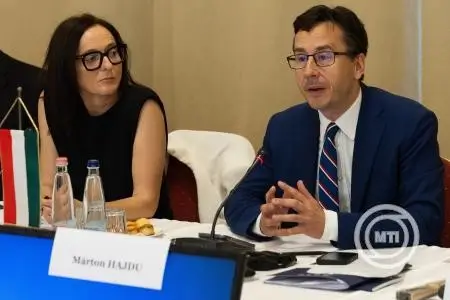
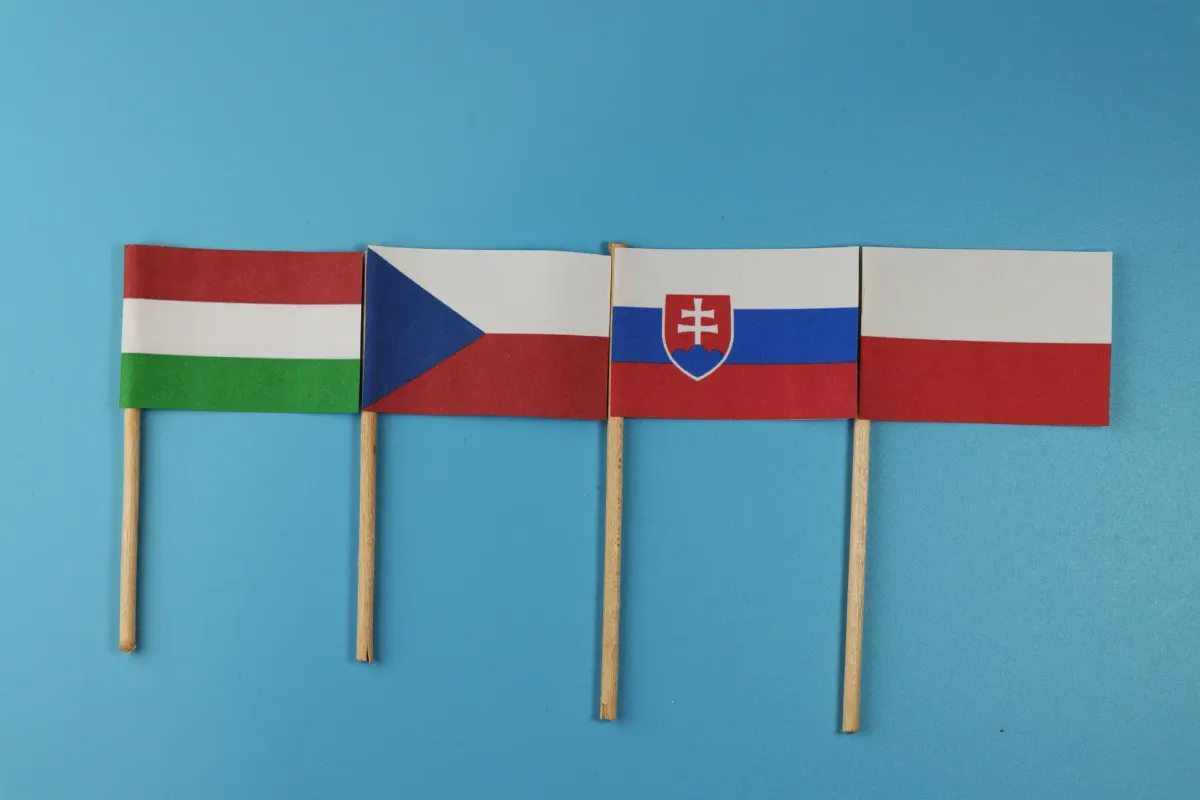
The meeting was convened by Péter Magyar in Budapest and was attended by Polish Prime Minister Donald Tusk, Czech Prime Minister Andrej Babiš and Slovak Prime Minister Robert Fico. The main goal is not to announce a spectacular new alliance, but rather to identify the areas in which the four countries can once again coordinate their interests and act together within the European Union.
The history of the Visegrád cooperation illustrates how Central Europe’s political landscape has changed over the past decade. The V4 was originally not an anti-EU formation, but a regional coordination platform designed to align common interests. However, it became a major political force during the migration crisis in the mid-2010s. Under the leadership of Hungary and Poland, the four countries strongly opposed EU refugee relocation plans and called for stricter border protection.
By 2026, however, the political environment has changed significantly. On migration, the tougher approach that was once seen as a specifically Central European position has become much more present in mainstream European politics as well. As a result, the V4 has lost the single, powerful common issue that previously united its members. The key question now is: what can become the group’s new shared agenda?
The answer is likely to be found primarily in economic and energy policy. One of the most important objectives of the Visegrád countries is to gain greater influence over the shaping of the European Union’s next long-term budget. For the region, it is crucial that EU funds continue to play a significant role in economic convergence, while the costs of Europe’s green transition do not place a disproportionate burden on industry and households.
A particularly sensitive issue is the EU Emissions Trading System (ETS), which affects energy prices and industrial competitiveness by increasing the cost of carbon emissions. Central European countries fear that overly rapid climate policy tightening could weaken their economic position. At the same time, criticism of the system is no longer limited to the V4: several other EU member states have raised similar concerns. This means that, this time, the Visegrád countries may seek to act less as an isolated opposition group and more as part of a broader European coalition.
The biggest obstacle to rebuilding the V4, however, remains the question of relations with Russia. The four countries differ significantly on this issue. Poland considers Russia a fundamental security threat and has been one of Ukraine’s strongest supporters since the beginning of the war. The Czech Republic has also pursued a clearly Western-oriented foreign policy and remains cautious toward Moscow.
By contrast, Slovak Prime Minister Robert Fico has taken a much more open stance toward Russia and differs from the EU mainstream on several issues. Hungary’s position is more complex: although Péter Magyar is politically seeking to distance himself from several elements of the Orbán era, the country remains economically connected to Russian energy supplies. This means that one of the V4’s greatest challenges will be whether it can develop a common position on one of Europe’s most important security policy issues.
The current summit is particularly significant from Hungary’s perspective, as it may also serve as a test of a possible shift in Hungarian foreign policy. During the Orbán government’s era, the V4 often appeared as a platform for political resistance against the European Union. Péter Magyar, however, is expected to pursue a less confrontational approach: seeking stronger ties with European institutions while preserving the advantages of Central European cooperation.
The emerging relationship with Donald Tusk could play an important role in this process. Significant political distance developed between the Polish and Hungarian leaderships in recent years, so a Budapest–Warsaw rapprochement alone could create a new balance in the region. If Hungary and Poland are able to cooperate again, it could significantly increase the V4’s influence within the EU.
At the same time, it is unlikely that the old V4 model will simply return. In the mid-2010s, the group’s strength came from having a clear common point of resistance: migration. Today, a more pragmatic interest-based alliance appears to be taking shape, with common priorities likely to include the EU budget, industrial protection, energy prices, green regulations and the future of EU enlargement.
The future of Visegrád cooperation will therefore depend on whether it can move beyond its previous political identity. The V4 can become a significant actor again only if it does not rely solely on its past successes, but offers a genuine common strategy for Central Europe within a European Union where security challenges and geopolitical shifts have become more important than ever.