Slovakia’s Search for Political Balance: Economic Pressures, Institutional Debates and the Stakes of the Next Election
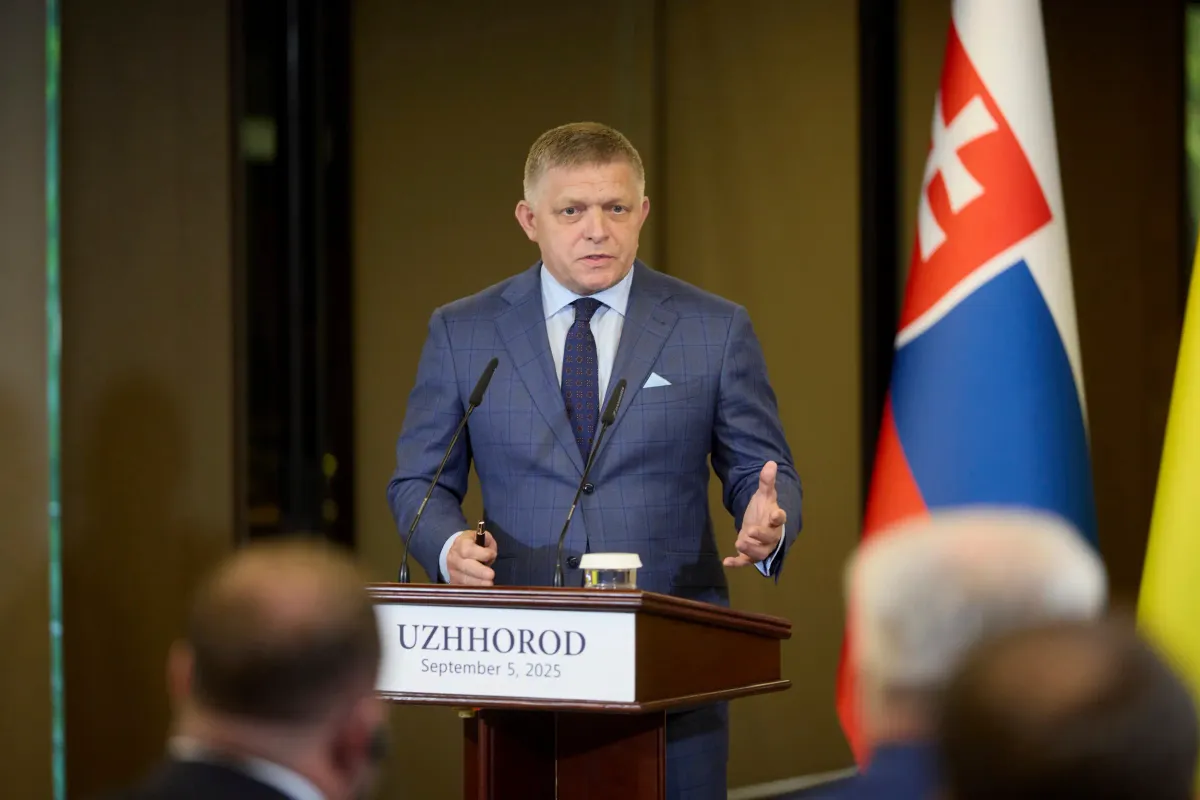
Slovakia has once again become a focus of political attention in Central Europe. Robert Fico’s government, which survived a confidence vote, is simultaneously trying to consolidate its political position, address the country’s economic challenges, and redefine the debate over the future direction of state governance.
One of the biggest challenges facing the Slovak government today is the state of public finances. The parliament confirmed Robert Fico’s government in a confidence vote after the country’s public debt exceeded the levels defined by its fiscal responsibility rules.
Politically, the vote was not only about the survival of the government, but also about how a Central European country responds when previously established economic and social commitments become increasingly difficult to maintain. According to Reuters, Slovakia’s debt level has risen significantly, while reducing the budget deficit requires difficult political decisions.
This issue is not unique to Slovakia. The Czech Republic, Poland and Hungary are facing similar dilemmas: how to maintain public spending that supports social stability while at the same time meeting European fiscal expectations and preserving economic competitiveness.
In Slovakia’s case, this question is particularly sensitive because the country’s economy is strongly connected to European industrial supply chains, especially the automotive sector. The sustainability of its growth model is therefore not only a domestic political issue, but also a broader European economic policy question.
The second major issue concerns the debate over the electoral system. According to the Fico government, the proposed changes are intended to increase the stability of the political system. However, opposition parties and several analysts fear that certain modifications could reshape the conditions of political competition.
The debate is part of a broader Central European trend. In recent years, several countries in the region have faced a similar question: when a government changes electoral rules, institutional structures, or the framework of state operation, is it implementing genuine efficiency reforms, or attempting to permanently reshape political power relations?
The Slovak case is particularly interesting because the country’s political system has traditionally been multiparty and highly fluid. Over the past decades, political forces have shifted rapidly several times, new parties have emerged, while previously dominant actors have weakened or disappeared.
The debate over electoral rules is therefore also about a broader democratic question: how open or closed is a political system to the emergence of new political actors?
The third major development is the strengthening of opposition forces. Progressive Slovakia (PS) has shown strong support in several opinion polls, while Fico’s Smer party remains one of the defining forces in Slovak politics.
The stakes of the next election will therefore not only be about who can form a government, but also about what direction Slovakia chooses within the region.
The current government’s approach differs from the EU mainstream in several areas: it places greater emphasis on protecting national decision-making powers, takes a more cautious position regarding support for Ukraine, and assigns a stronger role to the state in shaping economic and social processes. The opposition, by contrast, generally advocates closer European integration, institutional reforms, and stronger alignment with the Western alliance system.
As a member of both the European Union and NATO, a direct neighbour of Ukraine, and part of the Central European cooperation framework, Slovakia’s political direction has significance beyond its own borders. The country’s example shows that in today’s Central Europe, economic policy, the state of democratic institutions, and foreign policy orientation can no longer be viewed separately.
Debates over fiscal decisions, electoral rules, or Slovakia’s role in Europe are ultimately part of the same broader question: what kind of state and what kind of social model do Central European countries want to build for the coming decade?