Slovak referendum on Fico's lifetime pension fails amid record-low turnout
A failed Slovak referendum on Prime Minister Robert Fico's lifetime pension has exposed a pattern playing out well beyond Slovakia: across Europe, benefits for former heads of state are becoming political ammunition precisely where societies and elites are most deeply divided.
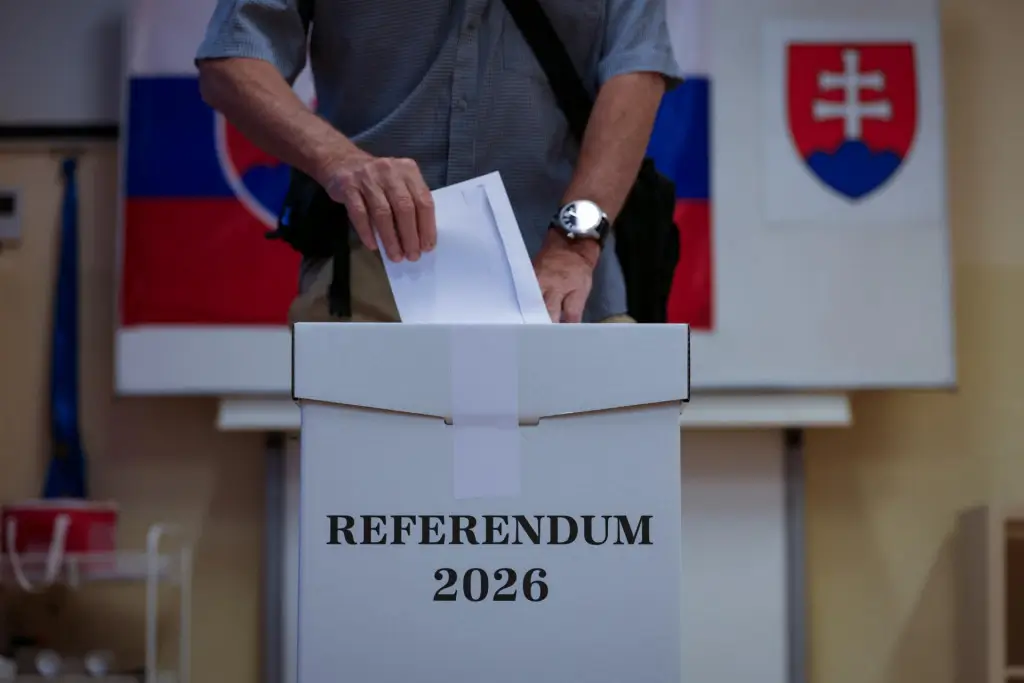
A referendum seeking to strip Prime Minister Robert Fico of a lifetime pension and restore two dismantled anti-corruption bodies collapsed on Saturday (July 4, 2026) after failing to reach the 50% turnout threshold required for validity.
Final turnout stood at 16.13%, according to the Interior Ministry, despite overwhelming support for both proposals among those who did vote. Only the 2003 EU-accession referendum has ever cleared Slovakia's turnout bar.
The vote asked whether to abolish the lifelong pension for prime ministers and parliament speakers who serve at least two terms – introduced in 2024 as part of a security package following the assassination attempt on Fico – and whether to restore the Special Prosecutor's Office and National Crime Agency, both dismantled by his coalition that same year. Currently, only Fico meets the two-term threshold.
The petition was organized by the non-parliamentary opposition party Demokrati, and gathered over 350,000 signatures. Progressive Slovakia backed the campaign, but smaller opposition parties did not, splitting the mobilization effort. Fico dismissed the vote as "politically motivated" and boycotted it himself.
Politicians’ allowances are under scrutiny across Europe
The Slovak referendum is not an isolated dispute. The issue of politicians' compensation has made its way onto the political agenda not only in Slovakia. In Hungary, the National Assembly recently passed a law freezing mayors' salaries, though the original proposal would have cut local government leaders' pay outright. The compensation of the president and former presidents remains the subject of ongoing debate there too, and reducing it is likewise a popular demand.
By contrast, the issue barely registers in Poland or Czechia, presumably because, despite political opposition, elite divisions in both countries aren't sharp enough to turn presidential or other political allowances into a weapon, and because these allowances are considerably more modest than in Hungary to begin with.
In Czechia, the benefit for former presidents hasn't been adjusted since 2004. Today it amounts to only about €2,000 a month – just slightly above the average Czech salary. The previous governing coalition, led by Petr Fiala, proposed doubling the benefit in 2024-25, but the plan was blocked by the coalition's own smaller parties, the Pirates and KDU-ČSL, on austerity grounds. Poland's arrangement is somewhat more generous: former presidents are entitled to 75% of the sitting president's salary, currently around €3,300 a month, plus additional benefits (costs of running an office, a company car, and lifetime personal security). Hungary stands apart: former presidents receive a monthly payment equivalent to €14,700 – on top of further benefits – placing it well above its regional peers, closer in scale and structure to how some Western European states treat the office. Germany is the clearest parallel: former heads of state there receive roughly €20,000 a month, plus further benefits, though the AfD introduced a bill as early as 2024 to cut this in half. In France, the base payment is only €5,550 a month – rising once other benefits are factored in – yet the Senate still voted in January 2025 to abolish these allowances and perks for former presidents and prime ministers entirely. A joint parliamentary committee rejected the measure, so a petition backed by 120,000 signatures is now calling for the complete abolition of these "lifetime privileges."
In other words, there is clearly a demand across Europe – driven largely, though not exclusively, by populist political movements – to reduce or even abolish politicians' compensation, particularly the benefits paid to former presidents. Such initiatives also appear more likely to gain traction, and to have a real chance of being enacted, in countries where society and its political elite are especially divided and no longer share the previously accepted norms that included a baseline tolerance of political opponents.
When politics fractures, privilege becomes the target
It is no coincidence that it is precisely in France, Hungary, and now Slovakia that the issue of former presidents' (and, in Slovakia's case, former prime ministers') benefits has come under such intense scrutiny: in all three countries, a fierce struggle between political factions is under way, often drawing in the judiciary, while the economy grapples with its own difficulties. In Hungary, it was specifically the scandal around President Katalin Novák's 2024 pardon decision – which forced her resignation and helped launch Péter Magyar's political career – that fed directly into the new government's drive to break decisively with the previous political establishment.
Czechia, by comparison the most consolidated of these democracies, is the one country where politicians' allowances have not become part of the political arsenal. Slovakia's failed referendum, low turnout notwithstanding, suggests it is now drifting toward the more contentious end of that spectrum.