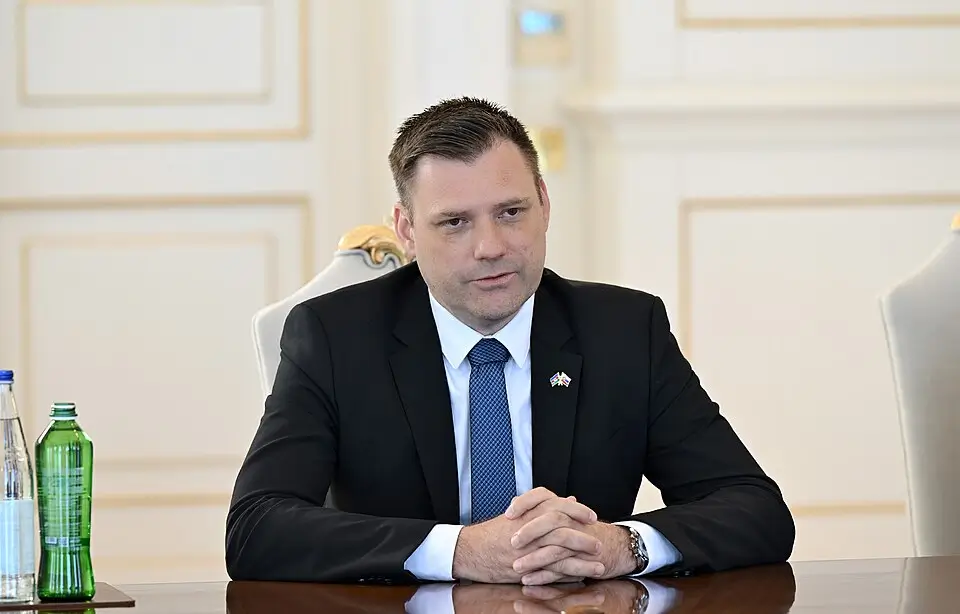
Slovak coalition partner helps oust Environment Minister, putting Fico’s parliamentary majority under pressure
Slovakia’s governing coalition faces renewed uncertainty after seven MPs from the junior coalition SNS joined the opposition to oust Environment Minister Tomáš Taraba. His return to parliament as an autonomous MP leaves Prime Minister Robert Fico with a potentially fragile majority ahead of crucial votes, including the 2027 state budget.
Slovakia’s parliament dismissed Deputy Prime Minister and Environment Minister Tomáš Taraba on Tuesday (29 September 2026) evening after seven MPs from the junior coalition Slovak National Party (SNS), which had nominated him, voted with the opposition to remove him.
The no-confidence motion, tabled by the opposition Progressive Slovakia (PS), passed with 77 votes in the 150-seat National Council. The result comes as Prime Minister Robert Fico’s coalition faces a narrowing parliamentary margin and prepares to submit the 2027 state budget, which will be one of the government’s key legislative tests in the coming months.
President Peter Pellegrini formally removed Taraba from office on Wednesday, a day after parliament withdrew its confidence in him. Pellegrini said the longer-term assessment of Taraba’s record as minister would come with time and expressed the hope that his return to parliament would contribute to improving the legislature’s public standing.
As Fico had not yet submitted a nomination for a successor, Pellegrini temporarily entrusted the prime minister with running the environment ministry. The SNS continues to support Filip Kuffa, a state secretary at the ministry, as Taraba’s possible replacement, but it remains unclear whether Fico will formally nominate him and, if he does, whether Pellegrini will appoint him. The president has previously indicated that he considered other candidates preferable.
Shortly after Tuesday’s vote, Fico said the SNS’s conduct had prompted him to convene the leadership of his Smer party to discuss the coalition’s next steps. Following a meeting on Wednesday, Smer said it was not preparing for early elections and called on its coalition partners, Hlas and the SNS, to govern responsibly. It also stressed the importance of securing approval for next year’s budget.
The arithmetic
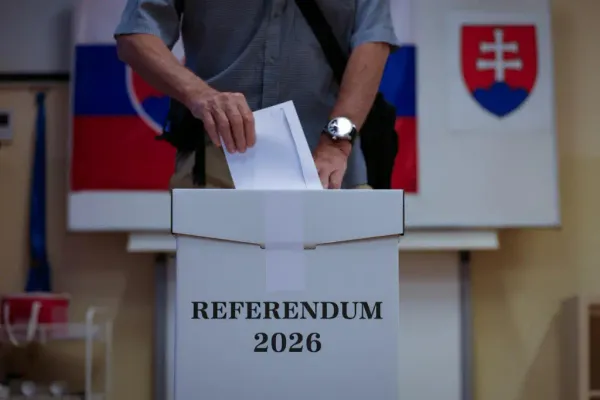
An absolute majority in the National Council is 76 of 150 MPs. Parliament requires at least 76 MPs to be present to conduct business, while ordinary legislation is passed by a majority of those taking part in the vote. At least 76 votes are required to approve a motion of no confidence or to override a presidential veto.
The governing camp of Smer, Hlas and the SNS, together with aligned unaffiliated MPs, had been able to count on 78 votes. That margin has come under greater pressure following Taraba’s return to parliament. He resumed his mandate on 1 October, replacing Milan Garaj, who had served as his substitute while Taraba was a member of the government.
Taraba has said he intends to sit as an autonomous MP rather than join a government parliamentary caucus and will decide how to vote on individual legislation. If his vote can no longer be treated as part of the coalition’s reliable majority, the government’s dependable parliamentary support falls to 77.
Several other coalition or unaffiliated MPs have been mentioned as possible allies of Taraba, but none has committed to joining him. Some have explicitly said they will continue supporting the government, while others have left open the possibility of cooperating on individual votes. The coalition could therefore fall to 76 or 75 votes if further MPs break ranks, but those scenarios remain hypothetical.
The 2027 state budget is expected to be one of the clearest early tests of whether the government can maintain sufficient support in parliament.
Snap elections?
Fico raised the possibility of early elections as soon as January over the weekend, but Smer has since said it is not preparing for that option.
Shortening parliament’s term requires a constitutional majority of at least 90 MPs. Progressive Slovakia has called for an early election, while the SNS has so far rejected the idea.
Even if the government were to lose its parliamentary majority or a confidence vote, that would not automatically trigger a general election. Slovakia’s constitutional framework allows for attempts to form another government, while early elections require a separate constitutional process.
Absent an early election, the next general election is due in 2027, four years after the September 2023 vote. No exact election date has yet been set.