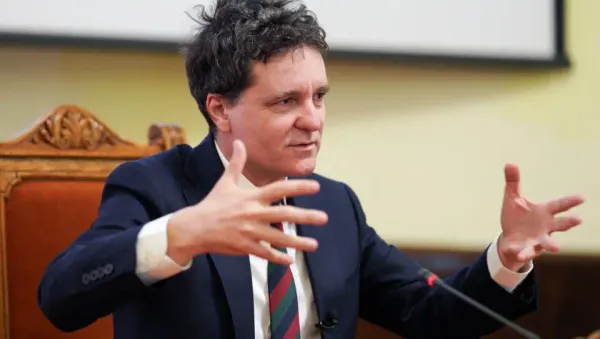
Romania once again in political turbulence: three options remain for Nicușor Dan
Romania is facing a political crisis, with the stakes now extending to fiscal stabilisation and access to EU funds.
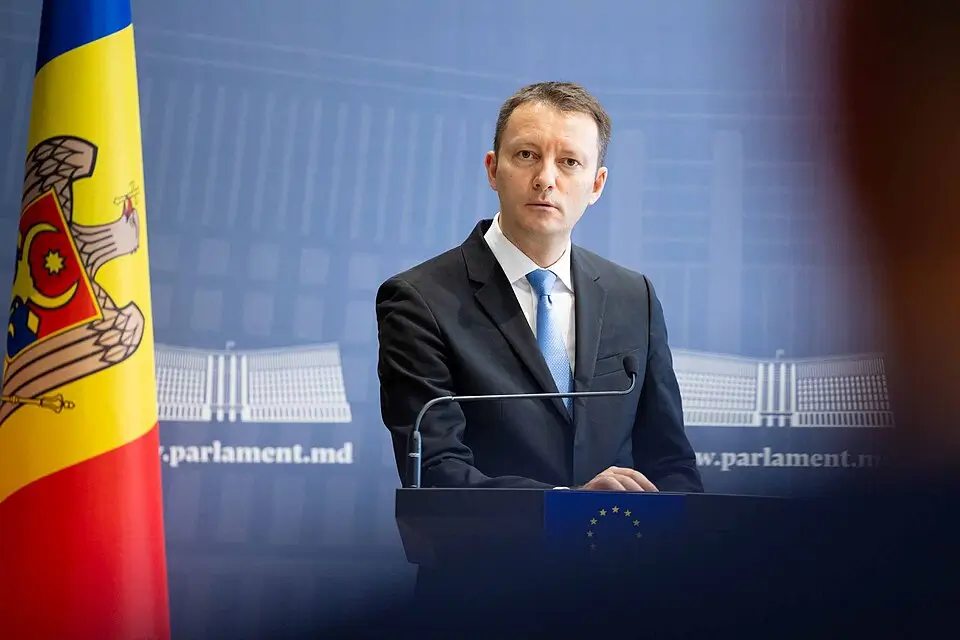
The roots of the current crisis go back to May, when the pro-European government led by Ilie Bolojan was brought down by the Social Democratic Party (PSD) and the right-wing populist AUR together. Several attempts to form a new government have failed since then. According to an Associated Press report published on September 17, President Nicușor Dan subsequently nominated Siegfried Mureșan, a European Parliament member of the National Liberal Party (PNL), as prime minister after his previous nominees failed to secure a parliamentary majority.
Mureșan initially sought to form a government with the support of the PNL, the USR and the Democratic Alliance of Hungarians in Romania (UDMR). However, the three parties have only 170 seats in parliament, while 233 votes are required for a government to be invested. It was therefore clear from the outset that the three-party arrangement could not survive on its own. Mureșan consequently sought the support of the PSD, while the PNL continued to rule out a coalition in which the Social Democrats would have government positions. According to an Euronews analysis published on September 18, the PNL–USR–UDMR coalition could therefore only pass a confidence vote with the support of other parties.
The situation became clear on September 28, when the PSD leadership decided not to support the Mureșan government. Both the PSD and AUR have said they will not vote for the cabinet, leaving the prime minister-designate well short of the 233 votes required.
The PSD's decision is not simply a matter of personal differences. The Social Democrats want to return to government, while the PNL says it does not want to revive the previous four-party coalition. Mureșan, by contrast, has been trying to persuade the PSD to provide external support for a PNL–USR–UDMR government. Politically, this would mean that the PSD would assume responsibility for the government's parliamentary viability without receiving ministerial positions. The PNL has also floated another possible compromise: a later rotation of government positions extending until 2028, when the next regular parliamentary election is due.
Meanwhile, the political deadlock is having increasingly serious economic consequences. At the end of August, Romania had already lost €770 million in Recovery Fund support because the political crisis prevented certain measures concerning public-sector pay and the reform of state-owned companies from being adopted by the deadline. According to the Financial Times, the political uncertainty is hitting Romania at a time when its fiscal deficit is among the highest in the European Union, while the possibility of losing its investment-grade credit rating is already being discussed by rating agencies.
The financial picture, however, is not entirely one-sided. Romania's budget deficit stood at 2.89% of GDP at the end of August, down from 4.51% a year earlier, while the full-year deficit target has been set at 6.2%. Fiscal consolidation has therefore begun to some extent, but the political system still has a series of difficult measures to implement. The government crisis is consequently not merely an institutional problem: it is directly connected to the question of who will bear the political cost of further fiscal adjustment.
The first likely consequence is the defeat of the Mureșan government. This, however, would not automatically mean an early election. Under the Romanian Constitution, the president can dissolve parliament if two consecutive attempts to form a government fail within the specified constitutional timeframe.
The second option is a new parliamentary deal. Several variants are possible: the PSD could return to some form of government cooperation; a minority government could be formed and seek parliamentary support on a case-by-case basis; or a technocratic cabinet could be established without a conventional coalition majority.
The third option is an early election. Mureșan himself does not regard this as desirable, but he has repeatedly said in September that the option cannot be ruled out if it proves impossible to form a pro-European government. According to AP, Romania has not held an early parliamentary election since 1989. The issue is particularly sensitive because recent opinion polls have shown gains for AUR, meaning that a new election could significantly alter the current parliamentary balance.
There is also a fourth, politically much more difficult possibility: some form of joint government arrangement between the PSD and AUR. The two parties already took part together in bringing down the Bolojan government in May, but forming a government together would represent a fundamentally different level of cooperation.
The coming weeks will therefore revolve around three questions. First, can the PSD somehow make a functioning government possible without formally returning to the coalition? Second, if that fails, can a minority or technocratic arrangement be found that parliament would accept at least for as long as necessary to meet Romania's budgetary and EU commitments? And third, if two attempts to form a government fail, will Nicușor Dan accept the political risks associated with an early election?
In the short term, the situation is relatively clear: the Mureșan government's parliamentary investiture is scheduled for September 30, while the coalition currently backing him is 63 votes short of the required majority.