Romania’s Political Crisis: Deadlock Over Government Formation and EU Funds
The domestic political paralysis could have serious economic consequences: the caretaker government is running out of time ahead of the August 31 deadline set by Brussels.
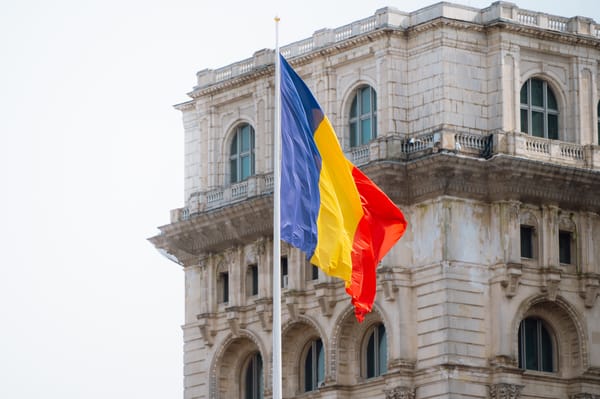
In mid-August, Romania still lacks a full-fledged government backed by a parliamentary majority. The country has been governed by Ilie Bolojan’s caretaker government since May 5, after parliament brought down the previous broad pro-EU coalition in a vote of no confidence. The political crisis has remained unresolved: President Nicușor Dan has failed to find a prime ministerial candidate capable of securing a stable parliamentary majority. At the same time, Romania faces urgent decisions on fiscal policy and EU funding. Fitch has maintained a negative outlook on the country’s credit rating amid growing political uncertainty.
The immediate trigger for the crisis was the collapse of the four-party coalition formed in June 2025. The government, comprising the National Liberal Party (PNL), the Social Democratic Party (PSD), the reformist USR and the Democratic Alliance of Hungarians in Romania (UDMR), was primarily tasked with consolidating the finances of Romania, which has one of the EU’s largest budget deficits. Prime Minister Ilie Bolojan pushed for tough austerity and revenue-raising measures, but the PSD increasingly opposed them, partly out of concern that the unpopular measures would further erode its support in favor of the nationalist AUR. On April 20, the PSD withdrew its support for Bolojan, effectively ending the coalition’s parliamentary majority.
The government eventually fell on May 5, when the PSD and the nationalist AUR, led by George Simion, jointly backed a no-confidence motion. The motion passed with 281 votes, effectively bringing the previous pro-EU grand coalition to an end. This did not, however, amount to a PSD–AUR coalition: the two parties were able to cooperate in bringing down the Bolojan government, but they have fundamentally different visions for how the country should be governed.
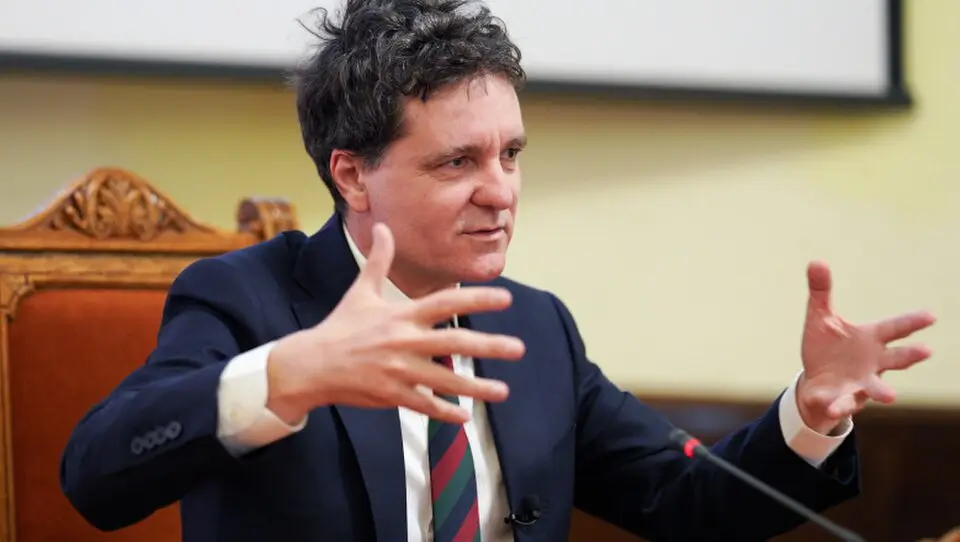
President Nicușor Dan has since made several attempts to form a new government. The first prime ministerial nominee, Eugen Tomac, withdrew after it became clear that he lacked sufficient parliamentary support. The next nominee, Adrian Veștea, also failed to secure the required majority on June 22. The parliamentary deadlock therefore continued, with Bolojan remaining in office as caretaker prime minister. In terms of parliamentary strength, the PSD holds 130 seats and the AUR 90, while the PNL, USR and UDMR together still fall short of an outright majority.
The situation is particularly difficult politically because Dan is simultaneously trying to prevent the AUR from gaining a foothold in government while maintaining Romania’s pro-European course. However, the centrist parties have yet to agree on whether this requires a new grand coalition, a minority government or a technocratic cabinet. The PNL has already indicated that it could support a technocratic government under certain conditions, while the PSD remains unwilling to automatically assume the political cost of Bolojan’s austerity policies.
Meanwhile, support for the AUR remains high. According to a July IRES poll, the party would lead in a hypothetical parliamentary election, with the PSD in second place ahead of the PNL. This also makes the prospect of early elections risky for the pro-European parties: rather than resolving the political crisis, an election could easily further strengthen the AUR.
The crisis is increasingly about more than government formation. Romania needs to implement key EU reforms in order to access funding from the Recovery and Resilience Facility. According to an August 13 report by Balkan Insight, the political deadlock is already putting approximately €770 million in EU funding at risk. The lack of political agreement is particularly problematic because the deadline for completing several reforms falls at the end of August.
The economic backdrop is also making political compromise more difficult. Romania continues to struggle with one of the EU’s largest budget deficits, while the social costs of fiscal consolidation are becoming increasingly visible. Political uncertainty has also made financing and the country’s credit rating more sensitive issues. By July, the weakening of the leu, difficulties in government financing and assessments by credit-rating agencies had all become central issues in the political debate.
For Romania, the key question now is whether at least a minimal parliamentary agreement can be reached on fiscal consolidation and fulfilling the country’s EU commitments. In the short term, a technocratic or minority government could emerge, with centrist parties providing support only on the most important issues. A new arrangement resembling the 2025 grand coalition appears politically more difficult. If the deadlock continues, however, the risks of losing EU funds, rising financing costs and further strengthening the AUR could all increase simultaneously.