Romania shoots down Russian drones on home soil for the first time
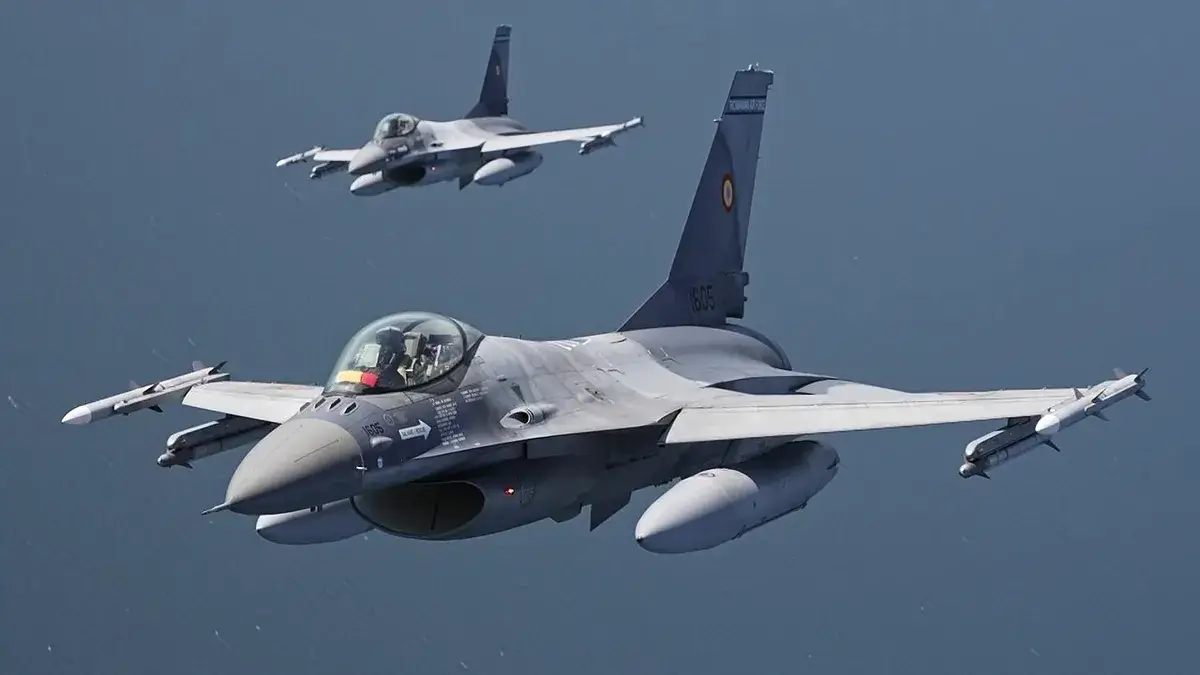
A Romanian F-16 destroyed a Russian-made drone over the Black Sea on July 24, marking the first time Romania's air force has shot down an intruding aircraft inside its own airspace since the war in Ukraine began – with two more drones downed in the following two days. The shootdowns triggered Bucharest's expulsion of a Russian diplomat and the recall of its ambassador from Moscow for consulations.
A Romanian Air Force F-16 shot down a Russian-made drone over the Black Sea on Friday, July 24, marking the first time Romania has destroyed an intruding aircraft inside its own airspace since Russia's full-scale invasion of Ukraine began in 2022. Two more drones followed in the next two days, each intercepted and destroyed by Romanian pilots.
President Nicușor Dan confirmed that investigators identified the first drone as a Shahed-type unmanned aircraft commonly used by Russian forces against Ukraine. A second drone was shot down on Saturday, and a third – identified as a Russian Geran-2, a Shahed derivative – was destroyed the following morning over Romanian territorial waters.
A tactic learned in Estonia
Cristian Popovici, the Defence Ministry's head of public relations and a former air defence officer, said Romanian pilots developed new procedures after a Romanian F-16 – deployed under NATO's Baltic Air Policing mission – shot down a suspected Ukrainian drone over Estonia on May 19. Applying the "lessons learned" from Estonia, he said, Romania's air force achieved "a 100% success rate in three days with three drones."
A history of near-misses and one controversial no-fire decision
Friday's shootdown stands in contrast to Romania's earlier encounters with Russian drones. In autumn 2023, drone wreckage was found on Romanian territory near the Ukrainian border. Investigators concluded the drones had been struck by Ukrainian systems during strikes on the port of Izmail and had drifted, out of control, onto Romanian soil.
On another occasion, Romanian F-16s tracked a Russian drone near the border but did not open fire. The Defence Ministry said at the time that it had "assessed the collateral risks and decided not to open fire". This decision drew criticism in the Romanian press for allowing a confirmed incursion to pass unchallenged.
Diplomatic fallout
The three shootdowns triggered a swift diplomatic response. Romania's Foreign Ministry summoned the Russian ambassador on July 27, showing him fragments of the downed drones, and formally declared a member of the Russian embassy staff in Bucharest persona non grata, giving him five days to leave the country. Romania simultaneously recalled its own ambassador to Moscow for consultations, which the Foreign Ministry itself described as an "unprecedented" diplomatic gesture. Russia's embassy rejected the accusations, and Russia's Foreign Ministry spokeswoman Maria Zakharova warned Moscow would deliver an "appropriate response."
This is not the first time Romania has expelled a Russian diplomat. Bucharest declared a Russian deputy military attaché persona non grata in 2021 over spying allegations, and there have been tit-for-tat expulsions in past diplomatic disputes as well. However, this was the first time Romania had recalled its own ambassador from Moscow alongside the expulsion of a Russian diplomat.
Part of a wider pattern across NATO's eastern flank
Romania's Defence Ministry says Russian drones have illegally entered its airspace 33 times since February 2022, though Friday's incident was the first Romania has actually shot down on its own territory.
A report from the International Institute for Strategic Studies found that between August 2024 and February 2026, hundreds of drones manoeuvred through the airspace of a dozen NATO member states and Ireland, repeatedly forcing the closure of major commercial airports and disrupting military activity.
The most serious single incident to date came in Poland. On the night of September 9–10, 2025, an estimated 19 to 23 drones – launched, according to Polish Prime Minister Donald Tusk, primarily from Belarus – crossed into Polish airspace in the largest such incursion since the war began. Polish and Dutch aircraft shot down at least three of them. However, falling debris, likely from a NATO interceptor missile, damaged a house near Lublin. The airspace over four Polish airports, including Warsaw's two main hubs, was closed for hours. Poland invoked Article 4 consultations with NATO allies and subsequently launched Operation Eastern Sentry to reinforce its eastern border.