Defence spending is driving the Czech budget off course
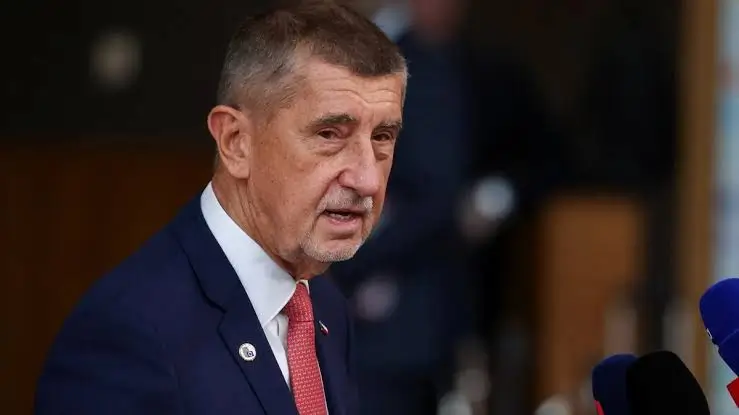
Czechia's 2026 deficit is running nearly a full percentage point above what the outgoing Fiala government projected and the single largest reason is a defence-spending trajectory that Prime Minister Babiš campaigned against but has since chosen to continue.
The Czech Ministry of Finance's revised debt management strategy, published on 17 July, shows the state's financing requirements climbing steadily: from 6.7% of GDP in 2024 to 8.2% this year. Public debt is forecast to rise in parallel, from 41.7% of GDP in 2024 to 44.4% in 2026. The general government balance – the ESA-based figure the European Commission actually assesses against the 3% Maastricht ceiling – is forecast at roughly 2.6% of GDP for 2026. That's still inside the limit, but it's markedly worse than the 1.7% the outgoing Fiala government projected for this same year back in October 2024.
The other figure worth tracking is the central state budget's own cash deficit – a narrower measure that excludes local governments' typical surpluses – which has held close to 3.4% of GDP in each of the last three years. That stability is due to a nominal GDP growth of around 2% in the last few years having largely offset the rising cash amounts, even as the debt-to-GDP ratio keeps climbing and interest costs absorb a growing share of the total.
Retail bonds: diversification, not a Hungarian-style shift
An interesting element of the new strategy is the revival of retail "Dluhopis Republiky" bonds, a programme the previous Fiala government had let lapse. According to the current finance minister, involving citizens in state financing diversifies funding sources and gives Czech savers a return comparable to what banks offer. Despite the populist framing, the bond carries no interest premium over what institutional buyers receive, and even after a record CZK 74 billion subscription round in mid-2026, retail paper still accounts for only 3.4% of total outstanding state debt. Czechia, in other words, has not abandoned the model it has followed for decades – financing debt chiefly through institutional and, to a lesser extent, foreign investors – rather than through citizens, as has occurred far more dramatically in Hungary, where roughly 70% of government bonds are held by the public, at a real interest premium over institutional rates.
Defence-spending escalation
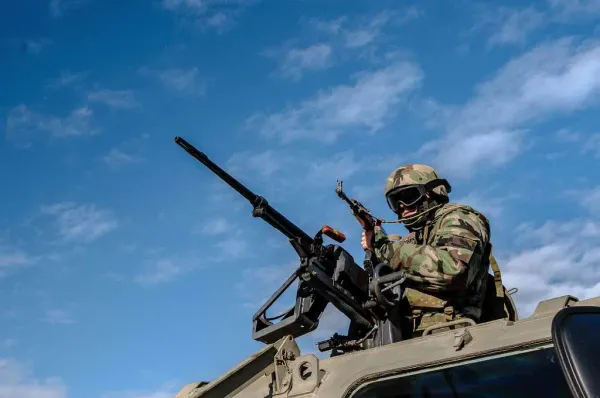
The primary driver of rising financing needs is defence spending. An amendment to the Budgetary Rules Act now allows the state to exceed the legislated 2% of GDP floor without breaching normal fiscal-discipline limits, an exemption running until 2033. The 2026 budget uses roughly CZK 30.7 billion of that room. Longer term, the trajectory points further out: NATO's Hague summit commitment envisions member states reaching 5% of GDP (2% core defence spending plus 3.5% broader security-related spending) by 2035, a path that could eventually take Czech defence spending from around CZK 160 billion today to somewhere between CZK 280–400 billion – up to a fifth of all government spending – though that scale of increase is a decade-long horizon, not a near-term budget line. Prime Minister Babiš confirmed at NATO's Ankara summit that Czechia would raise its defence budget by a further CZK 36 billion in 2027, despite having campaigned on a more sceptical line toward higher defence outlays.
The defence build-up is at least feeding a genuinely booming domestic industry: the Czech defence sector's contribution to GDP reached 2.09% in 2024. That is real GDP growth, employment, and corporate tax revenue, but it owes at least as much to European rearmament and export demand tied to the war in Ukraine as to the Czech state's own procurement. And a meaningful share of Czech defence procurement itself – F-35A fighters, CV90 vehicles, planned Leopard 2A8 tanks – goes to foreign, mostly American, suppliers, which is precisely the leakage that limits any domestic fiscal-multiplier effect: as the Czech National Bank's own analysis notes, when military technology must be purchased abroad, a large share of the spending simply stimulates trading partners' economies rather than generating a return for the Czech treasury.
Dukovany: a Fiala-era bill coming due
The Dukovany nuclear project is also weighing on the deficit, but this is squarely a Fiala-government legacy, not a Babiš decision. It was the outgoing government that selected KHNP as contractor in July 2024, then decided in spring 2025 to build two reactors rather than one and took an 80% state equity stake in Elektrárna Dukovany II to finance it. The CZK 18.3 billion appearing in the 2026 budget is simply the first disbursement under a financing structure that was already locked in before Babiš took office.
Rising interest payments compound all of this: Czech interest expenditure is projected to reach around 1.4% of GDP this year. For comparison, Hungary's interest expenditure ran at 3.8–4.9% of GDP across 2023–2025 – roughly three times the Czech burden – a direct consequence of financing a much larger share of debt through retail holders at a real yield premium; the average interest rate on Hungarian public debt was 4.6% in 2025, with little relief expected through 2027 as older, higher-yield bonds mature only gradually.
Working-pensioner bonus put off
Social spending adds a smaller but real increment. Teacher pay rises (CZK 11.86 billion annually) were legislated by the outgoing government but are being implemented under Babiš. The new government's own "working-pensioner bonus" pledge has meanwhile been pushed back to a first payout in January 2028, and a more consequential change – reverting the pension indexation formula to count one-half of real wage growth rather than the current one-third – was dropped from the current bill specifically on Finance Minister Schillerová's own budgetary objections, though it could resurface in a later one.
Put together, the outgoing government's 1.7% deficit projection for 2026 has proven untenable, with the actual figure now closer to 2.6%. The two largest single causes are the defence-spending escalation Babiš inherited and has chosen to continue – despite campaign rhetoric to the contrary – and Dukovany financing costs that were fixed in place before he took office.
Babiš campaigned on curbing defence spending; in office, he has instead continued and extended it as a shift that lines up with NATO's collectively agreed Hague target.