The price of an industrial economy
Czechia's economy grew 2.6% in 2025, unemployment sits near record lows, and the current account is in surplus. It is not an economy in difficulty. What the aggregate figures do not show is a structural transition already underway in its industrial base, which will define the country's economic trajectory for the next decade.
Czech statistical data show the economy grew 2.6% in 2025, driven by household consumption and public spending, with unemployment at 2.8% – among the lowest in the EU. The goods trade balance posted a surplus of CZK 19.3 billion in January 2026, and the current account ended 2025 in surplus.
Nevertheless, the European Commission's Spring 2026 forecast projects growth slowing to 1.8% this year, with the budget deficit widening to 2.8% of GDP and public debt rising to 47.2% by 2027. The Commission links this deterioration directly to the energy price shock following the Middle East conflict and the fiscal measures it has required. The more significant signal comes from a revision embedded in the Czech National Bank's Spring 2026 Monetary Policy Report: the CNB cut its estimate of the weighted steady-state growth rate of Czech euro area trading partners from 1.6% to 1.0%, attributing the bulk of the reduction – 0.7 percentage points – to Germany alone, whose traditional model of an export-oriented industrial economy, the CNB notes, has been significantly undermined by falling competitiveness amid high energy prices, emissions pressures, and population ageing.
These signals point to a deeper structural question: whether the economic model Czechia has relied on for three decades – industry-heavy, energy-intensive, and deeply integrated into German supply chains – remains viable in its current form. The data suggest the transition is already underway, and that deferring it further carries a cost.
The engine and its fuel
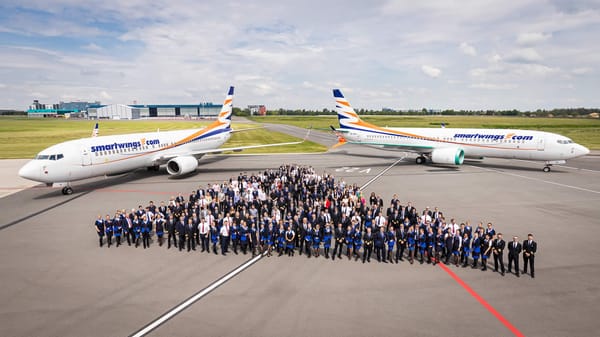
Industry including construction contributes 33% of Czech gross value added – with services at 65.3% and agriculture at 1.8%, according to the OECD Economic Survey of Czechia 2025 – placing it among the most industrialised economies in the OECD, well above the OECD average of 27.2%. Within manufacturing, automotive dominates. The sector directly accounts for around 4% of total value added and employment, roughly doubling when supplying industries are included. In 2025, Czech manufacturers produced 1,445,776 passenger cars – the second-highest total in the country's history – with automotive exports representing nearly 20% of total goods exports. Around 180,000 people are directly employed in the sector; including supplier industries, that figure reaches approximately 500,000, or nearly one in eleven employed Czechs.
With energy consumption per capita running 22% above the EU average, the cost of energy inputs matters more here than in most comparable economies. Services have been gradually gaining ground, but the industrial base remains large enough that what happens to it matters for the whole economy.
For most of the period from EU accession to 2019, this energy intensity was manageable: Czech industrial electricity was cheap, anchored by domestic coal-fired baseload generation priced outside global commodity markets. The post-2022 energy crisis changed that permanently. As coal has been displaced by market-priced sources, Czech non-household industrial electricity has roughly doubled – from around €0.08–0.10 per kWh through the 2010s to €0.17 per kWh today, according to Eurostat, now sitting 31% above Poland's €0.13 per kWh.
Energy is not the only challenge facing Czech industry. But it is the one that has moved fastest, and it has arrived before the structural remedy, expanded nuclear capacity, is in place.
Transition under construction
The IMF's Article IV mission identified the successor sectors: higher value-added activities including ICT services, advanced manufacturing, life sciences, and precision engineering – all materially less energy-intensive than the traditional manufacturing they are gradually supplementing. Czechia has already recorded genuine growth in biotechnologies, nanotechnologies, software, and pharmaceuticals. But the IMF was equally clear about the binding constraint: these sectors are limited by a shortage of skilled labour and restricted access to capital. Czech universities produce engineers, but not at the scale a rapid sectoral shift requires, therefore without deliberate policy intervention this structural problem will remain.
The most structurally significant longer-term opportunity lies at the intersection of the energy and industrial transitions. Czechia holds the largest lithium deposit in Europe at Cínovec in North Bohemia, and ČEZ has committed to a gigafactory capable of producing up to 800,000 battery units per year, with a launch window of 2027–2028. If realised, this would position Czechia as a supplier to the EV supply chain rather than a casualty of its restructuring. The Cínovec lithium mining is actively progressing and has strong Czech and EU backing, while the "gigafactory" component remains now uncertain and largely on hold, due to weaker than expected EV demand and overcapacity in global battery cell manufacturing. The strategic logic, however, is coherent: domestic lithium, ČEZ's energy infrastructure, and existing manufacturing capabilities could anchor Czech industry in the next supply chain.
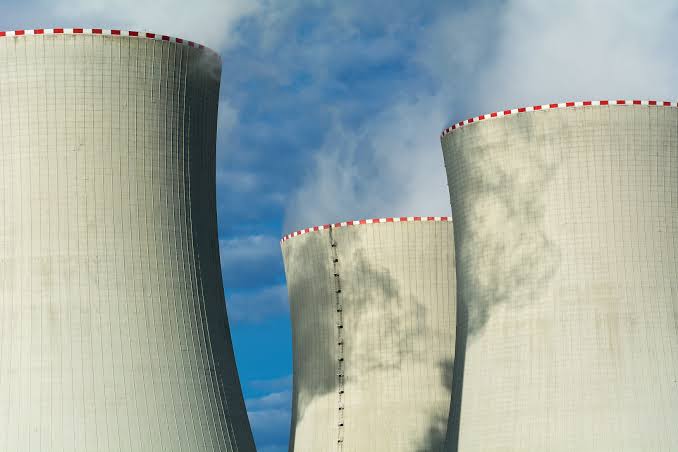
On energy, the structural answer is nuclear. Expansion at Dukovany — with units contracted from Korea's KHNP — and potential additional capacity at Temelín will restore a domestically-anchored electricity cost base in the 2030s, replacing the role coal once played without the carbon liability. The challenge is timing: the new capacity arrives after the most acute phase of competitive pressure, in a transition window — roughly 2024 to 2035 — when Czech industrial firms face their highest energy costs relative to peers.
A structural challenge, not a crisis
The Draghi report highlighted industrial electricity prices in the EU that are two to three times higher than in the United States as a systemic challenge affecting the continent's most energy-intensive economies disproportionately. Czechia is among the countries most exposed. As reflected in assessments by the IMF, the Czech National Bank (CNB), and Draghi himself, this points to a structural challenge requiring a deliberate policy response rather than an imminent crisis.
The industrial model that powered three decades of catch-up growth is under pressure in Czechia, but the country is far from being in crisis. Public debt remains below 50% of GDP, unemployment is among the lowest in the EU, the current account is in surplus, and a major nuclear expansion programme is underway to strengthen the country's long-term energy position. These fundamentals provide a solid basis for the adjustments needed to navigate an increasingly challenging competitive environment.