Thousands take to the streets in Slovakia against Fico’s pro-Moscow course
Thousands of protesters rallied against Prime Minister Robert Fico’s government across Slovakia on Tuesday. The demonstrations marked the anniversary of the 1989 Velvet Revolution, which toppled the communist regime in the former Czechoslovakia.
The protests came amid growing political strain after parliament rejected a government-proposed amendment to the penal code. Fico’s coalition has lost its majority, prompting calls for a snap election. Fico has served as prime minister of the EU and NATO member state four times over more than two decades, but since returning to power in 2023 he has faced a series of protests. According to the leader of Progressive Slovakia, the main opposition party, around 25,000 people gathered in central Bratislava, carrying placards with slogans such as “Run, Fico, run!”. Demonstrations were also held in other major cities, including Košice and Banská Bystrica.
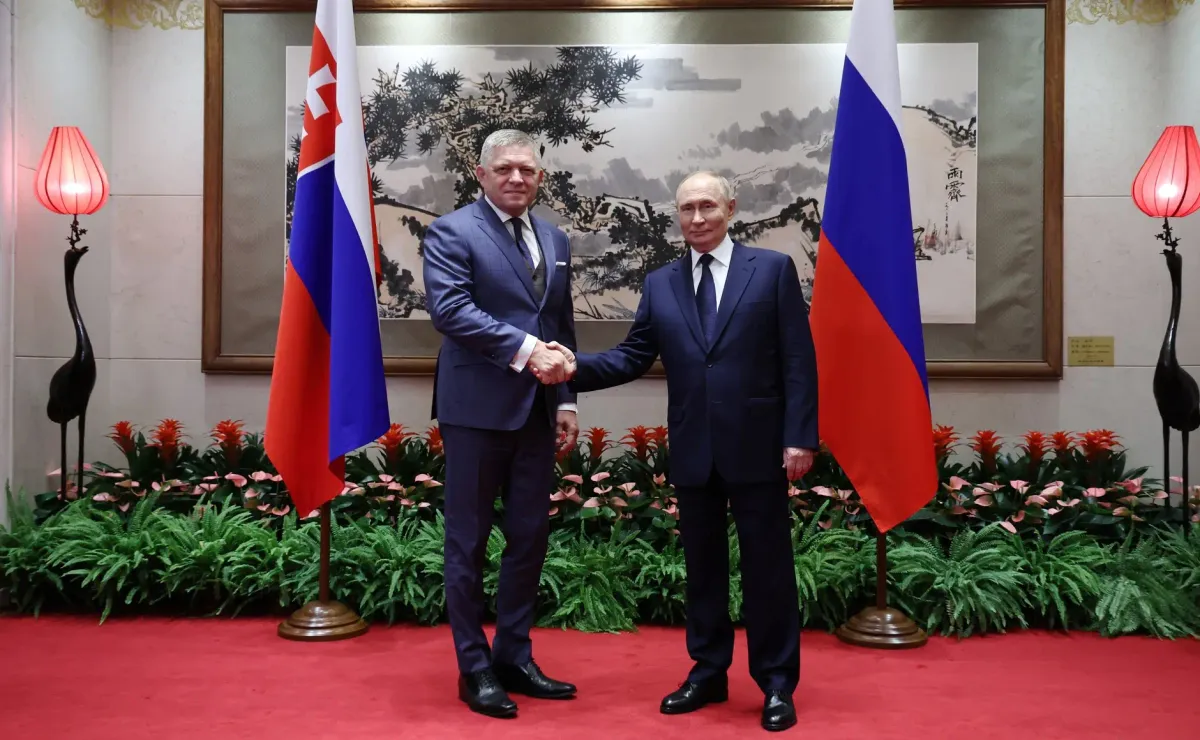
Fico opposes military aid to Ukraine, maintains close ties with Russian President Vladimir Putin and has repeatedly clashed with the European Union during his current term. Last year, parliament amended the constitution of the country of some 5.4 million people to state that national law takes precedence over EU law. The prime minister has also drawn criticism for moves to tighten control over the media and culture and to curb the rights of LGBTQ+ people. Critics have further condemned his efforts to deepen ties with the Kremlin despite Russia’s full-scale invasion of Ukraine. In October, for example, Foreign Minister Juraj Blanár travelled to Moscow for a meeting of the Russian-Slovak Intergovernmental Commission.
The government this week brought forward a cabinet meeting on the results of Blanár’s visit and on deepening cooperation with Russia, further angering protesters. Many of those who joined the rallies said Slovakia’s foreign policy was the main reason they came out. “We’re the last ones in the European Union to be negotiating with the Russians... It’s a disgrace,” Igor Vico, a 74-year-old doctor who is still working, told AFP. “We’re at the bottom of the world, not just in Europe, and it makes me sad,” he added. Younger demonstrators shared his concerns. “Russia isn’t a partner we should have, after all, they attacked Ukraine,” said Jan Ducho, a 15-year-old student who joined the protest in Bratislava.
Political polarization and a fraught dynamic between the state and civil society have become defining features across the Visegrád Group and the wider region. Widespread distrust and systemic resentment toward the political class are equally prevalent in Romania, Poland, and the Czech Republic. The widening chasm between the political establishment and the electorate shows no sign of narrowing anytime soon.