How Poland Is Grappling with Rising Fuel Prices
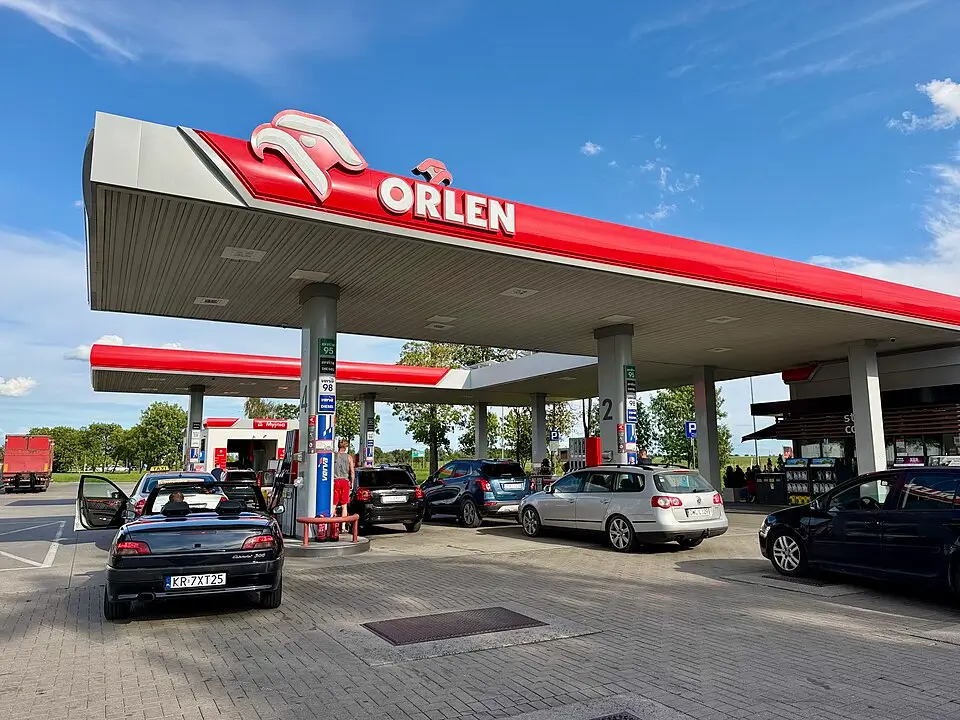
Polish motorists are seeing increasingly higher figures on petrol-station price boards, and for now there is little indication that prices will return to the much lower levels seen at the beginning of the summer anytime soon. According to an analysis by Business Insider Polska, six factors point towards fuel prices remaining elevated for an extended period.
Based on Mateusz Madejski’s article, expensive fuel is likely to remain part of everyday life in Poland for some time. The Polish situation is also of interest to the wider region because the countries of Central Europe are being hit by the same global market shock, while their governments are using different tax and pricing policies to cushion its impact.
The starting point for the current price surge is, naturally, the war in the Middle East and disruptions to global oil transportation. The importance of the Strait of Hormuz is well known, but one of the lessons of the current crisis is precisely that attention cannot be focused on a single bottleneck. According to data from the US Energy Information Administration (EIA), the volume of oil and petroleum products passing through Hormuz fell from 21.6 million barrels per day at the end of 2025 to 4.9 million barrels per day in the second quarter of 2026. Meanwhile, traffic through Bab el-Mandeb rose from 5.4 million barrels to 8.1 million barrels per day, partly because Saudi Arabia increasingly redirected its oil towards the Red Sea rather than through Hormuz. This only works, however, as long as the alternative route remains secure.
This is why Saudi Arabia’s East–West oil pipeline has become particularly important. It connects the country’s eastern oil fields with the port of Yanbu on the Red Sea, allowing the Strait of Hormuz to be partially bypassed. The pipeline was attacked on September 10, prompting Saudi Arabia to suspend its operation. It was restarted on September 22, but initially at reduced capacity: according to Reuters, restoring its full capacity of around 7 million barrels per day could take six to eight weeks because three pumping stations were damaged. This is particularly sensitive for Europe because an important route for Saudi oil to reach the Red Sea runs through this system.
The impact is also directly visible in Poland. The country’s largest oil company, Orlen, purchases significant quantities of crude oil on international markets, and any disruption or delay in Saudi supplies means that the missing volumes have to be replaced from other sources at short notice. According to a September 17 analysis by Warsaw-based Centre for Eastern Studies (OSW), several Saudi shipments scheduled for European refineries for the end of September were cancelled or postponed, with Orlen among the affected European buyers. The problem, therefore, is not simply how much a barrel of oil costs, but also where it can be sourced from and through which routes it can actually be delivered to European refineries.
This also explains why any easing in crude oil prices does not automatically translate into lower prices at petrol stations. Crude oil still has to be refined into fuel, and refining capacity itself can become constrained. According to an analysis by the European Central Bank, refining margins played a much larger role in the 2026 energy-market shock than they do in a normal period. In the case of diesel, for example, refining costs and margins amounted to around 10 cents per litre in February, jumped to 26 cents in March, and rose even further during the renewed escalation in the Middle East over the summer. In other words, the price at the pump is not simply a reflection of the Brent crude price per barrel: refinery capacity, transportation, inventories, demand and taxation all matter as well.
The figures show that Polish motorists have indeed experienced a significant increase in prices. According to European Commission data from September 14, the average price of 95-octane petrol in Poland was €1.82 per litre, while diesel stood at €2.01. Although this was still below the EU average, the price of diesel had risen by more than 1% in a single week. The picture is similar elsewhere in the region: petrol cost around €1.83 per litre in the Czech Republic, €1.81 in Slovakia and €1.71 in Hungary, while diesel was around €1.92 in Hungary, €1.92 in Slovakia and almost €1.99 in the Czech Republic. In mid-September, the EU average stood at €1.92 for petrol and €2.08 for diesel.
Hungary is somewhat unusual in this respect. Fuel prices are determined jointly by taxation, the exchange rate of the forint, the regional refining market and MOL’s supply options. According to Hungary’s Central Statistical Office (KSH), the average Hungarian petrol price in August was HUF 589 per litre, while diesel averaged HUF 672, with both prices below the average levels in neighbouring countries. This does not mean, however, that Hungary is insulated from the international shock: if global oil prices, and particularly diesel refining prices, remain high for an extended period, tax policy or a temporary price cap can only partly offset the impact.
Poland is a case in point. Following the outbreak of the Middle East crisis, the Warsaw government introduced the so-called CPN programme in an attempt to moderate fuel prices. In its first phase, both VAT and excise duty were reduced; in the second programme, reintroduced as CPN 2.0, more limited measures were used. According to Business Insider, the first programme cost around PLN 4.7 billion, while the second cost almost half a billion złoty. The programme did effectively reduce the amount paid at petrol stations in the short term, but an increasingly obvious question is emerging: how long can a state use public funds to keep pace with global market prices?
This is an important lesson from a regional perspective. During the year, Central European countries have used a variety of methods to cushion the oil-price shock: some cut fuel excise duties, while others limited retailers’ margins or capped retail prices. The Czech Republic, for example, simultaneously adjusted taxation and retailers’ margins in April, while Romania also reduced the excise duty on diesel. A Reuters assessment at the time showed how difficult it is to coordinate interventions in fuel markets across the region.
The greatest risk, however, is not necessarily that fuel will suddenly disappear from petrol stations. At an oil coordination meeting in early September, the European Commission explicitly stated that there were currently no oil-supply problems in the EU: European refineries and alternative global sources were still sufficient to meet demand, while commercial and strategic stocks remained at adequate levels. The problem is that supply routes are becoming increasingly vulnerable, procurement is becoming more expensive and unpredictable, and seasonal demand may also increase in the autumn.
For prices to return to their previous levels, several factors would have to develop favourably at the same time: the conflict in the Middle East would need to ease, maritime and overland transport routes would need to be restored, the refining market would need to normalise, and more abundant supply would need to return to global markets. If several of these factors remain unfavourable for an extended period, the 2026 fuel-price shock may prove to be more than a short-lived spike for European motorists, marking instead the beginning of a longer period of adjustment.