The Drone War Is Knocking on Poland’s Door
Russia is deploying increasingly sophisticated jet-powered drones in the immediate vicinity of the Ukrainian-Polish border, while a recent Polish military analysis suggests that Warsaw’s armed forces have still not fully adapted to the type of warfare that has already become commonplace in Ukraine. The question is increasingly becoming how quickly Poland can prepare for the mass deployment of drones.
Early Sunday morning, Polish air-defense systems detected more than a dozen Russian Geran-5 jet drones over western Ukraine, directly near the Polish border. The Polish military scrambled fighter jets, while authorities warned residents in the border regions. According to Polish Defence Minister Władysław Kosiniak-Kamysz, one of the drones crashed just one kilometer from the Polish border, while another came down five kilometers away. There was no violation of Polish airspace.
One of the Russian drones struck the locomotive of a passenger train traveling between Kyiv and Warsaw, just a few kilometers from the border. There were 206 passengers on board, but no one was injured. According to the AP, shortly before the attack, a diplomatic train carrying several European politicians had traveled along the same railway line. This raised the possibility that the train may itself have been the intended target, although this has not been confirmed.
Prime Minister Donald Tusk spoke during an emergency briefing with government and national-security officials about a clear escalation of Russian military pressure. He specifically highlighted the emergence of jet-powered drones, which pose a new challenge to air defenses because of their greater speed and range.
According to the Financial Times, the new Geran-4 and Geran-5 drones are already partly taking on a role similar to that of cruise missiles. They are faster, have greater range and may be more resistant to electronic jamming, while Russia is capable of producing them in large quantities at relatively low cost.
The events of Sunday also give particular relevance to the Polish Onet podcast “Fronty Wojny.” After visiting the MSPO defense-industry exhibition in Kielce, journalists Marcin Wyrwał and Edyta Żemła concluded that while drones and robots are fundamentally transforming the battlefield in Ukraine, Poland’s military procurement system and military thinking in many respects still follow the logic of previous wars.
The exhibition itself demonstrated the opposite trend: unmanned helicopters, AI-supported systems, autonomous ground vehicles, reconnaissance and strike drones, as well as counter-drone technologies, were on display across the exhibition floor. The question, however, is how quickly these technologies can actually be introduced into the Polish armed forces.
One of the most important lessons from the war in Ukraine is that drones are no longer specialized equipment but a fundamental element of modern warfare. Reconnaissance, strike, transport and evacuation drones operate alongside one another, while human soldiers increasingly focus on command, control and more complex tasks.
According to the Polish journalists, the armed forces still lack a fully developed concept for how to integrate ground drones on a mass scale into the battlefield system. They cite the example of a manufacturer that demonstrated a ground robot to a military unit, only to receive the reaction: what could they actually do with such a drone?
This stands in sharp contrast to the Ukrainian experience. At the front, drones are often designed to last only a handful of missions and are then rapidly replaced when necessary. The emphasis is therefore not necessarily on perfect and extremely expensive platforms, but on systems that are cheap, can be produced in large quantities and can be rapidly upgraded.
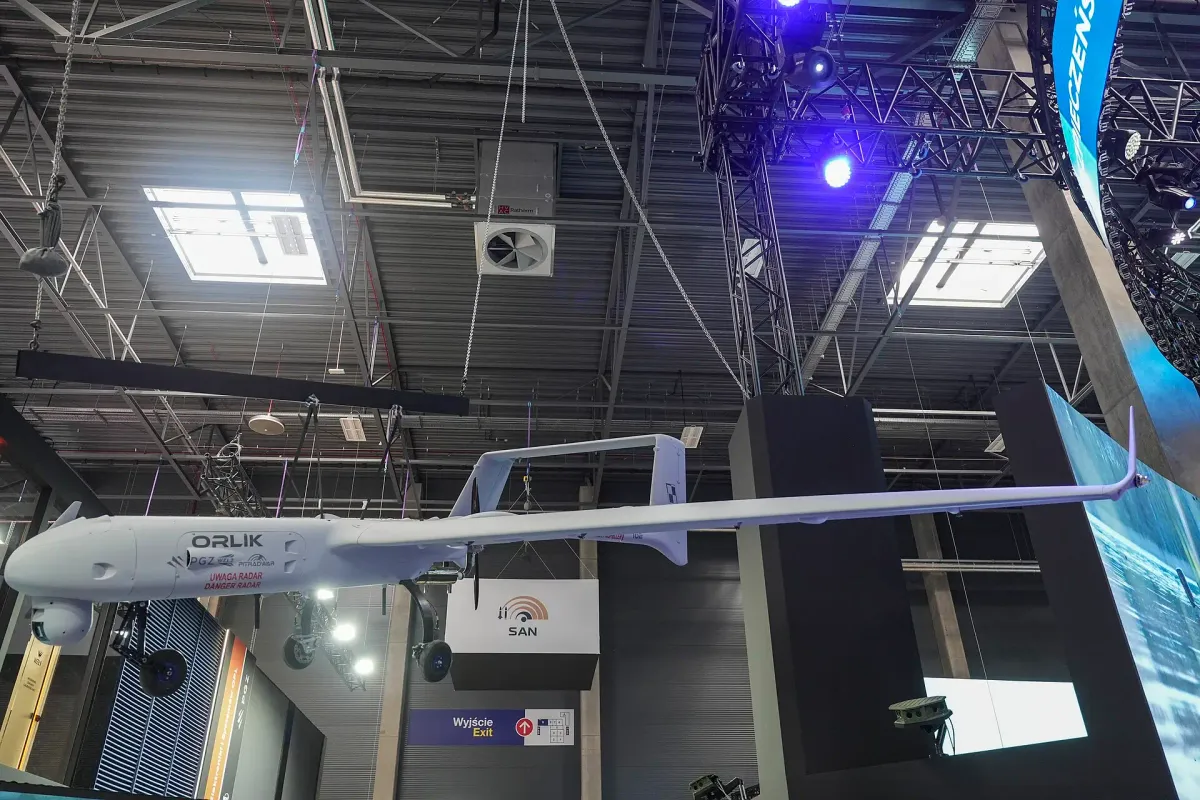
Several Polish defense-industry programs, including Wizjer, Orlik and DragonFly, are at different stages of development, but according to Onet they may share a common problem: lengthy development and procurement cycles. In the case of Wizjer, it is particularly striking that the system’s requirements were established before the full-scale war in Ukraine.
Questions have also been raised in the Polish parliament about the status and delays of these programs.
Bureaucratic risk aversion can also be an obstacle. If the military were to make minor modifications to an existing, inexpensive drone to adapt it for frontline use, this could potentially void the manufacturer’s warranty. For an officer, this is not merely a technical issue but also a matter of personal responsibility. As a result, an army may possess equipment but still hesitate to modify it quickly in response to battlefield experience.
One of the key questions in the debate is therefore how much of a role mass-deployable autonomous systems should play alongside traditional, extremely expensive weapons platforms. Onet cites Poland’s order for 96 AH-64E Apache attack helicopters as an example. According to the journalists, some voices within military circles have suggested that fewer helicopters might have been sufficient and that the remaining funds could have been spent on drones. This, however, is an opinion expressed in the podcast, not an officially established Polish military requirement.
Poland is meanwhile trying to catch up. In February 2026, Bydgoszcz-based Wojskowe Zakłady Lotnicze Nr 2 and PGZ held open tests showcasing airborne and ground-based strike, reconnaissance, evacuation and transport systems, as well as counter-drone technologies. Donald Tusk and Defence Minister Kosiniak-Kamysz also attended the demonstration.
Modern drone warfare is also becoming less and less about the aircraft themselves. Longer-range autonomous systems require advanced communications and navigation infrastructure, satellite connectivity, artificial intelligence, electronic warfare capabilities and real-time data processing.
The war in Ukraine is continuously accelerating this technological competition. The emergence of the Geran-5 also demonstrates how the boundary between conventional strike drones and cruise missiles is becoming increasingly blurred.
The Polish military therefore faces two challenges at once: it must continue developing high-performance conventional weapons systems while also preparing for an era of warfare in which cheap, mass-produced and rapidly upgradeable autonomous systems will play a decisive role.