Cracks in Poland’s Right: Is PiS Falling Apart?
For a long time, it seemed that the return to power of Poland’s illiberal right – allied with Orbán and highly effective at blocking Donald Tusk’s government – was merely a matter of time. But those plans could now be derailed by an emerging split within the party.
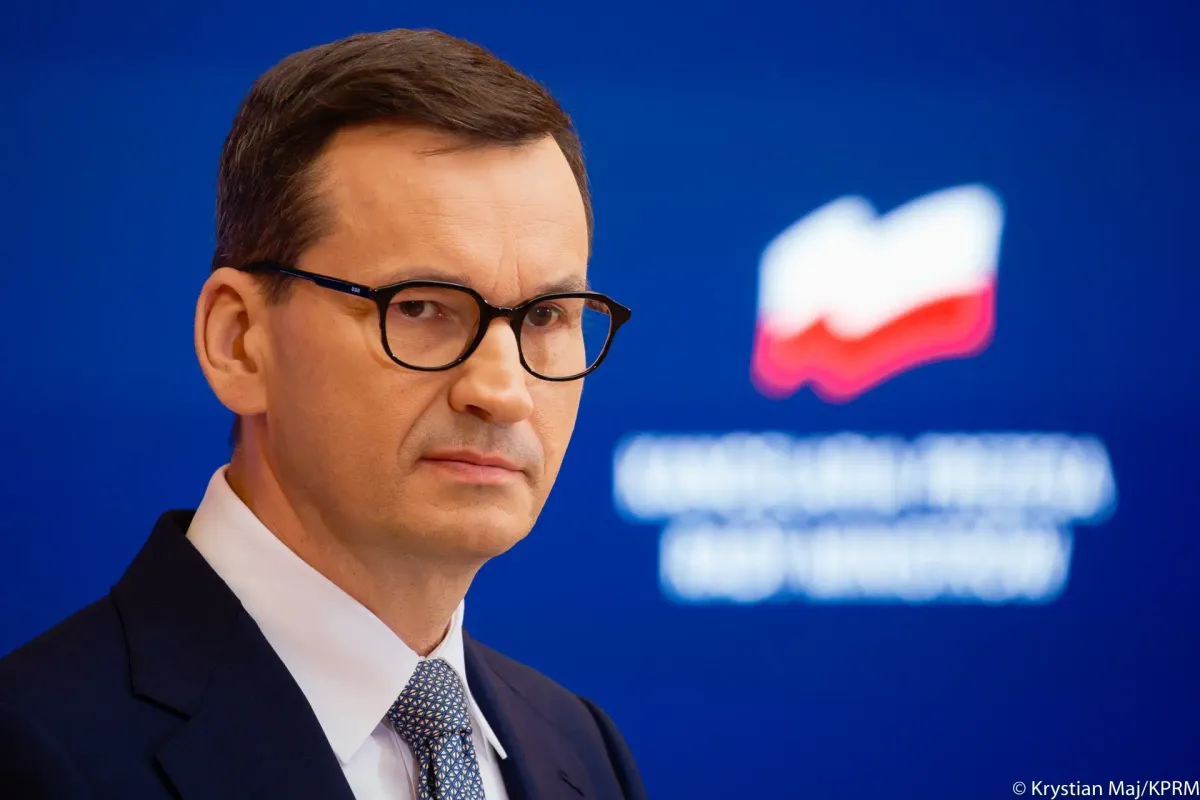
In recent weeks, Poland’s right wing has entered one of the deepest internal crises in its history. The conflict between Law and Justice (PiS) leader Jarosław Kaczyński and former Prime Minister Mateusz Morawiecki has led to an open break: at the end of July, more than thirty PiS MPs left or were expelled from the party after refusing to sign a loyalty declaration demanded by Kaczyński.
The conflict is about more than a personal rivalry. In April, Morawiecki established an organisation called Development Plus (Rozwój Plus), initially presenting it as a political platform operating alongside PiS and focusing on economic development and modernisation. Kaczyński, however, saw it as a dangerous challenge to his position as party leader and to PiS unity, and called on the party’s MPs to sever their ties with the outside organisation.
Morawiecki refused to do so and formed an independent parliamentary group with around 40 MPs and one senator. At the beginning of August, he also announced that the group would transform into a new political party, which is expected to be formally registered in the autumn.
The stakes are therefore higher than those of a simple party split. PiS governed Poland for eight years between 2015 and 2023 and, although it lost the ability to form a government after the 2023 election, it remained the country’s largest opposition party. It now faces challenges from three directions at once: Morawiecki’s new party could target more moderate right-wing voters, Konfederacja is strong on the radical right, while President Karol Nawrocki could also emerge as an independent political centre of gravity.
Nawrocki’s position is particularly interesting. The PiS-backed candidate was elected president in 2025, but since then he has not simply acted as an extension of Kaczyński’s political influence. The presidency is increasingly emerging as an independent centre of power, while Nawrocki and Donald Tusk’s government remain locked in continuous political and institutional conflict. According to Balkan Insight, the PiS crisis coincides with Nawrocki’s efforts to define his own role on the Polish right.
The situation could benefit Donald Tusk in the short term: a divided opposition will find it harder to mount a united challenge to the government. In the longer term, however, the opposite could also happen. A more moderate, economically focused right-wing party led by Morawiecki could appeal to voters who no longer want to vote for PiS but are equally unwilling to support Tusk’s camp.
The Polish right could therefore undergo a fundamental transformation before the next parliamentary election, which must be held by 2027 at the latest. The twin race has suddenly become a multi-player contest. The key question will be who can claim the position of the leading force among Poland’s conservative voters: Kaczyński, Morawiecki, Nawrocki or Konfederacja. If PiS does indeed split into several factions, Poland could enter the next election with a multipolar right that could simultaneously pose a threat to Tusk’s government and to the political legacy of the old PiS system.