For industrialised, export-oriented CEE countries, the EU–Mercosur agreement is incrementally beneficial
Only Poland has strong structural reasons for concern, while Hungary, Czechia and Slovakia stand to benefit from expanded industrial exports.
A collection of 236 posts
Only Poland has strong structural reasons for concern, while Hungary, Czechia and Slovakia stand to benefit from expanded industrial exports.
The aftermath of Trump’s Venezuela move remains unclear, but CEE states are likely to be impacted indirectly by oil prices and EU sanctions.
Despite expectations, the EU–Mercosur deal was not signed and stances of CEE countries remain divided.
Support for EU membership in Poland remains high, but the share of those who would favour leaving the Union now exceeds 10 percent.
Poland’s economic weight is undoubtedly increasing in the region, with Polish-German economic relations and political tensions deepening.
Romania is projected to see modest growth and a gradual narrowing of the budget deficit over the next three years.
More and more migrants enter the EU via its northeast border, making Poland a buffer against Moscow’s politically driven bid to destabilize Europe.
Over the past decade and a half, Poland has undergone a remarkable economic transformation, and in several key indicators it is now comparable with Japan. The question many economists are asking is: what is Poland’s secret, and how has it managed to outpace its Central European peers?
If the EU decides to approach Moldova separately, it would depart from recent EU practice of advancing Moldova, Ukraine and Georgia as a group under the "Association Trio" framework.
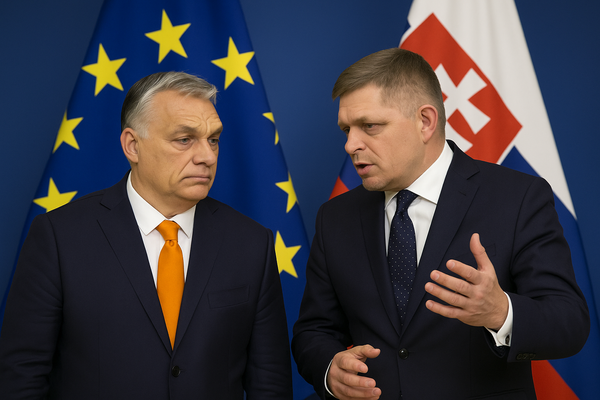
Hungary and Slovakia have emerged as the most vocal opponents of two of the EU’s most consequential reform proposals: plans to phase out Russian energy imports and to overhaul the bloc’s long-term budget to prioritise defence, climate and digital transition. EU mulls ban of new Russian energy contracts
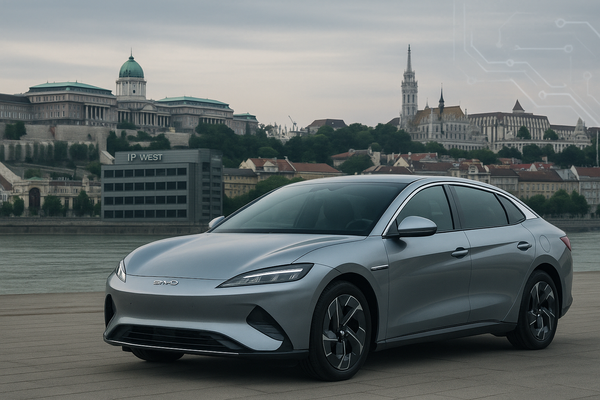
Chinese electric vehicle (EV) manufacturer BYD on 15 May signed an agreement with the Hungarian government to relocate its European headquarters to Budapest's 11th District, alongside two major research and development projects. The announcement marks the latest phase in BYD's European expansion. Hungary's government
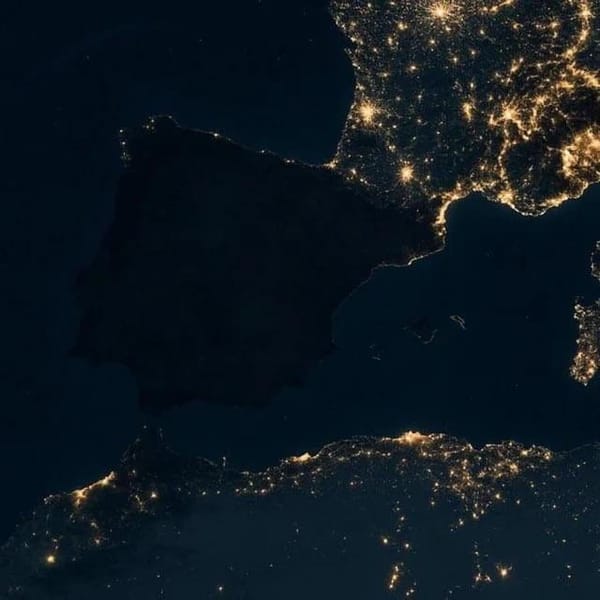
Hungary currently leads the world for share of solar energy in its energy mix, as it generated a quarter of its domestic electricity from photovoltaic panels in 2024. However, the recent massive blackout in Spain and Portugal served as a reminder of the challenges involved with high reliance on renewable

Romania and Poland have gender pay disparities among the lowest in the EU, according to Eurostat data published this month. In Central and Eastern Europe (CEE), Romania and Poland recorded the smallest gender pay gaps in 2023, at 3.6% and 4.5% respectively — both well below the EU average
Moldova and North Macedonia have been approved to join the Single Euro Payments Area (SEPA), marking a significant step in their integration with European financial systems. The countries will become operational members on October 5, after becoming compliant with SEPA regulations from April, the European Payments Council (EPC) announced on
Ukrainian President Volodymyr Zelenskyy called on European leaders to step up their efforts towards peace in Ukraine during a string of high-level phone calls on Friday, 21 February, including several with premiers of Central and Eastern Europe (CEE) countries. Zelenskyy stressed that Europe must act more decisively, in a televised