Bulgaria is turning – but in which direction?
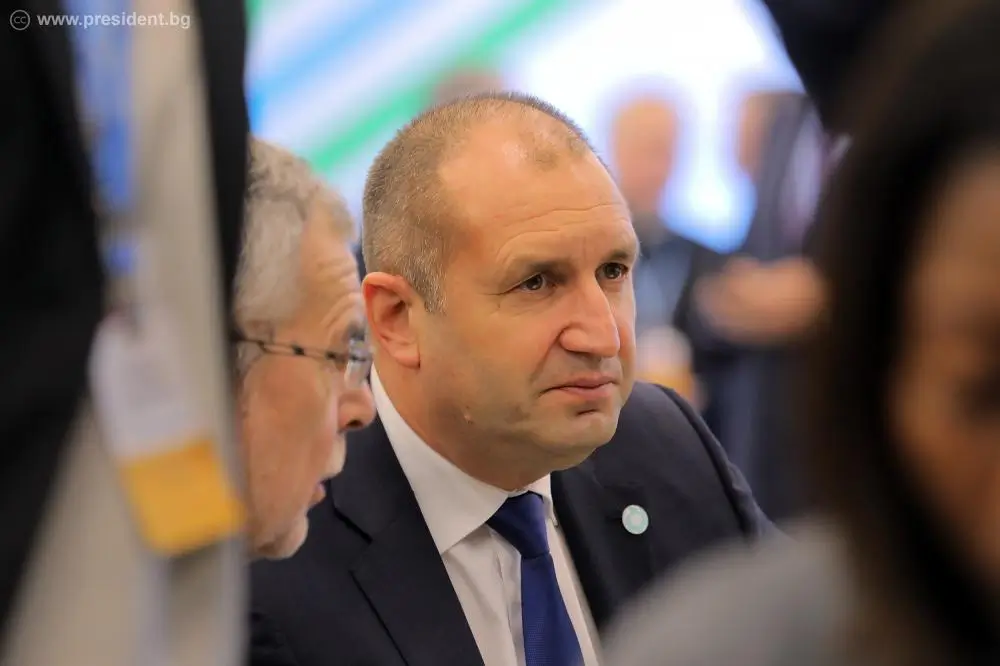
The April 2026 Bulgarian election is not just another domestic political episode, but a turning point whose significance goes beyond the country’s borders. The result – a landslide victory for Rumen Radev and the possibility of the first single-party government in nearly three decades – simultaneously reflects a societal demand for stability and the geopolitical uncertainties of the region.
In recent years, Bulgaria has been a textbook example of political instability: since 2021, eight elections have been held, while forming a durable government has proven extremely difficult. In this context, Radev’s victory is less an ideological shift than a systemic response: a significant share of voters simply want a functioning state. According to analyses, the vote represents “a clear mandate for stable governance and institutional reform.”
From a regional perspective, the first and most important implication is the potential return of stability. A single-party majority could end the coalition deadlocks that have so far slowed decision-making, particularly in key areas such as energy, the use of EU funds, and defence policy. At the same time, several analysts warn that “stability is not the same as reform.” This distinction is crucial for the Balkans as a whole, where political stability often goes hand in hand with a lack of reform.
The second, and perhaps even more important dimension, is geopolitics. Radev’s political profile reflects a particular balancing act: while committed to Bulgaria’s EU and NATO membership, he has repeatedly criticised EU policies and called for more open relations with Russia.
This “strategic ambivalence” is not unique, but increasingly characteristic of Southeast Europe: even alongside EU membership, a pragmatic or opportunistic eastern opening is emerging.
Regionally, this suggests that Bulgaria is unlikely to turn away from Western integration, but rather will seek to balance between different poles. This reflects a broader pattern seen across Central and Eastern Europe: formal commitment to the EU paired with a growing search for strategic autonomy. Some assessments suggest the election could result in “tightrope walking” between the EU and Russia.
A third key aspect concerns the EU itself. While a stable majority of Bulgarian society continues to support EU membership, the election outcome shows that this does not exclude eurosceptic or critical voices. The new government is likely to approach Brussels in a more pragmatic and transactional way, particularly on issues such as euro adoption and energy policy. Regionally, this could reinforce a trend in which EU cohesion remains formally intact, but political directions become increasingly diversified.
Finally, the internal logic of the election – marked by anti-corruption rhetoric and anti-elite sentiment – also extends beyond Bulgaria. The campaign focused heavily on corruption and the functioning of the state, issues that are similarly present across the Balkans and, more broadly, Central Europe.
This suggests that the election result is not an isolated phenomenon, but part of a wider regional pattern: voters are seeking stability and order, even if this leads to politically heterogeneous or ideologically ambivalent leadership.
Overall, viewed through a regional lens, the Bulgarian election sends three key messages. First, after prolonged instability, the demand for stability can legitimise significant concentrations of power. Second, geopolitical orientation is increasingly becoming a “grey zone,” where EU membership and relations with Russia do not necessarily exclude one another. Third, the Balkans – and to some extent Central Europe as a whole – remain a region where political dynamics are shaped simultaneously by internal structural challenges and external geopolitical forces.
The question is therefore not only where Bulgaria is heading, but also how effectively it can navigate multiple directions at once – and what kind of model this will offer for the rest of the region.