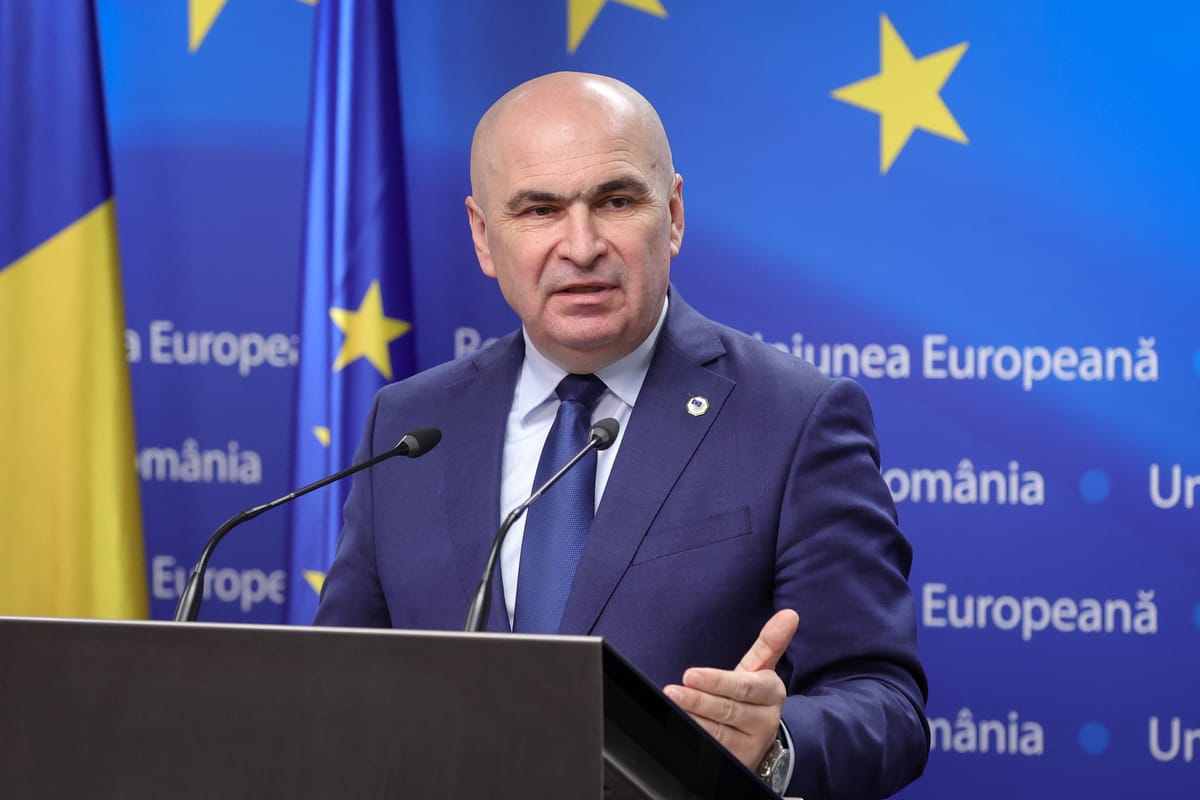
Romania plunged into political crisis as social democrats turn against Prime Minister Bolojan
Romania’s governing coalition fractured on Sunday evening when the Social Democratic Party (PSD), the country’s largest political force, voted in an internal referendum to withdraw its political support from Prime Minister Ilie Bolojan.
“He must go home,” PSD leader Sorin Grindeanu declared after the vote, referring to Bolojan, and gave the premier a three-day ultimatum to resign. If Bolojan refuses, PSD ministers are expected to quit the cabinet en masse at the next government meeting on April 23 - a step that would leave the government without a parliamentary majority and effectively paralysed.
What triggered the crisis
The roots of the split stretch back months. PSD has accused Bolojan - a liberal technocrat who took office about ten months ago as the PNL’s candidate for premier - of pursuing aggressive austerity measures without meaningful consultation with his coalition partners. The party cited rising inflation, a slide into recession, declining public investment, and a deterioration in living standards, particularly among pensioners.
More fundamentally, PSD leaders complained of a breakdown in coalition dialogue. “We entered this government in good faith, but from day one we were treated as political adversaries, not partners,” Grindeanu told Romanian television.
The battle lines
Bolojan has refused to step down. “I will continue to exercise my mandate as Prime Minister,” he said in a statement hours after the PSD vote, adding that “those who provoke crises must bear the consequences.” His party, the National Liberal Party (PNL), rallied behind him with a unanimous vote of confidence, and the junior coalition partner USR likewise declared its support.
PNL has gone further, signalling it may demand Grindeanu’s resignation from his post as President of the Chamber of Deputies - Romania’s third-highest state office.
What happens next
All eyes are now on President Nicușor Dan. PSD has indicated it will wait for the president to convene consultations at Cotroceni Palace before making its next move. Grindeanu has outlined two paths: either a new pro-European coalition is formed without Bolojan as prime minister — a scenario in which Grindeanu himself has not ruled out taking the role — or PSD moves into opposition entirely.
A motion of censure remains on the table, though Grindeanu has said PSD will not file one while its ministers are still in the cabinet. The arithmetic is daunting for any alternative majority: PNL and USR have pledged not to form a future coalition with PSD if the social democrats trigger a crisis, but without PSD’s seats, assembling a governing majority in Bucharest becomes extraordinarily difficult.
Regional implications
The crisis arrives at a sensitive moment for the European Union. Romania, with a population of nearly 19 million, is the bloc’s seventh-largest member state and a key NATO ally on its eastern flank. International observers have warned that prolonged political instability could jeopardise EU cohesion fund disbursements and affect the country’s credit rating. Politico reported that Romania is “sinking once again into political turbulence,” a pattern familiar to those who have followed Bucharest’s revolving-door governments over the past decade.
For Romania’s Central European neighbours, the standoff is a reminder that coalition politics in the region remain fragile, and that even large, nominally stable governing alliances can fracture rapidly when economic pressures meet political ambition. Whether the crisis resolves through compromise at Cotroceni or deepens into a full government collapse will be a test of the country’s democratic institutions - and of President Dan’s untested mediation skills.