Poland’s new space capability: A transformation of the regional security architecture
The deployment of the Polish military’s first sovereign operational satellite reconnaissance system may appear at first glance to be a straightforward military-technological development. In reality, however, it represents something far more significant: part of a deeper transformation of Europe’s security architecture whose strategic implications extend well beyond the technology itself.
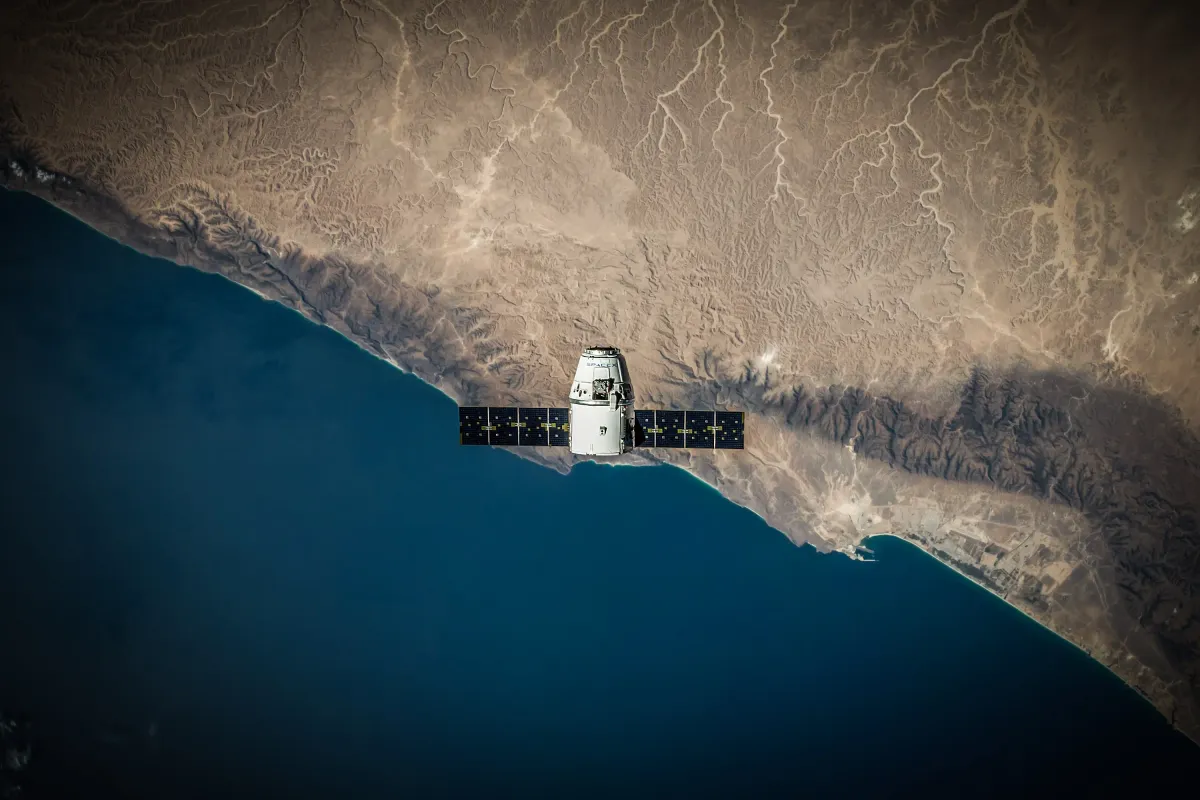
With the launch of four ICEYE satellites, Poland has acquired a capability that, according to the Polish press, was previously almost exclusively the privilege of major powers. Warsaw is no longer dependent solely on NATO allies or U.S. intelligence infrastructure for strategically important reconnaissance data. Instead, it is now capable of independently collecting, analyzing, and sharing satellite intelligence. This is particularly significant at a time when the war in Ukraine has fundamentally reshaped Europe’s security environment — and when questions are increasingly being raised about how long Europe can rely on unrestricted access to American satellite intelligence.
In the decades following the Cold War, the security thinking of Central European states was primarily defined by NATO’s collective defense system. The war in Ukraine, however, has demonstrated that in modern conflicts, information superiority, rapid response capabilities, and sovereign intelligence assets have acquired dramatically greater strategic importance. In a region where Russian military activity has become a direct security concern, real-time reconnaissance capabilities are no longer merely a technological advantage, but a national security necessity.
Poland’s current strategy clearly reflects this reality. In recent years, Warsaw has deliberately sought not merely to serve as a “frontline state” facing Russia, but to position itself as one of NATO’s key military and technological centers on the Alliance’s eastern flank. Record-breaking defense spending, large-scale American and South Korean arms purchases, rapid military expansion, and investments in cyber and space capabilities all point in the same direction: Poland views Russia as a long-term, structural threat and is reshaping its defense strategy accordingly.
In this context, the “sovereignty factor” of the newly deployed system is especially important. Polish officials emphasize that the data is now collected and controlled independently by Poland itself. This is not simply a technological issue; it also represents political and strategic autonomy. Receiving intelligence from allies is fundamentally different from obtaining it through one’s own systems and according to one’s own priorities. Sovereign intelligence infrastructure increases strategic flexibility, accelerates decision-making, and expands national room for maneuver during crises.
The technological significance of the system itself is also considerable. The satellites use SAR (Synthetic Aperture Radar) technology, allowing them to operate regardless of weather conditions or time of day. Unlike optical systems, SAR satellites can observe targets through cloud cover and during nighttime operations. Based on the lessons of the war in Ukraine, this capability has become critically important, as the speed and continuity of information gathering are often decisive factors in modern warfare.
The development also highlights another important trend: the gradual democratization of space technology. In the past, only global powers could afford sovereign military satellite infrastructure. Today, however, new generations of smaller, cheaper, and rapidly deployable satellite constellations are enabling medium-sized states to build independent global surveillance capabilities. Over the longer term, this could reshape not only Europe’s security architecture, but also the internal balance of power within NATO itself.
Poland is no longer merely a consumer of intelligence information; it is increasingly becoming an active producer and provider of it. This strengthens Warsaw’s political weight within the Alliance, particularly regarding security issues on NATO’s eastern flank.
The newly deployed satellites are therefore more than technological assets. They are also symbols of a new Polish strategic doctrine: the recognition that in 21st-century geopolitical competition, informational and technological sovereignty may become just as important as traditional military power itself.