A New Era in Hungary: The Tisza Government Takes Office
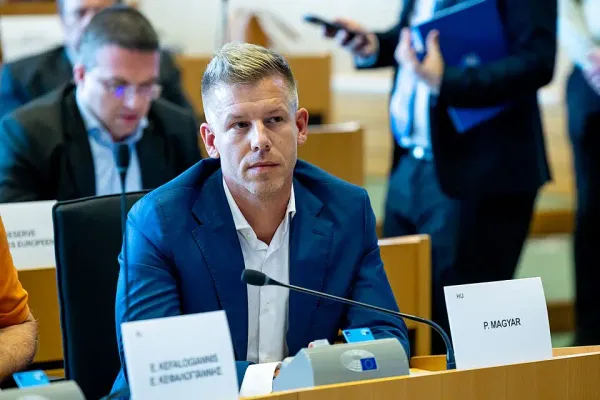
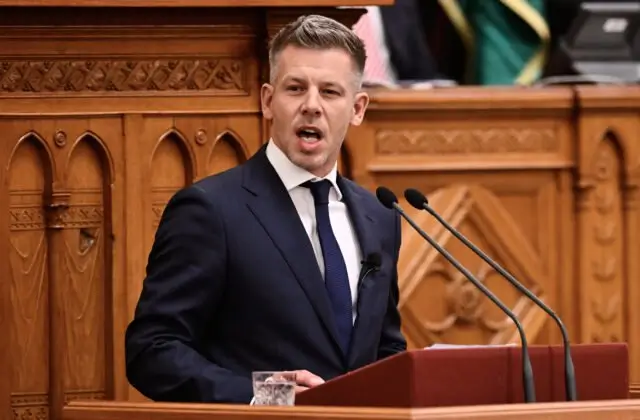
After 16 years of Fidesz rule, Hungary’s parliament on Tuesday approved the new government led by Prime Minister Péter Magyar.
Hungary entered a historic new political chapter in the spring of 2026. Following the victory of the Tisza Party, the country’s new administration represents a clear break – both structurally and ideologically – from the centralized governing model of the past decade and a half. The cabinet’s stated ambition is to build a modern, European and transparent state administration where professional integrity, rather than political loyalty and informal networks, becomes the defining principle of governance.
The Prime Minister: Péter Magyar
Prime Minister Péter Magyar rose to the top of Hungarian politics with a background in European diplomacy and experience in Brussels. As head of government, his central promises include restoring the rule of law, rebuilding a functional and humane state, securing access to suspended EU funds, and establishing a new “social contract” in which the state serves its citizens – rather than the other way around.
The Government’s Brain Center: The Prime Minister’s Office
Government coordination is overseen by Bálint Ruff, the minister heading the Prime Minister’s Office. Coming from a background in strategic analysis and political campaigning, Ruff is tasked with improving government efficiency and ensuring greater clarity and discipline in political communication. His priorities include reducing bureaucracy, uncovering corruption cases linked to the previous administration, and opening decision-making processes to professional and civil organizations.
Diplomacy and Security as Pillars of the New Administration
Restoring Hungary’s international credibility is the responsibility of Foreign Minister and Deputy Prime Minister Anita Orbán, who comes from the multinational corporate sector. Her appointment is widely seen as a signal of Hungary’s renewed commitment to NATO and to a more constructive role within the European Union.
Alongside her, Defense Minister Romulusz Ruszin-Szendi – former Chief of the General Staff of the Hungarian Armed Forces – is leading military reform efforts focused on modern technologies and a highly professionalized force structure.
Internal security and law enforcement fall under Interior Minister Gábor Pósfai, another figure recruited from the international corporate world and explicitly positioned as a civilian reformer. His stated goals include restoring the prestige of the police force and implementing zero tolerance toward corruption.
Economic Modernization and Stability
The government’s economic team emphasizes pragmatism and long-term stability. Finance Minister András Kármán, who has experience both in government and banking, is responsible for maintaining fiscal discipline and preparing the groundwork for eventual euro adoption.
Minister for the Economy and Energy István Kapitány – formerly a senior executive at Shell – brings extensive international business experience to the cabinet. He oversees Hungary’s green energy transition and innovation-driven economic strategy.
Responsibility for transportation networks and strategic infrastructure projects lies with Dávid Vitézy, former candidate for mayor of Budapest and former transport state secretary, who is known as a strong advocate of sustainable mobility and railway development.
Human Capital and Social Justice
The government places particular emphasis on future generations and public welfare systems.
Judit Lannert, Minister for Children and Education, is overseeing a comprehensive overhaul of the education system, with a focus on teacher autonomy and modern skills development.
Health Minister Zsolt Hegedűs, a surgeon by profession, is working to create a more patient-centered healthcare system and transparent waiting-list management. Following the Tisza election victory, however, he has already become internationally recognizable after videos of his celebratory dance spread widely online.
Vilmos Kátai-Németh, Minister for Social and Family Affairs, is tasked with modernizing social support systems and addressing demographic challenges. He is also the first blind minister in modern Hungarian history.
Justice Minister Márta Görög is responsible for establishing stronger legal guarantees for prosecutorial independence and judicial impartiality. During her parliamentary hearing, she also pledged to launch a broad societal constitutional dialogue process.
Rural Development, Environment and Culture
The government also places strong emphasis on sustainability and local communities.
Szabolcs Bóna, Minister for Agriculture and Food Economy, advocates sustainable farming and greater competitiveness for Hungary’s food industry. He himself is a successful agricultural entrepreneur from western Hungary.
Viktória Lőrincz, Minister for Regional and Rural Development, oversees the restoration of local government powers and policies aimed at revitalizing smaller towns and villages.
László Gajdos, Minister for the Living Environment, focuses on climate protection, water management and biodiversity preservation. Before entering politics, he served as a zoo director.
Zoltán Tarr, Minister for Social Relations and Culture, is tasked with strengthening civic dialogue and ensuring the conditions for a free cultural and artistic life. Before his political career, he also served as a Reformed Protestant pastor.
Zoltán Tanács, Minister for Science and Technology, oversees research and development policy and the restoration of academic freedom within Hungarian universities and research institutions.
A Different Type of Government
This is the first government in the history of Hungarian democracy in which the majority of ministers are not traditional party operatives, but recognized experts in their own professional fields. The cabinet is also supported by advisers and commissioners such as world-renowned opera singer Andrea Rost and prominent social policy expert Kriszta Bódis, known for her work on Roma inclusion.
Taken together, the new administration presents itself as a sharp departure from the power-centered and heavily political governing philosophy of the previous era.