Government crisis in Poland?
One of Poland’s governing parties is splitting – but why, and what could this mean for the government? At its core, the dispute appears to stem from personal rivalries that quickly escalated beyond internal disagreements.
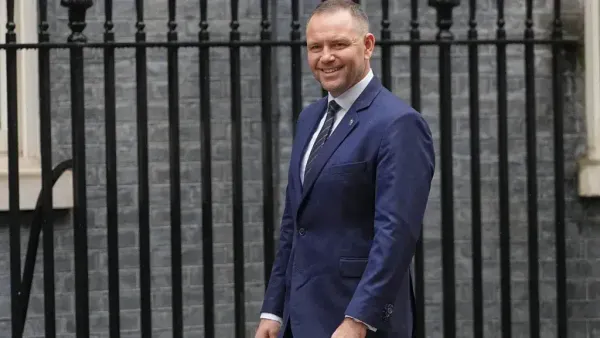
A key pillar of Poland’s governing coalition, the centrist Polska 2050, has undergone a visible internal split, leading to the creation of a new parliamentary grouping. Around 15 MPs and several senators have left the party to form a new faction called “Centrum.” The developments were reported in detail by Brussels Signal, which described the split as a serious blow to the centrist pillar of the ruling coalition.
The immediate trigger for the internal conflict was the party’s leadership election in January, in which Katarzyna Pełczyńska-Nałęcz was elected as party leader. Following the vote, strategic and personal tensions intensified, ultimately resulting in the parliamentary caucus breaking in two. An analysis by Notes from Poland points out that support for Polska 2050 has declined significantly in recent months, further sharpening internal debates over the party’s direction and political future.
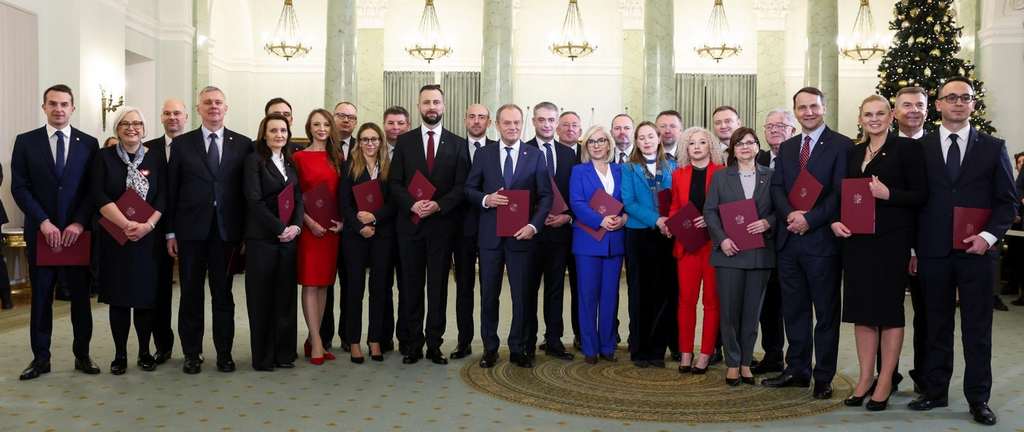
Prime Minister Donald Tusk has sought to calm political turbulence. According to a report by the Polish state news agency PAP, Tusk stressed that the government’s parliamentary majority remains stable and that the departing MPs have also pledged continued support for the coalition. Nevertheless, the split highlights that the internal cohesion of the Koalicja 15 Października, which came to power in 2023, cannot be taken for granted.
The conflict within the party is not only organizational but also narrative in nature. The party’s founder and former leader, Szymon Hołownia, has argued in multiple statements that the split was driven by personal tensions linked to Pełczyńska rather than substantive programmatic differences.
Meanwhile, Poland’s prosecution service has issued an arrest warrant for former justice minister Zbigniew Ziobro, who is suspected of 26 criminal offenses, including leading an organized criminal group and abuse of power. Ziobro, however, has been granted asylum in Hungary. In addition, on February 19 a European arrest warrant was issued for former deputy minister Marcin Romanowski, who was also granted asylum in Hungary in December 2024. This has generated serious diplomatic tensions between Warsaw and Budapest.
Although the immediate collapse of the government does not appear to be a realistic scenario, the fragmentation of a junior coalition partner could weaken the cabinet’s room for maneuver in the longer term. Parliamentary arithmetic may not change dramatically for now, but the political signal is clear: the centrist space in Polish politics is undergoing realignment, creating strategic uncertainty ahead of the next electoral cycle. The next parliamentary election in Poland is expected in 2027. According to current polling data, Tusk’s party (KO) leads with 34 percent, but the coalition as a whole would likely lose its parliamentary majority if elections were held today.