Gdańsk's Message: Ukraine's Reconstruction Is Also About Central Europe's Future
The central theme of the Ukraine Recovery Conference 2026 (URC 2026) in Gdańsk was financing Ukraine's post-war reconstruction. But the conference was also about something even more important: which countries in Central Europe will emerge as the economic winners of the next decade, and which will be able to link their own development to Ukraine's reconstruction.
Held on 25–26 June, URC 2026 was not merely a donor conference. It also served as a regional economic policy forum where Western governments, international financial institutions and private investors discussed not only the post-war period but also investments that are already taking place today. The conference's official objective was to mobilize international capital, support Ukrainian businesses and accelerate the country's European integration.
The conference's most tangible outcome was the announcement that Ukraine is expected to sign more than 160 agreements worth over €10 billion. These cover projects in energy, transport, logistics, housing and business development. In addition, the World Bank announced a $3.39 billion Development Policy Operation designed to stimulate economic growth and job creation.
The European Union also made a significant announcement, releasing the first €3 billion tranche of its approximately €90 billion financial package intended to support Ukraine's fiscal stability, energy resilience and defence spending. European Commission President Ursula von der Leyen stressed that rebuilding Ukraine is simultaneously an investment in Europe's own future.
The European Bank for Reconstruction and Development (EBRD) likewise announced more than €500 million in new investments, primarily targeting the energy sector, critical infrastructure and private-sector financing. This demonstrates that international financial institutions are no longer thinking solely in terms of emergency assistance, but are committing to a long-term economic presence in Ukraine.
From a Central European perspective, however, the conference's most important message was not the total value of the agreements signed, but Poland's strategic positioning. Warsaw made it clear that it does not intend to be merely one of Ukraine's supporters. Instead, it aims to become the leading European logistics, financial and business hub for Ukraine's reconstruction. Over the past four years, Polish ports, railways, road corridors and financial service providers have effectively become Ukraine's western gateway. The Gdańsk conference sought to institutionalize this role.
This is particularly significant because Ukraine's reconstruction is expected to become Europe's largest economic project since the Second World War. According to the joint assessment of the World Bank, the European Commission and the United Nations, the cost of rebuilding Ukraine over the next decade has risen to approximately $588 billion.
Competition for this opportunity extends well beyond Western European multinationals. Polish construction companies, logistics providers, energy firms and financial institutions are already positioning themselves to secure a share of reconstruction contracts, while Warsaw seeks to ensure that a substantial portion of international investment reaches Ukraine through Polish channels.
This strategy also presents a challenge for the rest of Central Europe. Hungary, Romania, Slovakia and the Czech Republic all hope to benefit from Ukraine's reconstruction, yet none currently enjoys Poland's logistical advantages or political standing. As a result, the coming years are likely to bring competition not only for access to the Ukrainian market itself, but also for the role of intermediary for international investment.
This competition will be particularly important in energy, transport and digital infrastructure, sectors that will permanently integrate Ukraine into the European economy and reshape regional supply chains.
One of the conference's notable innovations was that participants no longer treated economic reconstruction and security policy as separate issues.
Energy security, critical infrastructure, cybersecurity and defence industrial development were discussed alongside the rebuilding of housing and transport infrastructure. Western partners increasingly view these elements as inseparable, arguing that sustainable investment can only take place if Ukraine is capable of guaranteeing its own long-term security. This reflects a broader shift in thinking: Ukraine's reconstruction is no longer simply a humanitarian or development policy issue, but an integral part of Europe's security strategy.
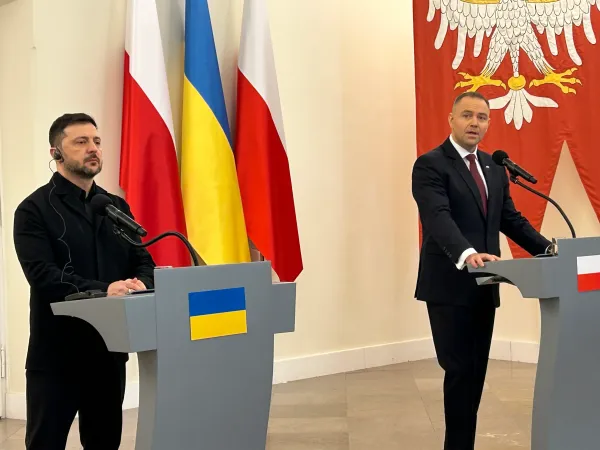
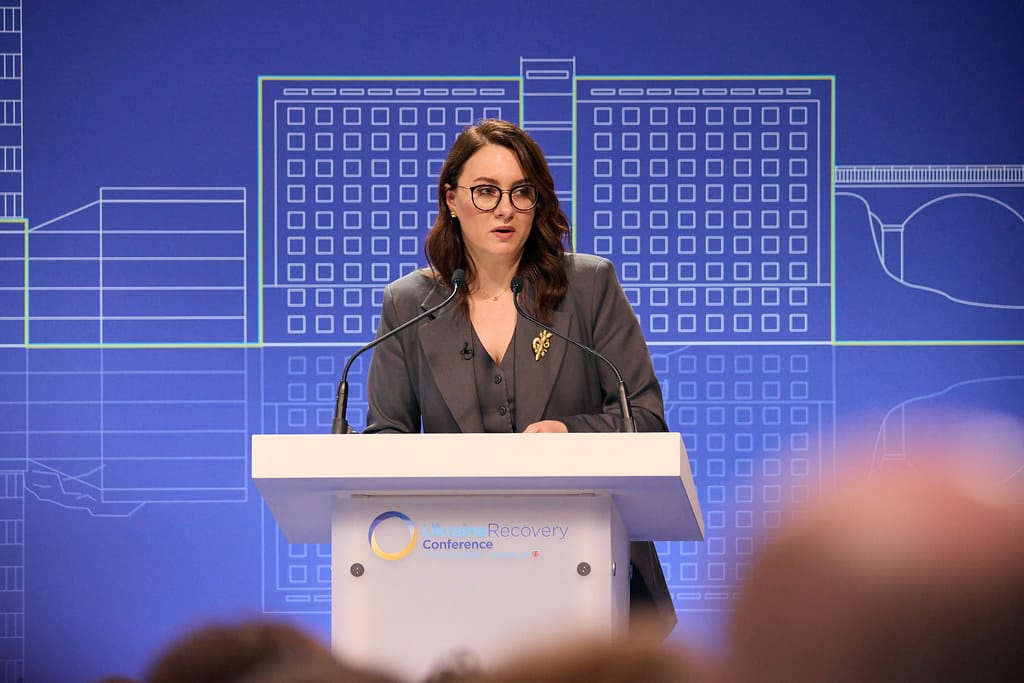
The conference was nevertheless overshadowed by renewed tensions in Polish-Ukrainian historical relations. Ukrainian President Volodymyr Zelenskyy did not attend the meeting in Gdańsk, with First Deputy Prime Minister Yuliia Svyrydenko leading the Ukrainian delegation instead. Behind the scenes, a renewed diplomatic dispute over the memory of the Volhynia massacres during the Second World War has strained bilateral relations in recent weeks. Polish Prime Minister Donald Tusk nevertheless sought to make clear that historical disagreements should not undermine European support for Ukraine or cooperation on reconstruction.
Ultimately, the message from Gdańsk was that rebuilding Ukraine is no longer a task to be postponed until after the war. Reconstruction is already underway, and it is increasingly shaping the economic landscape of Central Europe itself.
One of the region's defining questions over the coming decade will be which countries are able to integrate themselves into this transformation. Poland has made its ambition to become the regional leader unmistakably clear. For the rest of Central Europe's economies, the challenge will be to determine how successfully they can participate – as suppliers, logistics partners or financial intermediaries – in what is set to become Europe's largest reconstruction programme in modern history.