New Ukrainian - Polish Dispute: Allies Clash Over the Past
Poland's support has been one of the pillars of Ukraine's resilience since the start of the war. Now, that seemingly stable alliance has come under strain in a dispute that could have implications for broader regional cohesion and even the course of the war.
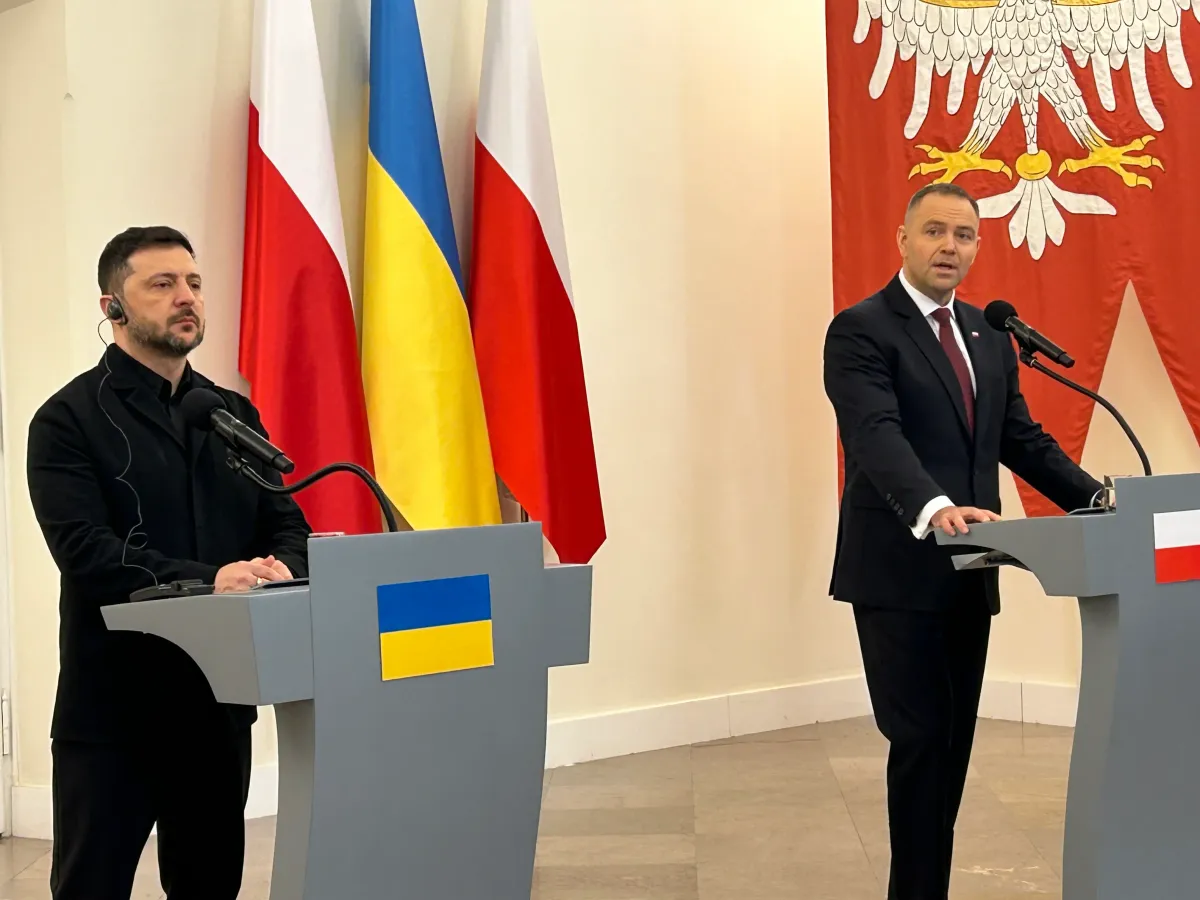
While Poland remains one of Ukraine's most important military and political supporters in its war against Russia, one of the most sensitive historical disputes between the two countries has resurfaced in recent weeks. At the centre of the controversy is a decision by Ukrainian President Volodymyr Zelenskyy, who in late May granted one of Ukraine's Special Operations Forces units the honorary title "Heroes of the UPA." The move triggered immediate political and public backlash in Poland, where the name of the Ukrainian Insurgent Army (UPA) is primarily associated with the Volhynia massacres.
According to Reuters, the reaction was so strong that Polish President Karol Nawrocki requested an assessment of whether Zelenskyy should be stripped of the Order of the White Eagle, Poland's highest state decoration, which he received in 2023.
The Ukrainian Insurgent Army was a nationalist armed formation that operated during and after the Second World War. In Ukraine, many regard the UPA as a symbol of the country's struggle for independence, as it fought against Soviet rule.
In Poland, however, the UPA is primarily associated with the ethnic cleansing campaigns carried out in Volhynia and Eastern Galicia between 1943 and 1945. According to Polish historians and official remembrance policy, approximately 100,000 Polish civilians were killed during these attacks. Warsaw officially recognizes these events as genocide.
Reuters provides a detailed overview of the historical background of the dispute:
The decision has provoked criticism well beyond conservative and nationalist circles. Poland's Ministry of Foreign Affairs issued an official statement expressing concern, arguing that such decisions risk weakening Polish-Ukrainian relations and providing ammunition for Russian propaganda.
At the same time, Prime Minister Donald Tusk sought to de-escalate the dispute. Speaking to Reuters, he stressed that direct dialogue between the two countries was essential, arguing that under the current geopolitical circumstances neither side could afford a deterioration in relations.
Polish Defence Minister Władysław Kosiniak-Kamysz adopted a firmer tone, publicly calling on Kyiv to reverse the decision. The statement was reported by Poland's state news agency PAP:
The Ukrainian leadership has also attempted to ease tensions. Ukrainian Foreign Minister Andrii Sybiha stated that the naming decision was not intended as an anti-Polish gesture. In comments to Reuters, he emphasized that the soldiers of the unit wished to honour those who had fought against Soviet and Russian imperial domination. He also called for continued dialogue between the two countries.
Ukrainian officials further noted that progress has recently been made on historical reconciliation issues, particularly regarding the exhumation of Polish victims of the Volhynia massacres.
The significance of the dispute extends far beyond the name of a military unit. In recent years, Warsaw and Kyiv have deliberately sought to keep historical disagreements in the background in light of the Russian threat. Since the beginning of the war, Poland has been one of Ukraine's most important partners, playing a crucial role in arms deliveries, military logistics, and the reception of Ukrainian refugees.
For this reason, the current controversy serves as a reminder that unresolved historical issues continue to exist in Polish-Ukrainian relations and retain the potential to trigger political crises. The memory of the Volhynia massacres remains deeply embedded in Polish society, while in Ukraine the UPA continues to be viewed by many as a symbol of the national struggle for independence.
The gap between these two historical narratives is not new. However, the latest dispute demonstrates that despite strong common security interests, historical memory remains one of the most difficult and sensitive issues in Polish-Ukrainian relations.