Călin Georgescu released into house arrest
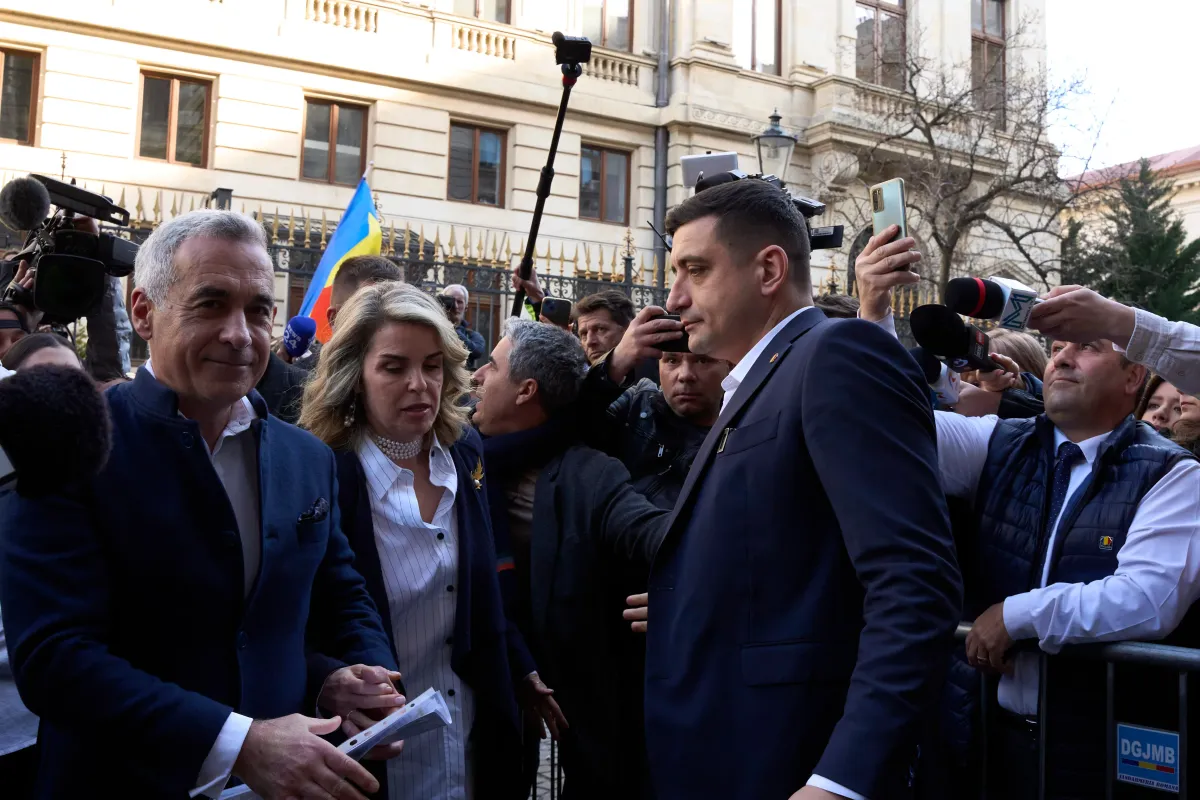
Călin Georgescu, the pro-Russian candidate who surprisingly finished first in the first round of Romania's cancelled 2024 presidential election, was released from Bucharest's Central Detention Center on Monday, November 23, after spending nearly two months in pretrial detention. He left the facility at about 5 p.m. and will remain under house arrest, wearing an electronic monitoring bracelet. According to Euronews Romania, he must also periodically inform the court about his means of subsistence.
The Bucharest Court of Appeal dismissed as unfounded the appeal filed by the organised crime prosecutors of DIICOT against an earlier Bucharest Tribunal ruling that had replaced his pretrial detention with house arrest. The decision is final.
Earlier this month, Georgescu was indicted together with his associate Ionel Rusen for forming an organised criminal group and for fraud with particularly serious consequences, with alleged losses exceeding EUR 1.1 million. According to investigators, businessman Răzvan Leu was persuaded to invest in a precious-metals venture that required a EUR 6 million credit line. Georgescu allegedly directed him to Rusen, who later introduced an Italian citizen as the representative of a Swiss bank.
Georgescu rejected the accusations after his release. "I would like to contradict you: I was not under arrest," he told reporters when asked about his time in detention. "I was born a free man, and I will remain free." After thanking his family, lawyers and supporters, he once again described the case as politically motivated: "I am innocent in yet another case fabricated for political reasons, something understandable in a dictatorship."
According to News.ro, dozens of his supporters gathered outside the detention center, chanting his name as he walked out.
Georgescu rose to prominence in November 2024, when he unexpectedly won the first round of the presidential election. The vote was later annulled by Romania's Constitutional Court, and the case has remained one of the most divisive issues in Romanian politics ever since.
The case fits a broader regional pattern. Across Central and Eastern Europe, outsider and sovereigntist politicians critical of the European Union and of support for Ukraine have gained ground in recent years, often relying on social media rather than traditional party structures. At the same time, a growing number of such figures have faced legal proceedings, fuelling a recurring debate over whether these cases reflect the rule of law at work or politically motivated prosecutions, as their supporters claim. Georgescu's situation nevertheless stands out. The annulment of an EU member state's presidential election over alleged campaign manipulation remains unprecedented, and it has turned his legal battles into a test case for how European democracies respond to concerns about online influence and foreign interference.