
What’s next in 2026 for Central and Eastern Europe?
Can CEE develop a realistic policy response that shields the region from Europe’s structural decline?
Economic pressures across Central and Eastern Europe (CEE) are reshaping political dynamics, contributing to government changes and strengthening Eurosceptic and populist forces in several countries. While these movements have capitalised on public dissatisfaction driven by inflation, weak growth and declining competitiveness, the same economic conditions may ultimately undermine their longer-term political viability.
CEE economies, closely tied to Germany’s performance, are slowing down. Even Poland — long regarded as the region’s growth frontrunner — is not immune to Germany’s downturn. While Warsaw can temporarily cushion the impact through strong domestic consumption, the sustainability of this strategy is yet to be seen. A similar pattern is evident in Hungary, where wage growth significantly outpaces underlying economic performance. Similarly, in its recent OECD Economic Outlook, the OECD highlights that while robust private consumption supports Czechia’s growth, the economy remains exposed to long-term vulnerabilities arising from rising trade barriers and geopolitical tensions, which could weigh on investment and export prospects.
As the EU struggles with stagnation and declining global competitiveness, a key question emerges: can CEE countries meaningfully insulate themselves from global economic headwinds, or develop credible and broadly supported policy responses to shared structural challenges?
Economic pressures and political uncertainty
Hungarian political analyst Péter Tölgyessy has described current economic and political developments as part of a broader “global system shift.” In his assessment, this shift entails a regime change across the Western world — reflected, but not confined to, Trump-era policies — alongside a power realignment in which Europe is experiencing gradual but potentially irreversible decline.
Tölgyessy points to long-term growth data to illustrate this trajectory: over the past two decades, EU economies have expanded by roughly 10 percent, compared with around 40 percent growth in the United States. Germany, once Europe’s economic engine, now underperforms even some of the poorest U.S. states, in terms of economic output. As a result, Europe’s relative decline has become a central concern across the political spectrum.
The 2025 U.S. National Security Strategy, reportedly issued — or at least partially leaked — by the White House reinforces this interpretation. The document suggests that the Trump administration is actively seeking allies among CEE countries and political forces that challenge the dominance of mainstream progressive agendas in Europe. It frames Europe as facing “civilizational erasure” due to internal challenges such as migration and demographic decline.
These themes resonate strongly in much of Central and Eastern Europe.
A distinct regional profile within the EU?
Recent electoral developments point to a broader pattern: many East-Central European governments are pursuing a more cautious or selective approach to EU integration, particularly in areas such as fiscal policy, migration, climate regulation and social policy.
Even Poland’s current pro-EU government shares positions with its regional neighbours — most notably its opposition to compulsory relocation mechanisms under the EU migration pact. Across the region, governments of varying ideological backgrounds express scepticism toward illegal immigration, deeper EU-level fiscal integration, climate measures perceived as undermining competitiveness, and progressive social agendas related to gender and family policy.
Ukraine policy remains a key exception. Poland continues to provide robust financial and military support, distinguishing itself from several neighbours.
Within this regional landscape, Hungarian Prime Minister Viktor Orbán stands out as an ideological entrepreneur, actively seeking to consolidate a like-minded bloc inside the EU.
The €90 billion loan and the East–West Divide
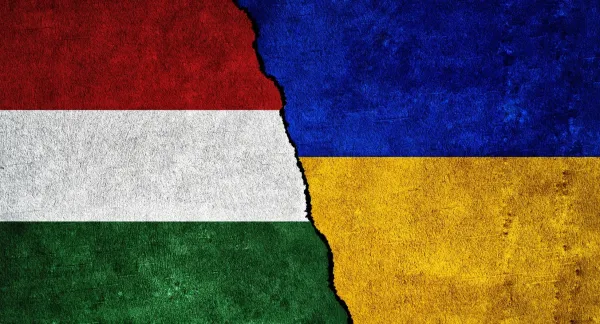
The recent decision by Czechia, Slovakia and Hungary to opt out of participation in the EU’s proposed €90 billion loan to Ukraine highlights this emerging divide between what could be described as a progressive West and a more paranoid East.
All three governments justified their stance primarily on economic grounds, arguing that participation would impose an undue burden on domestic taxpayers. Beyond fiscal concerns, scepticism also extends to the strategic rationale for continued financial and military support.
Opposition to joint borrowing also reflects deeper concerns about European integration itself. Both Orbán and Babiš argue that common debt instruments accelerate fiscal integration and erode national sovereignty.
No clear path through the global shift
Today, three of the four Visegrád countries are governed by populist forces. They came to power by effectively leveraging the broader European crisis — rising inflation, weak growth and declining competitiveness.
Yet these same dynamics may ultimately turn against them. While economic pressures helped Babiš return to power in Czechia, similar pressures could erode Orbán’s support in Hungary. More broadly, populist and Eurosceptic parties across the region face a structural dilemma: having capitalised on discontent, they now confront the challenge of delivering viable solutions.
As Tölgyessy argues, it may ultimately matter little which party wins elections in Hungary next year — or elsewhere in the region. The decisive factor is how individual countries adapt to the ongoing global system shift.