The Beneš dilemma is drawing attention in regional and European public discourse
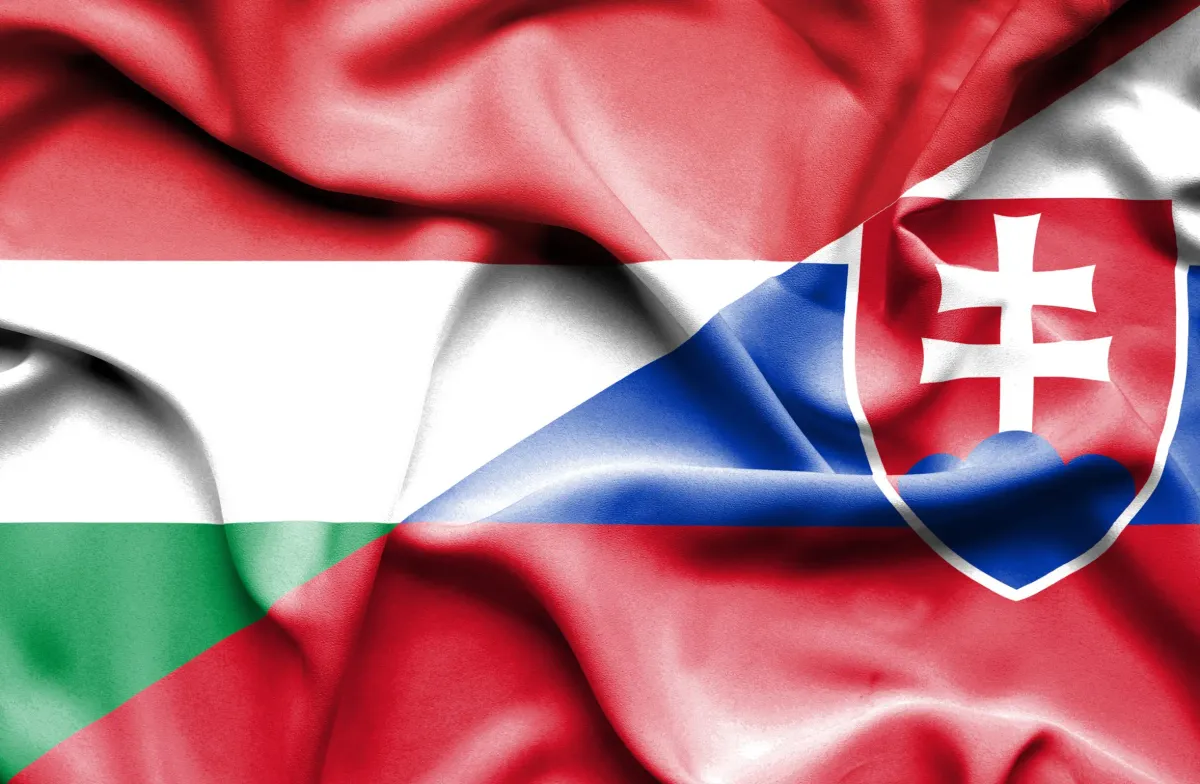
The issue of the Beneš Decrees, once again brought to the forefront, and the related Slovak–Hungarian disagreement have now appeared on the regional and European agenda as well.
As discussed in our earlier article, the Beneš Decrees resurfaced in early 2026 as a significant source of political tension in Central Europe, primarily affecting relations between Slovakia and Hungary. The Beneš Decrees were adopted in Czechoslovakia in 1945–46 after the Second World War and, based on the principle of collective guilt, enabled the withdrawal of citizenship, confiscation of property and expulsion of ethnic Germans and Hungarians. Although most states regard the historical context of the decrees as settled, their legal and moral implications remain contested to this day, particularly in relation to minority rights and the principle of collective responsibility.
The immediate trigger of the current conflict was an amendment to Slovak legislation that entered into force in December 2025. The amendment allows for criminal sanctions against the “questioning” of the Beneš Decrees, which, according to critical interpretations, could lead to the criminalisation of historical debate and to unjustified restrictions on press freedom. The controversy quickly expanded beyond the framework of Slovak domestic politics. At the same time, political and social assessments within Slovakia itself are far from uniform. Some political parties and civil society organisations argue that legally enshrining the “inviolability” of the decrees is unnecessary and sets a dangerous precedent, while others maintain that the issue is a closed historical matter whose reopening could have destabilising effects. In connection with the debate, petitions and public protests have also emerged, emphasising the protection of freedom of expression.
At the EU level, the conflict is particularly sensitive because it highlights the tension between historical justice, national sovereignty and EU fundamental rights protection. Although the European Union has previously indicated officially that the Beneš Decrees do not form part of EU law, legislation that criminalises debate about them raises new rule-of-law concerns. As a result, the issue has entered the broader European public discourse, and it cannot be ruled out that EU institutions may examine whether the regulation is compatible with the EU Charter of Fundamental Rights.
Analyses published in both European and Polish media outline several possible scenarios for the future development of the conflict.
The first scenario, often described as “controlled cooling,” assumes that the conflict will persist in the short term but primarily at the rhetorical level. In this case, both sides – Budapest and Bratislava – would use the issue for domestic political purposes, while practical cooperation in areas such as the economy, cross-border infrastructure and energy security would remain largely unaffected. Under this scenario, the Hungarian government would periodically refer to EU fundamental rights but would refrain from initiating formal infringement proceedings, while the Slovak government would emphasise that the legislation “is not directed against anyone.” A similar dynamic has previously been observed in the dispute over dual citizenship, which led to sharp diplomatic tensions but ultimately did not result in lasting institutional rupture.
The second scenario is an “EU rule-of-law escalation,” in which the dispute is elevated to the European level. In this case, following an initiative by Hungarian or even Slovak opposition actors, the European Commission could begin examining whether the criminalisation of questioning the Beneš Decrees is compatible with the EU Charter of Fundamental Rights, particularly regarding freedom of expression and academic freedom. Such a procedure would be politically highly sensitive, as Slovakia has until now typically positioned itself on the “other side” of rule-of-law disputes, often in contrast to Hungary. Several analysts have pointed out the irony of this situation, including a Politico Europe analysis.
The third scenario involves a “deepening of bilateral political confrontation,” in which the conflict becomes directly embedded in Hungarian and Slovak election campaigns. In this case, discourse centred on national sovereignty and the defence of historical narratives could intensify within the Slovak political space, while in Hungary the rights of ethnic Hungarian communities living abroad would likely move to the centre of the campaign agenda.
The fourth, less visible but strategically significant scenario is one of “quiet retreat.” In this case, the Slovak legislature, under internal or EU-level pressure, would clarify or narrow the interpretative scope of the contested legislation, for example by explicitly stating that it does not apply to academic, historical or political debate. This would allow both sides to de-escalate the conflict without loss of face. Similar solutions have been applied in other memory-politics disputes in Central Europe, where the original political message of legislation was softened through its implementation practice.
Finally, a fifth, longer-term structural scenario suggests that the issue of the Beneš Decrees will gradually become integrated into broader European debates on memory politics, similar to discussions surrounding historical laws in the Baltic states, Poland or Ukraine. In this case, the Hungarian–Slovak dispute would no longer be framed primarily as a bilateral issue, but rather as part of a wider European debate about where the boundaries lie between historical responsibility, national narratives and fundamental rights.