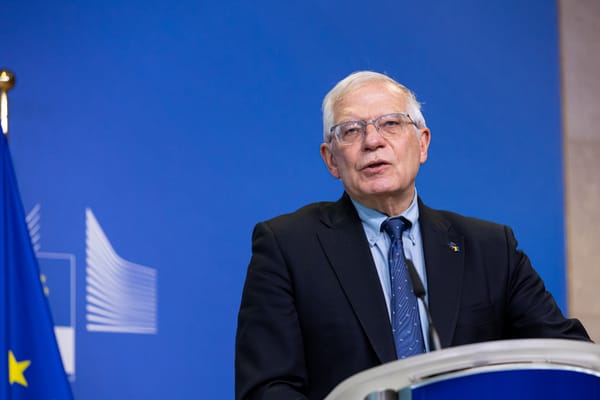
As Ukraine’s second largest city, Kharkiv, was heavily bombarded by Russian forces on Monday, European Union foreign policy chief Josep Borrell announced that EU defence ministers would discuss how the bloc would deliver EUR 500 million worth of defensive weapons to Ukraine. He said, that while Kyiv was resisting
On the evening of Sunday, 27 February, as Russian President Vladimir Putin had put his nuclear forces on high alert, Ukraine’s government agreed to talks in Belarus with Russian officials. Al Jazeera reported that President Volodymyr Zelensky said Kyiv would send a delegation of officials to Ukraine’s border
The war in Ukraine is a further nail in the coffin of the Pax Americana. Donald Trump began the dismantling of the US-dominated world order and post-WWII security apparatus, and now the job is being completed by Joe Biden.
After last year’s withdrawal from Afghanistan, the Western response – or
On early Friday, Al Jazeera reported that Russian forces had sent missiles into Kyiv and other locations in Ukraine. Stating that Putin “must and will fail”, the European Union has agreed severe sanctions on Russia. Namely, this means the EU will freeze Russian assets within the Union. Also, Russian banks’
Following Russia’s attack on Ukraine on Thursday morning, Poland, Estonia, Latvia and Lithuania all invoked the NATO alliance’s Article 4, which obliges all 30 NATO members to hold a consultation when “the territorial integrity, political independence or security of any of the parties is threatened”.
Explaining the rationale
Global news organisations are reporting that Russia launched a full-scale invasion of Ukraine in the early morning hours of Thursday, 24 February, bombing targets across the country and sending in troops. Ukrainian President Volodymyr Zelenskyy has declared martial law in his country. Promising that the world will hold Russia accountable,
United Nations Security Council members condemned Russia’s order to deploy troops to Donetsk and Luhansk after Russian President Vladimir Putin declared them independent, on Monday. Speaking on state television, Putin said “I deem it necessary to make a decision that should have been made a long time ago – to
As the stand-off between Russia and Ukraine continues, for countries within Central and Eastern Europe (CEE) it has spurred a flurry of activity, including troop movements among members of the NATO alliance to bolster their defenses. The Baltic News Network writes that Lithuania’s Ministry of Defense confirmed that a
US President Joe Biden said on Thursday that the prospect of Russian forces invading Ukraine remains a real threat, a “very high” one in the coming days. “Every indication we have is they’re prepared to go into Ukraine,” said Biden, who warned that Russia could employ a “false flag”
Russian forces did not invade Ukraine today, confounding earlier US intelligence statements this was likely to happen on Wednesday. The Kremlin mocked Western media who had declared today the “invasion date”, France 24 reported.
Nevertheless US Secretary of State Antony Blinken expressed scepticism regarding the Russian Defence Ministry claim that
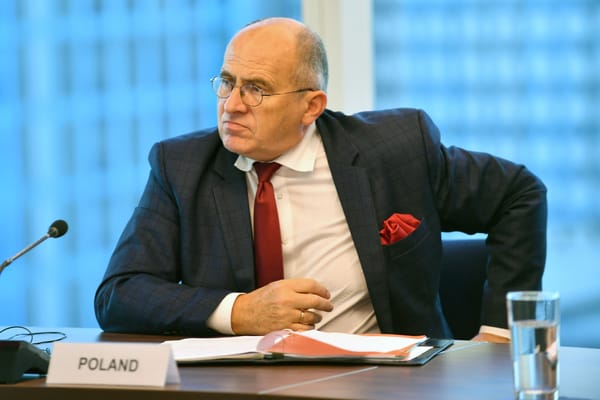
Poland Foreign Minister Zbigniew Rau met his opposite number in Moscow, Sergei Lavrov, to offer a “new initiative for dialogue” regarding the build up of Russian troops on Ukraine’s eastern border. Rau expressed hope that he can offer an “informal platform” to de-escalate the “deep security crisis” that Europe
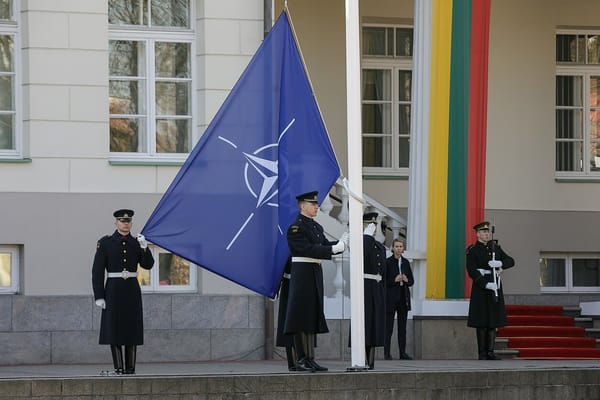
NATO has sent troops to Lithuania, which the country’s head of state says should be permanently stationed in the Baltic country. A rotating contingent of soldiers “would be the best boost to security and deterrence that NATO could provide – not only to Lithuania, but to the whole region”, President
EU High Representative Josep Borrell said the European Union will act decisively if Russia commits further acts of aggression against Ukraine, ahead of a two-day visit to the Eastern European country on Tuesday.
Tensions are high between Ukraine and Russia, which has amassed around 100,000 troops on Ukraine’s
With Russian troops amassing at Ukraine’s eastern border, negative sentiments toward the Nord Stream 2 (NS2), both within Germany and among its allies in Central and Eastern Europe, are emerging, Newsweek writes.
Estonia, Latvia and Lithuania are urging the incoming German coalition to reconsider the gas pipeline, which the
US Secretary of State Anthony Blinken and NATO Secretary General Jens Stoltenberg discussed the importance of strengthening Transatlantic unity at the NATO Foreign Ministerial in Riga, Latvia on Wednesday. NATO billed the summit as “30 Allies (meeting) to discuss the situation in and around Ukraine, Belarus, lessons learned from NATO’