Oil crisis: Are the Poles getting off light?
In Poland there are no signs of fuel panic or dramatic price hikes, even though the government has not introduced emergency measures to protect the market or consumers. The key to this apparent mystery lies in successful diversification.
In recent days the global oil market has once again become extremely volatile. Geopolitical tensions in the Middle East, security risks affecting maritime transport routes – especially strategic straits – and broader international political conflicts have caused significant fluctuations in oil prices. Such crises typically affect most severely those countries whose energy supply relies heavily on a single supplier or transportation route. Poland, however, has significantly reduced this vulnerability in recent years through a deliberate energy policy, meaning that current disruptions in the oil market are reflected primarily in prices rather than in the security of supply.
The vast majority of Poland’s oil consumption comes from imports. In itself, this would suggest that the country is highly exposed to fluctuations in global markets. Over the past decade, however, one of the key goals of Polish energy policy has been to eliminate one-sided dependencies, particularly on Russian energy resources.
According to an analysis by the International Energy Agency (IEA), diversification of supply sources and the expansion of import routes have become central elements of Poland’s energy strategy.
The report notes that the country has made significant investments in energy infrastructure in recent years, which reduces long-term supply risks.
One of the most visible elements of this strategy was the elimination of Russian oil imports. Poland’s largest energy company, ORLEN, completely stopped purchasing Russian crude by 2025 after the final long-term contract expired.
According to the company’s official statement, this means that all Polish refineries now process crude oil sourced exclusively from non-Russian suppliers.
This step represents a significant difference compared with several other Central European countries, which still rely heavily on Russian oil delivered via the Druzhba pipeline.
Ending Russian imports was not merely a political decision but part of a broader procurement strategy. Poland now sources crude oil from several different regions, including the Middle East, the North Sea, Africa and the United States. According to Reuters, for example, ORLEN has signed a supply agreement with the Norwegian company Equinor, which covers a significant share of the company’s annual oil demand.
Using multiple suppliers means that supply disruptions in a single region are unlikely to trigger an immediate energy crisis in the country.
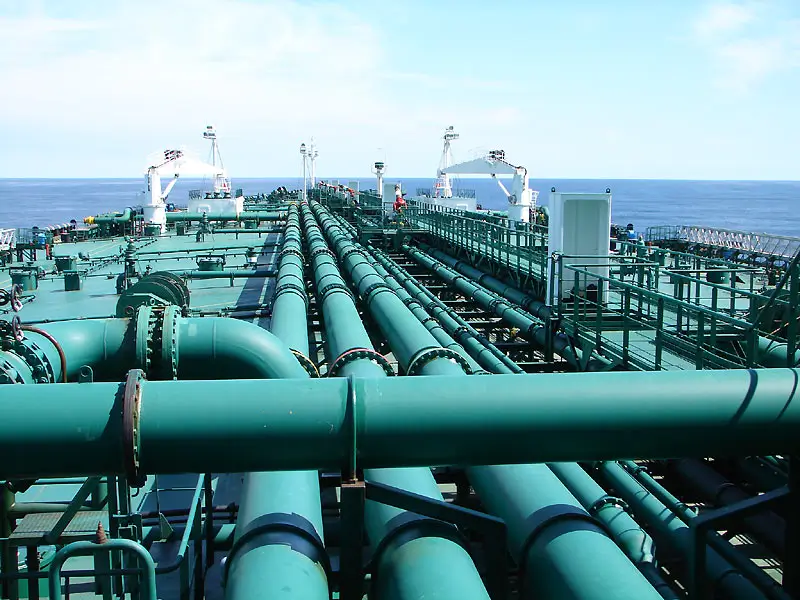
Diversification has also been made possible by investments in physical infrastructure. One of Poland’s most important energy facilities is the Naftoport oil terminal in Gdańsk, which allows the country to receive crude oil delivered by maritime tanker shipments. This is crucial because it means the country does not depend solely on pipeline transport. Maritime imports allow Polish refineries to process oil originating from virtually any region of the global market. According to the IEA, such infrastructure significantly increases both the flexibility and security of supply.
Naturally, global oil market tensions still affect the Polish economy. Rising world market prices appear in fuel costs and inflation. However, the risk of supply disruptions is far smaller than in the past. In an analysis, Reuters reported that parts of Central Europe – particularly countries that have diversified their energy sources – have become more resilient to supply shocks in recent years.
This means that while the effects of the global crisis cannot be avoided entirely, Poland’s economy is less vulnerable to sudden disruptions in oil supply.