MOL nears NIS takeover to build cross-border refining network
Hungary’s MOL Group is close to acquiring a majority stake in Serbia’s NIS, a deal that would bring the Pančevo refinery and NIS’s downstream and upstream assets under MOL’s control once U.S. sanctions are lifted. The deal would create a unique, pipeline-linked refining network in Central and Eastern Europe, allowing MOL to operate three landlocked refineries across Hungary, Slovakia and Serbia as a single system.
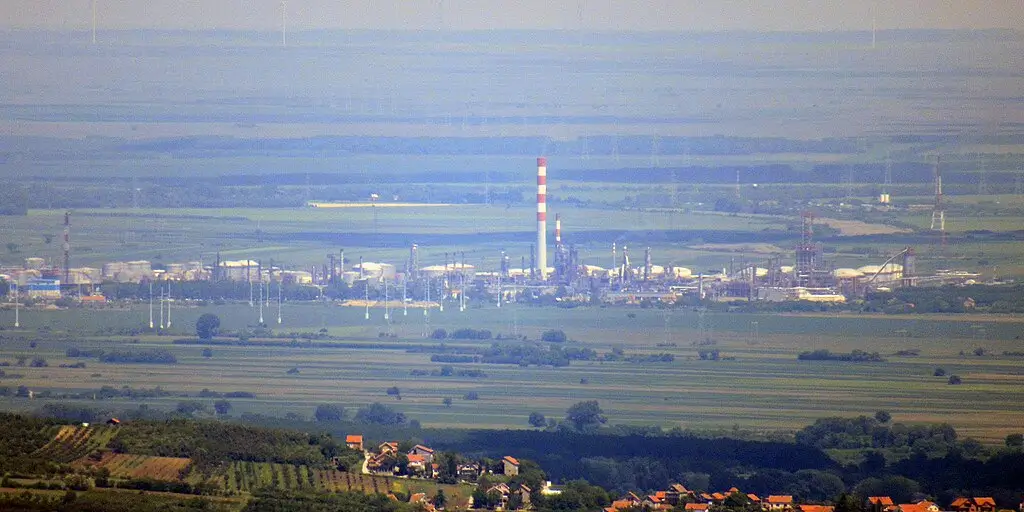
After months of uncertainty surrounding Serbia’s sole oil refinery and largest fuel supplier, Hungary’s MOL Group is nearing a deal to acquire a majority stake in Naftna Industrija Srbije (NIS), including the strategically vital Pančevo refinery.
Officials have described the talks as being in an advanced phase between MOL and Russia’s Gazprom Neft on the sale of a controlling stake — potentially the full 56.15% Russian shareholding — in NIS. According to the letter of intent signed by the parties, the transaction extends beyond the refinery itself to include NIS’s retail fuel network and hydrocarbon exploration and production portfolio.
Under the proposed structure, the Serbian state would increase its own stake by five percentage points, while minority shareholders would retain the remainder. The agreement also envisages the possible participation of Abu Dhabi National Oil Company (ADNOC) as a minority investor, with MOL retaining majority ownership and operational control.
Sanctions pressure eases as crude supplies resume
The announcement comes as crude oil deliveries to Pančevo have resumed via Croatia’s JANAF pipeline, following a prolonged interruption triggered by U.S. sanctions imposed on NIS’s Russian owners late last year.
A special U.S. licence enabled a temporary restart of refinery operations through 23 January, with cargo flows continuing into mid-January and allowing production to begin ramping up. However, the longer-term resumption of normal operations remains conditional.
Negotiations over the ownership change must now be completed by 31 March, the deadline for meeting requirements set by the U.S. Treasury’s Office of Foreign Assets Control (OFAC). Any permanent lifting of sanctions — and the granting of a full operating licence — depends on OFAC’s approval of the new ownership structure. If cleared, the Pančevo refinery could return to near-full capacity, restoring Serbia’s role as a stable fuel supplier to the Western Balkans.
A strategic bet on regional energy integration
MOL’s chief executive has publicly argued that cooperation with Middle Eastern partners could help ensure stable and predictable operations in landlocked Central European markets, adding that closer integration between Serbia’s, Hungary’s and Slovakia’s refining systems would strengthen the energy security of the entire region.
MOL has framed the NIS acquisition as a strategic step towards deeper regional energy integration rather than a standalone takeover.
The Pančevo refinery, operational since 1968 and modernised over the past decade, has a capacity of around 4.8 million tonnes and forms the backbone of Serbia’s fuel supply, supported by a retail network of nearly 400 filling stations and sizeable upstream assets across the Western Balkans. The disruption of crude supplies in 2025 exposed how vulnerable Central and Eastern Europe remains to refinery outages and logistical bottlenecks. Under the proposed deal, MOL plans to link Pančevo with its refineries in Százhalombatta and Bratislava through new crude and product pipelines, allowing output to be shifted across borders as demand or maintenance schedules require.
Unlike groups such as OMV, whose refineries largely operate as national hubs serving distinct markets, MOL would run its assets as a single, integrated system spanning Hungary, Slovakia and Serbia. This is a rare model in Europe that could materially enhance supply resilience and flexibility in the region.
Coming weeks will be decisive
Securing Pančevo would materially expand MOL's refining footprint and retail reach, but the deal remains contingent on OFAC clearance and may attract competition-law scrutiny given MOL’s existing regional presence. The inclusion of a strong minority partner such as ADNOC could help mitigate political and financial risks, while reinforcing the transaction’s international credibility.
The coming weeks will therefore be decisive, as MOL, the Serbian government, Gazprom Neft and international regulators finalise terms that will shape not only the future of NIS, but the architecture of energy supply across Central and Eastern Europe.