Hungary’s energy path: Still quite expensive
Hungary has chosen a unique path in designing its energy system, both in European and regional comparisons. Although the country is in a transitional period, the results so far do not necessarily validate the direction: the system is vulnerable, import-dependent, and costly.
Sun + Nuclear – according to government communications, these are the two main pillars of the Hungarian energy system and also the main development priorities. The Paks Nuclear Power Plant (Paks1) provides nearly 40% of electricity consumption, while the extension of its operational life for another 20 years is on the agenda. Recently, with the first concrete pour, the Paks expansion project (Paks2) aiming to build two new reactor blocks officially entered the construction phase after a 12-year preparatory period. The Hungarian government signed the implementation contract with Rosatom in January 2014, and according to the original plan, the first new block should have been completed by 2013.
The situation is complicated by Austria filing a lawsuit with the EU Court against the Hungarian project. Last autumn, the court annulled the EU approval for state aid to the project and ruled that the legality and justification of Rosatom’s no-tender contract must be thoroughly examined. Without this assessment, it cannot be determined whether the state aid is justified (the Commission considers the entire financing as state aid). Currently, the legal situation is that no EU approval exists for Paks2 payments. If the Commission decides in its ongoing review that assigning a third-country — in this case Russian — main contractor with state financing conflicts with EU competition rules, it could result in having to repay all previous and future payments. This would be practically impossible, as the Paks2 project company, i.e., the client, has already transferred approximately HUF 780 billion spent so far, mostly to Rosatom and partly to Hungarian and other foreign subcontractors.
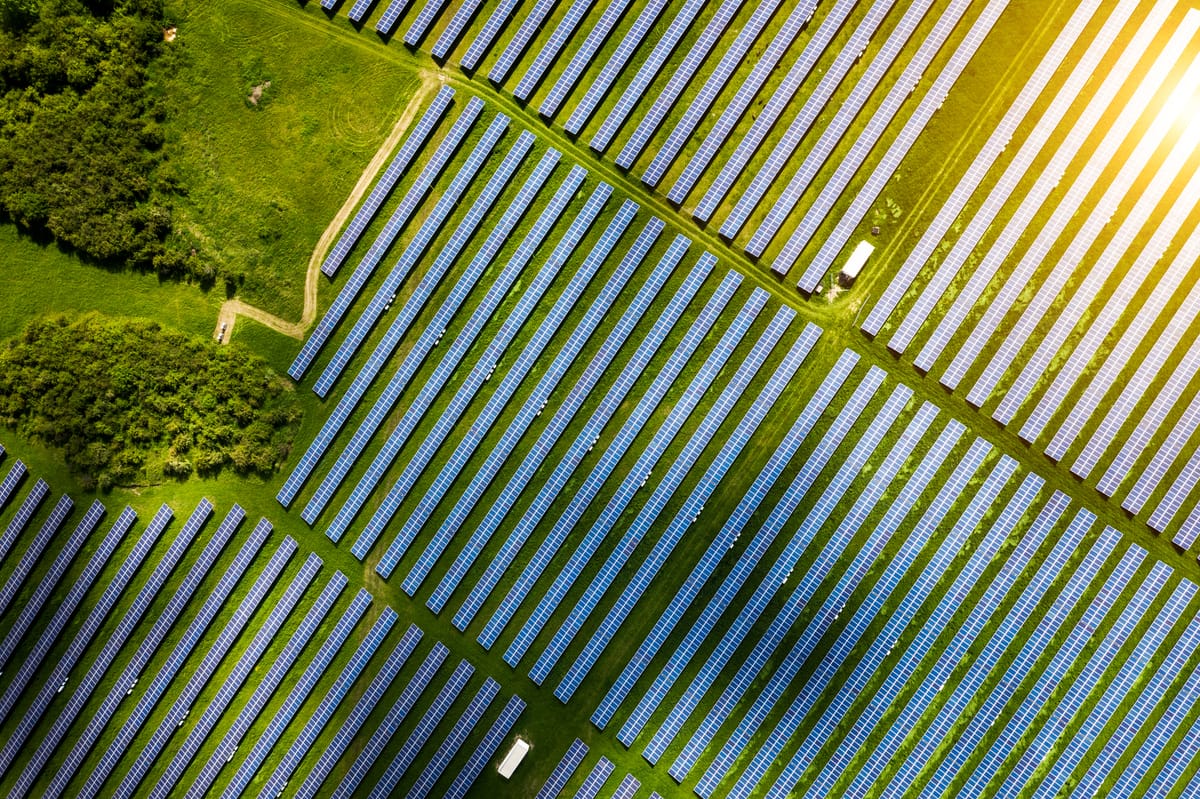
Meanwhile, solar capacity almost five times the planned Paks2 capacity has been installed in the country, largely without state support, based on market mechanisms and/or EU funding.
As a result, when the sun is shining and Paks1 – increasingly struggling with technical issues – is producing, there is electricity surplus in the Hungarian market. On cloudy or snowy days (or in case of Paks1 malfunctions), there is electricity shortage. Nuclear and solar are not optimal complements: nuclear plants are designed for continuous baseload operation, making shutdowns and restarts cumbersome, while solar naturally produces electricity only when the sun shines. Consequently, Hungary typically sells electricity cheaply and buys it expensively on the European market, which is not the most favorable position.
As of early 2026, market (without government price intervention) electricity prices in Hungary were higher than in several neighboring countries, while the country remained heavily dependent on imports, covering roughly one-third of consumption, and during peak periods, this can reach 40–50%.
Systemically, Hungary does not have sufficient domestic generation to fully cover electricity demand, so imports are indispensable.
To balance the system, wind farms (since wind can blow at night or during cloudy weather) and new gas-fired power plants that can be started and stopped quickly are needed. However, new wind farm construction has been banned since 2010, when the Orbán government came to power, though a regulation published in early February theoretically lifted this ban.
The main issue with gas-fired power plants, as with the entire system, is that they must rely heavily on energy imports from Russia, which currently accounts for about 80% of Hungary’s supply — at least until the EU ban comes into effect in 2027.
Nevertheless, there are new developments regarding gas power. The government and the state-owned MVM have initiated or supported several new gas-fired power plant projects. The largest of these is a 1,000 MW combined-cycle gas turbine (CCGT) plant under construction in Tiszaújváros. The MVM Tisza Power Plant Ltd., in consortium with Ansaldo Energia (Italy) and Çalık Holding (Turkey), signed the construction contract, and according to details, this will be one of Hungary’s largest modern gas-fired plants. Financing for the project includes a €1.2 billion syndicated loan involving 11 banks.
Another important step is a new CCGT unit at the Mátra Power Plant, with a planned capacity of about 540–650 MW, expected to be completed by 2028 according to 2025 plans. This unit is part of a strategy to replace the existing lignite-based production and introduce modern, lower CO₂-emission gas-fired plants.
An intergovernmental agreement with Turkey also includes the construction of new gas-fired power plants, along with cooperation on domestic oil and gas field exploration.