Hungary and Ukraine: How a broken pipeline became the centrepiece of an election campaign
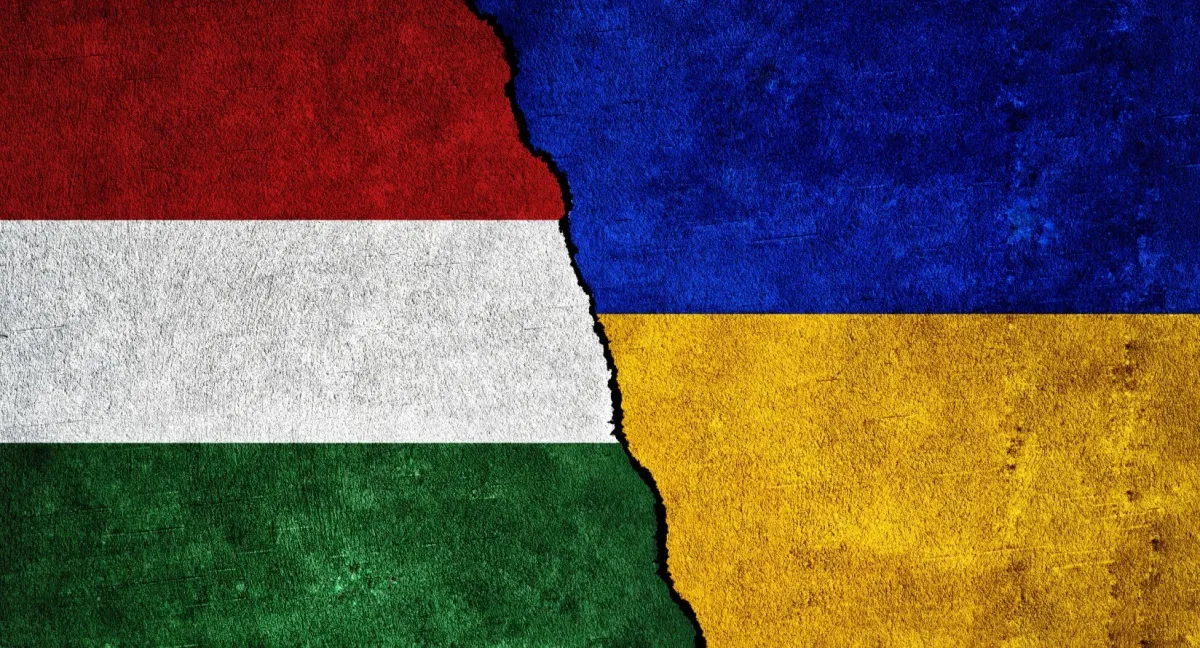
With Hungary's parliamentary elections set for 12 April 2026, the relationship between Budapest and Kyiv has deteriorated into one of the most explosive bilateral disputes inside the Europe. Three interlocking episodes - a halted oil pipeline, an inflammatory remark by Ukrainian President Volodymyr Zelenskyy, and the dramatic seizure of an armoured Ukrainian bank convoy in Budapest - have turned what began as an energy disagreement into a full-blown diplomatic crisis, with consequences that reach far beyond Hungary's borders.
The Druzhba pipeline: whose fault is it?
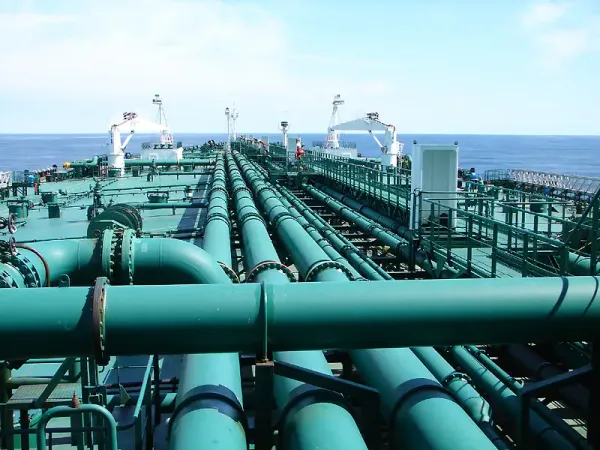
The immediate trigger was the shutdown of the Druzhba - or "Friendship" - oil pipeline on 27 January 2026. The pipeline, which has carried Russian crude oil to Central Europe since 1964, runs through Ukrainian territory before reaching refineries in Hungary and Slovakia, the last two EU member states still importing significant volumes of Russian oil via this route. According to Ukrainian authorities, a Russian drone strike hit the Brody pumping station in Lviv Oblast on 27 January, severely damaging high-pressure equipment and triggering a storage tank fire that took ten days to extinguish. Ukraine's Foreign Ministry told the European Commission that full responsibility for the suspension lies with Russia.
Prime Minister Viktor Orbán rejected that explanation. In a video address, he declared that "the data clearly shows that this unprecedented shutdown has political rather than technical causes," and published satellite images he claimed proved the pipeline remained technically operational. He wrote an open letter to Zelenskyy demanding the pipeline's immediate reopening, and deployed soldiers and police to guard Hungary's critical energy infrastructure, citing fears of a Ukrainian sabotage attack. Orbán then linked the dispute to EU-level leverage: Hungary blocked both a new round of EU sanctions against Russia and a proposed €90 billion European loan intended to finance weapons for Ukraine, pending resumption of oil transit.
The European Commission's Oil Coordination Group found on 25 February that there was "no immediate risk" to Hungarian or Slovak energy security, noting that both countries had begun drawing on strategic reserves and that the Adria pipeline through Croatia was actively supplying non-Russian crude. Kyiv, for its part, said in a note to a technical EU meeting that it was "actively carrying out repair and restoration works," while citing daily threats of new Russian missile attacks as a security constraint on those efforts.
Zelenskyy's remark and the "death threat" row
The dispute escalated sharply on 5 March, when Zelenskyy addressed a Ukrainian parliamentary committee. Expressing frustration over Hungary's blocking of the €90 billion EU loan package, he said he hoped "a certain person in the European Union" would not block the funds, adding: "Otherwise, we will give the address of this person to our Armed Forces, to our lads. Let them call him and talk to him in their own language." The barely veiled reference to Orbán was widely circulated and was swiftly condemned in Budapest as a death threat against the prime minister.
Foreign Minister Péter Szijjártó called the remarks a practical threat against Orbán's life. Opposition leader Péter Magyar - Orbán's main challenger in the April vote - also condemned the statement, saying "no foreign head of state can threaten anyone, not a single Hungarian," while speaking at an election rally. Orbán himself ruled out any compromise in a post on social media: "There will be no deals, no compromise. We will break the Ukrainian oil blockade by force. Hungary's energy will soon flow again through the Friendship pipeline." He did not elaborate on how.
In a separate interview with Italian newspaper Corriere della Sera, published on 3 March, Zelenskyy had already weighed in directly on the Hungarian vote, saying "I believe Orbán will be defeated in the elections, and then we will be able to resume normal relations with Hungary." Budapest accused Kyiv of open interference in its domestic politics.
The armoured convoy seizure
The crisis reached a new level on 5 March, when Hungarian law enforcement stopped two armoured cash-in-transit vehicles belonging to Ukraine's state-owned Oschadbank on the road between Austria and Ukraine. The convoy was carrying $40 million, €35 million, and approximately 9 kilograms of gold - part of a routine financial services arrangement between Raiffeisen Bank International AG in Austria and Oschadbank Ukraine. Seven Oschadbank employees travelling with the vehicles were taken into custody. As of 6 March, their whereabouts and ability to communicate remained unknown, according to Ukraine's National Bank. GPS tracking data confirmed the vehicles were located in central Budapest, near a Hungarian security services facility.
Hungary opened a money laundering investigation as the legal basis for the seizure. Ukrainian Foreign Minister Andrii Sybiha rejected that framing outright: "This is state terrorism and racketeering," he wrote on X. "If this is the 'strength' Prime Minister Orbán spoke of, then it resembles the strength of a criminal group." Ukraine's National Bank stressed that the cargo had been fully documented in accordance with international transportation rules and European customs requirements, and called on Budapest to provide immediate clarification. Ukraine said it would ask the EU to provide a legal assessment of Hungary's actions.
The electoral context
International analysts are watching the sequence of events closely in the context of the April election. According to the Kyiv Independent, Orbán is trailing in the polls: the opposition Tisza party, led by Péter Magyar, has been polling at around 45–50%, with Fidesz oscillating around 40%. Research fellow Pavel Havlicek of the Association for International Affairs in Prague told the Kyiv Independent that Orbán is "desperately losing" the pre-election fight and "picking external fights" to mobilise voters. The Washington Post reported as early as late February that Orbán was staking his re-election campaign on an explicitly anti-Ukraine message, with Budapest bus stops displaying AI-generated billboards depicting Zelenskyy flanked by European officials.
What began as a dispute over an oil pipeline has thus become, in the space of weeks, a test of Hungary's place within the EU, a flashpoint in the broader European debate over how to support Ukraine, and the dominant frame of a national election whose outcome could significantly reshape the bloc's internal politics.