Czechia’s constitutional order under strain
An alleged attempt to pressure Czech President Petr Pavel over a cabinet appointment has spiralled into one of the most serious institutional crises in Czech politics in years, pitting the presidency against a right-leaning government and exposing fractures over Ukraine and the country’s EU alignment. Though legal experts largely reject the notion of criminal blackmail, the dispute has mobilised public support for the president and raised the prospect of a constitutional court showdown.
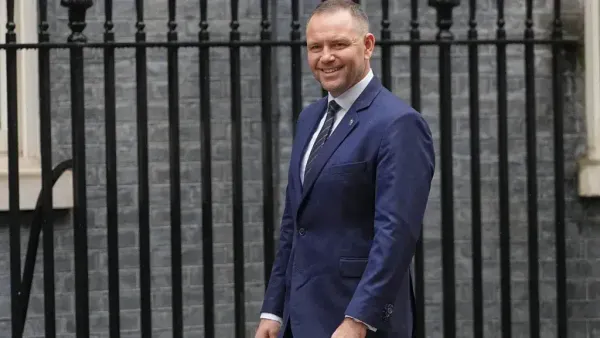
In late January, Czech President Petr Pavel publicly stated that he had received text messages from Foreign Minister Petr Macinka which he said he perceived as an attempt at political blackmail. According to the president, the messages implied negative consequences if he failed to approve the appointment of Filip Turek, leader of coalition partner Motorists, the government’s nominee for environment minister — a move Pavel described as unprecedented and unacceptable, citing concerns over Turek’s past conduct and public statements, which he said raised doubts about his respect for the constitutional order and fundamental values such as human dignity and equality.
The Presidential Office subsequently submitted the matter to the police and security services to assess whether the communication could meet the legal definition of blackmail or coercion. Pavel stressed that, irrespective of criminal liability, any attempt to pressure the head of state crosses a serious constitutional and political line.
Foreign Minister Macinka rejected the accusation, arguing that his messages were part of political negotiation rather than threats. In a message relayed through the President’s political adviser, Macinka cautioned that Pavel’s position could “burn bridges” between constitutional actors and accused him of overstepping his presidential mandate. The dispute rapidly escalated into a broader political crisis, drawing in coalition partners, opposition parties, and legal experts.
Legal opinion: coercion or political pressure?
Most legal experts commenting publicly have so far stopped short of calling the messages criminal blackmail. Under Czech criminal law, coercion or extortion typically requires a threat of unlawful harm, such as violence or serious injury. Lawyers argue that implied political consequences, while potentially improper, do not automatically meet that threshold.
Several constitutional lawyers have described the messages as being “on the borderline” between aggressive political pressure and criminal conduct. As a result, while many experts see the language used as politically unacceptable, they caution against assuming criminal liability without a court ruling.
Impact on international relations
The crisis has raised concerns about foreign-policy coherence, as it directly involves the foreign minister. Diplomats note that internal institutional conflict at the top of the state can temporarily blur policy signals, making it harder for partners to assess Czech positions.
So far, no neighbouring governments — including Poland, Slovakia, Hungary or Austria — have publicly commented on the dispute, treating it as a domestic constitutional matter. Nevertheless, observers warn that a prolonged confrontation could weaken Czechia’s diplomatic effectiveness at a time of heightened regional instability.
President Pavel has repeatedly stated that EU and NATO membership are non-negotiable pillars of Czech foreign policy, and support for Ukraine is a strategic, moral, and security necessity for Czechia. He made it clear that any government formation or foreign-policy shift that would undermine NATO, EU commitments, or solidarity with Ukraine would meet presidential resistance.
Divided society, visible presidential support
Polling suggests that Czech society is deeply divided, but that the president enjoys substantial public backing. Surveys show that general support for EU membership remains, though Euroscepticism persists across segments of society. Support for further arms deliveries to Ukraine has declined, reflecting war fatigue rather than outright hostility to Ukraine. In one recent survey from last year, approximately 40 percent of respondents said the new Czech government should end supplies of military equipment and ammunition to Ukraine. The same share (around 44 percent) believed that direct financial assistance should be halted, with higher support for humanitarian and diplomatic aid.
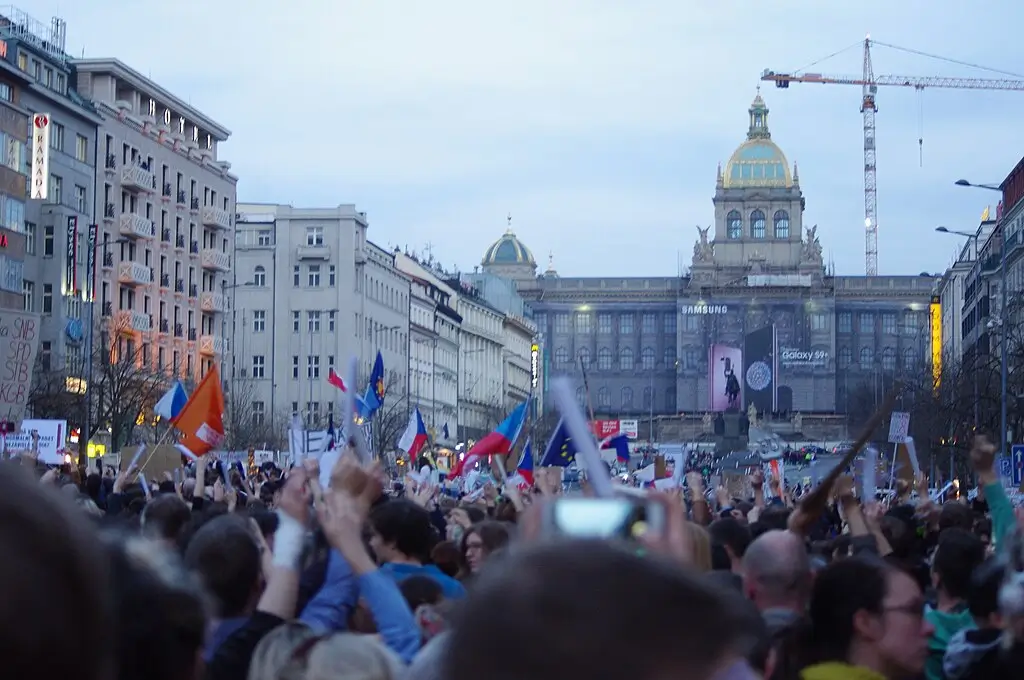
Pavel’s firm pro-EU and pro-NATO stance has struck a chord with many Czechs, even as broader public consensus frays. Tens of thousands took to the streets in Prague and other cities, waving EU and Ukrainian flags and framing the standoff as a defence of the constitution and the country’s Western orientation. Organised by civic groups such as Milion chvilek pro demokracii, the rallies cast the confrontation as a pushback against what organisers described as unconstitutional pressure on the presidency.
The dispute has exposed a deepening political divide in Czechia. The current governing constellation includes right-wing and far-right forces that are increasingly sceptical of further military support for Ukraine and favour a more sovereignist stance. This drift is reinforced by ANO’s alignment with the Patriots group in the European Parliament, signalling a broader ideological repositioning.
Critics of the President within the coalition argue that Pavel is politically vetoing a legitimate nominee, while supporters say he is acting as a constitutional safeguard against the erosion of democratic norms. Opposition parties have seized on the conflict, with some calling for a no-confidence vote, raising the risk of legislative paralysis, cabinet reshuffles, or even early elections.
Constitutional debate: what the president can — and cannot — do
At the heart of the crisis also lies a constitutional ambiguity. Article 68 of the Czech Constitution states that the president appoints ministers on the proposal of the prime minister, but does not explicitly require automatic compliance, nor does it grant the president a clear veto. Most constitutional scholars agree on a middle position: the president is bound by the proposal, but has limited room for exceptional refusal, particularly when a nominee raises serious legal, ethical or constitutional concerns.
Presidents have exercised this discretion before, making Pavel’s move controversial but not unprecedented. However, the dispute offers no remedy under criminal law. If the prime minister insists, the ultimate arbiter is the Constitutional Court, which can rule on whether the president exceeded his powers.
What comes next
The crisis may now move on two tracks: political, through negotiation, coalition bargaining, or parliamentary pressure, or constitutional, if a competence lawsuit is filed with the Constitutional Court to clarify presidential powers.
Until resolved, the standoff remains one of the most serious institutional confrontations in Czech politics in recent years, with implications not only for governability but for the country’s long-term political and foreign-policy direction.