Central Europe divided on EU sanctions against Russia
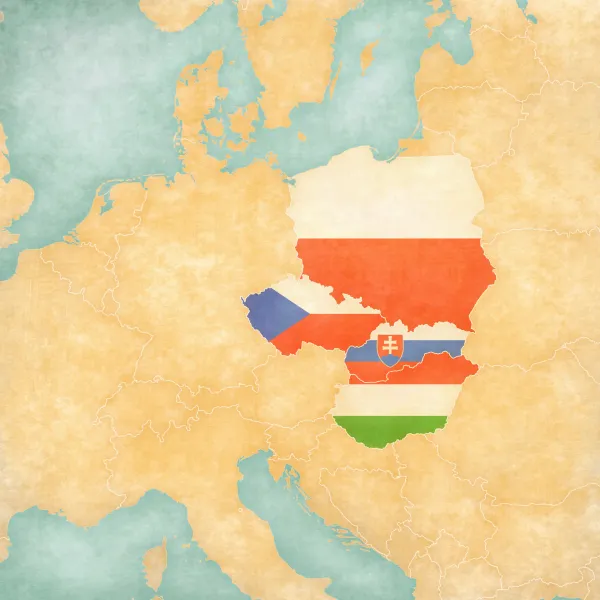
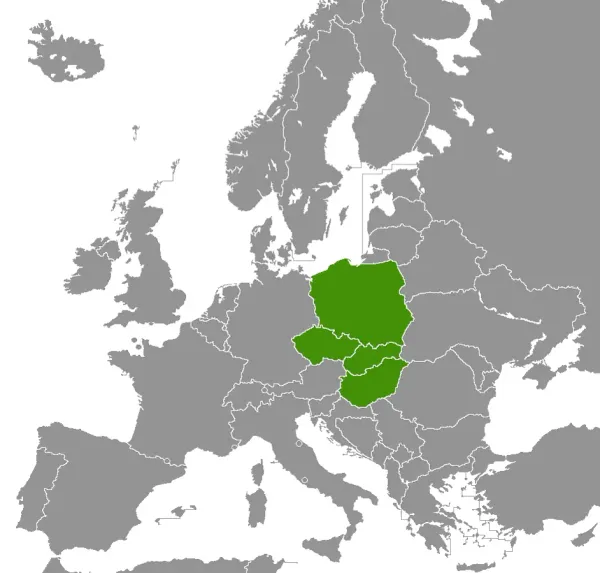
As the EU tightens sanctions on Russia, Central European states display contrasting political stances rooted in their priorities and capacities.
A collection of 151 posts
As the EU tightens sanctions on Russia, Central European states display contrasting political stances rooted in their priorities and capacities.
The Central and Eastern European oil market is entering a new era as a result of the US measures aimed at restricting Russian crude exports.
Over the past decade and a half, Poland has undergone a remarkable economic transformation, and in several key indicators it is now comparable with Japan. The question many economists are asking is: what is Poland’s secret, and how has it managed to outpace its Central European peers?
A fire broke out last Monday night at MOL Group’s Danube Refinery in Százhalombatta, damaging one of the largest of its three distillation towers. The incident can have significant impact on regional oil supply and prices.
Hungary and Slovakia have emerged as the most vocal opponents of two of the EU’s most consequential reform proposals: plans to phase out Russian energy imports and to overhaul the bloc’s long-term budget to prioritise defence, climate and digital transition. EU mulls ban of new Russian energy contracts
Hungarian Prime Minister Viktor Orban's ruling Fidesz party submitted on Tuesday, 13 May a bill that would allow the government to monitor, penalise and potentially ban organisations receiving foreign funding and categorised as threats to national sovereignty. The draft law would expand the powers of the Sovereignty Protection
Centrist Warsaw Mayor Rafal Trzaskowski narrowly won in the first round of Poland’s presidential election, setting up a closely contested runoff on 1 June. With 99.75% of votes counted, Trzaskowski, backed by Polish Prime Minister Donald Tusk’s centrist Civic Coalition (KO) secured 31.3% on 18 May
Independent pro-EU candidate Nicusor Dan won Romania’s presidential election on Sunday, 18 May, defeating far-right challenger George Simion in a runoff vote. The result represents a holding of the political centre after months of polarised campaigning, easing tensions in Brussels and Central and Eastern Europe (CEE). Dan secured 53.
First they laughed off George Simion as a fringe agitator. Now, with a commanding first-round lead behind him, the ultranationalist is one step away from Romania’s presidency. His opponent on 18 May, Bucharest Mayor Nicusor Dan, is racing to unite the fractured political centre to stop him. Romania'
The Security Service of Ukraine (SBU) has arrested two Ukrainian military veterans in Zakarpattia, west Ukraine, on suspicion of high treason, it announced on Friday, 9 May. Ukrainian authorities claim Hungary was collecting sensitive military data with an eye on a possible future incursion into western Ukraine. The SBU said
Hungary currently leads the world for share of solar energy in its energy mix, as it generated a quarter of its domestic electricity from photovoltaic panels in 2024. However, the recent massive blackout in Spain and Portugal served as a reminder of the challenges involved with high reliance on renewable
Estonia has surged to second place in the 2025 World Press Freedom Index, its best-ever result and the highest ranking among EU countries. Estonia's ranking in the 2025 World Press Freedom Index is the highest ever achieved by a Central and Eastern European (CEE) country since the index&
Czechia has halted imports of Russian crude oil delivered via the Druzhba pipeline for the first time in 60 years, Czech Prime Minister Petr Fiala announced in mid-April. The milestone was enabled by the expansion of the Transalpine Pipeline (TAL), which connects the Italian port of Trieste to Austria and
Far-right leader George Simion surged to a clear lead in the first round of Romania’s presidential election rerun, taking 40.9% of the vote ahead of the 18 May runoff that could reshape the country’s entire political trajectory. Simion, leader of the ultranationalist Alliance for the Union of
Workers in Central and Eastern Europe (CEE) enjoy some of the lowest personal income tax rates in Europe, with Slovakia and Poland the outliers for individuals and families, according to a new Organisation for Economic Co-operation and Development (OECD) report. The OECD Taxing Wages 2025 report analysed tax data and