
Hungary's political earthquake: the end of the Orbán era and the weight of what comes next
On 12 April 2026, Hungarian voters ended sixteen years of Viktor Orbán's rule in a landslide, handing Péter Magyar's Tisza party a two-thirds supermajority on the highest turnout since the fall of communism. The result is a genuine political watershed but Magyar inherits a stagnant economy and structural constraints that any government would struggle to manage.
Hungary held a parliamentary election on Sunday, 12 April 2026, and delivered a verdict that few would have thought possible just two years ago. Péter Magyar, the leader of a party that barely existed when Viktor Orbán's Fidesz swept to its fourth consecutive supermajority in 2022, won a landslide of historic proportions. With nearly all votes counted, Magyar's Tisza (Tisztelet és Szabadság – Respect and Freedom) party received 53.6% of list votes, against 37.8% for Fidesz-KDNP. Seat allocation under Hungary's mixed electoral system was even more decisive: Tisza won 138 of 199 parliamentary seats, giving it a two-thirds supermajority – three mandates more than the largest Fidesz supermajority ever achieved. The far-right Mi Hazánk scraped through the 5% threshold with 7 seats. The Democratic Coalition and the Two-Tailed Dog Party failed to enter parliament. Orbán conceded by phone call to Magyar on election night, telling supporters it was "painful, but clear."
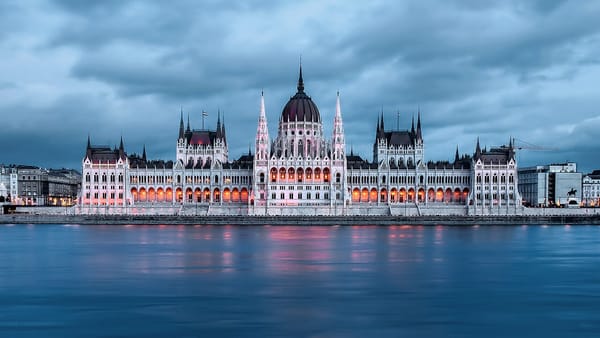
Turnout reached approximately 79% – the highest since Hungary's first free election in 1990. As Magyar himself noted in his victory speech on the Danube embankment opposite the Parliament building, no party in the democratic era had ever received such a mandate, or from so many voters. That is strictly true: Tisza's 3.07 million list votes represent the largest absolute vote haul in post-communist Hungarian history, surpassing even Fidesz's best years.
The comparison requires a caveat. Magyar benefited from an unprecedented consolidation of opposition forces: Momentum, MSZP, Párbeszéd, DK and several smaller parties withdrew from the election entirely to maximise Tisza's chances – something without precedent since 1990.
The economic reckoning behind the result
To understand Sunday's outcome, one must look beyond the drama of Magyar's two-year rise and place it in its structural context.
Hungary had entered its sixth year without meaningful growth. The numbers bear this out starkly. Hungary's GDP grew by just 0.9% in 2023, 0.6% in 2024, and 0.4% in 2025 – a cumulative real expansion of less than 2% over three years, against a backdrop of inflation that peaked at 25% in January 2023, the highest in the European Union, before falling back to the 4–5% range.
Investment collapsed: gross fixed capital formation dropped roughly 20% from its 2021 peak, with public investment specifically cut as the government scrambled to contain a fiscal deficit that reached 6.7% of GDP in 2023.
The most visible political consequence was in real wages. Sustained real wage growth – 9.5% in 2017, 8.4% in 2018, 7.0% in 2019 – had been the Orbán era's greatest electoral asset, the material foundation for four successive supermajority victories. Then came the inflation crisis: real wages fell 8.9% in 2022 and a further 5.0% in 2023, the worst two-year collapse of the entire period. The 2024 recovery (+9.2%) reflected disinflation more than underlying dynamism, and the 2025 gain of roughly 5% was partly engineered through pre-election tax relief – take-home pay pumped up through the tax code rather than through economic growth.
By the time of the election, approximately €18 billion in EU cohesion and recovery funds remained frozen over rule-of-law concerns – depriving Hungary of a fiscal lifeline that neighbouring states were drawing on freely.
All of this translated into a political liability that no amount of pre-election distribution could reverse.
What awaits Péter Magyar
The scale of the victory produced an immediate and emphatic international response. Von der Leyen declared that "Hungary has chosen Europe." Macron welcomed "the victory of democratic participation." Tusk was characteristically pointed: "Back together – Russians, go home!" Zelensky expressed readiness for constructive cooperation. NATO's Rutte called Magyar the same evening.
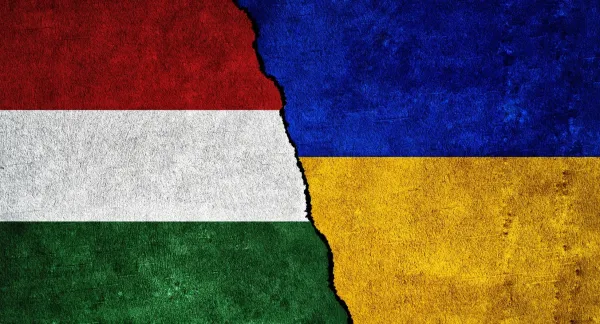
Brussels's relief is real but its enthusiasm is calibrated. One senior EU official described the result as "a new leaf" while warning it would not be "plain sailing." Magyar himself has been deliberately circumspect on the issues that most excite Brussels: he has said Hungary will not send weapons to Ukraine, that EU accession for Kyiv should be subject to a domestic referendum, and that Russian fossil fuel imports will not end quickly – a practical constraint given Hungary's deep dependence on the Druzhba pipeline. The EU, aware of the political arithmetic, is unlikely to demand rapid movement on these fronts. But they will remain in the background.
The economic challenge is the most pressing and least amenable to rapid solution. Magyar inherits a budget deficit above 4.5% of GDP, public debt at 73% and rising, investment that has fallen by 18% over the past two years, and an economy that has barely grown for three years. The real wage recovery of 2024–25 was partly engineered through tax relief rather than productive growth, and the structural backdrop – German stagnation, the pressure of US tariffs on European trade, and energy prices driven up by escalating Middle East tensions – does not change with the government.
Magyar won because voters concluded that the risks of change were lower than the costs of continuity. Whether his government can convert that mandate into durable improvement, rather than simply becoming the next administration to run aground on structural rocks, is the question that will define Hungarian politics for the next four years.