
Czech Republic and Slovakia agree €40m deal to reverse Druzhba pipeline flow
The Czech Republic and Slovakia have agreed to invest approximately €40 million to reverse the flow of the Czech section of the Druzhba pipeline, creating an alternative crude oil supply route for Slovakia amid an ongoing energy crisis triggered by damage to the pipeline's Ukrainian stretch.
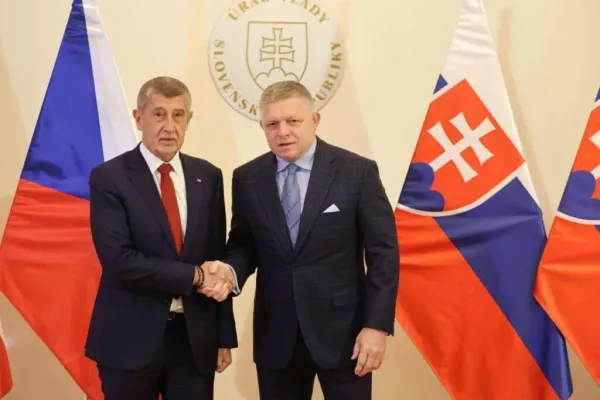
Czech Industry Minister Karel Havlíček announced the initiative on March 18, following talks in Prague with Slovak Economy Minister Denisa Saková. "We offered Slovakia the possibility of using the reverse flow of the Druzhba," Havlíček said. "In other words, we are ready to start investing in technical measures so that oil can be supplied from the Czech Republic to Slovakia."
A crisis since late January
The crisis began on January 27, 2026, when a Russian drone strike severely damaged pipeline infrastructure near the Brody oil hub in western Ukraine, halting crude oil deliveries through the southern leg of the Druzhba pipeline – a vital energy artery for both Slovakia and Hungary. While both countries have been affected, Slovakia's situation is particularly acute: the country is almost entirely reliant on its single Bratislava-based refinery, Slovnaft, which is configured specifically to process Russian-grade crude.
Slovakia has responded by releasing 250,000 tonnes of crude oil from its strategic reserves – roughly one month's worth of operations at the Bratislava refinery – to be drawn down gradually until September 2026, according to the Institute of Central Europe.
The reverse-flow solution
The proposed technical upgrade would use infrastructure that the Czech Republic no longer needs for its own Russian oil imports. Prague ended its dependence on Druzhba supplies in 2025, after expanding the TAL pipeline running from Italy to Germany. By reversing the flow direction of its now-idle Druzhba section, the Czechs could redirect Western-sourced crude eastward to Slovakia.
According to Reuters, the initial investment of up to CZK 1 billion (approximately $47 million) would deliver tens of thousands of tonnes of oil per month to Slovakia in emergency mode. Over a two-to-three-year horizon, annual capacity could be scaled up to 2-3 million tonnes.
A longer-term energy shift
Analysts see the deal as more than a short-term fix. As reported by InVenture, the investment signals a broader regional push to build energy resilience in Central Europe, reducing dependence on Russian crude and diversifying supply routes in an era of wartime disruption and geopolitical uncertainty.
In the meantime, Slovakia and Hungary have been drawing on strategic reserves and sourcing non-Russian crude via the Adria pipeline from Croatia. The European Commission's Oil Coordination Group has confirmed there is no immediate risk to the energy security of either country, noting that additional cargoes are already in transit to Croatian terminals.
Ukraine, for its part, has stated that repairs to the damaged pipeline section are underway but that stable, uninterrupted operations cannot be guaranteed as long as Russian attacks on energy infrastructure continue.