
High-Speed Rail Reform in Poland: Trains Set to Race at 250 km/h
Polish media report that travel time between Warsaw and Kraków could fall to less than two hours.
Poland is set to take long-distance rail travel to a new level next year: the first scheduled PKP Intercity services could operate at 250 km/h on the Central Rail Line (CMK), Transport Minister Dariusz Klimczak has announced. The upgrade primarily requires modernising the line's communications and safety infrastructure rather than purchasing new trains.
Klimczak said on X that the GSM-R railway radio communication system was tested overnight on the CMK. The system is one of the key safety requirements for railway operations above 160 km/h. Its introduction will allow Poland to make better use of the existing infrastructure and create the technical conditions for 250 km/h operation.
The CMK, or Railway Line No. 4, is Poland's most important high-speed rail corridor. It connects Warsaw with southern Poland, although the actual high-speed section begins at Grodzisk Mazowiecki and ends at Zawiercie, around 40 kilometres from Katowice. As a result of the upgrade, the planned journey time is 1 hour 52 minutes between Warsaw and Kraków and exactly 3 hours between Warsaw and Wrocław.
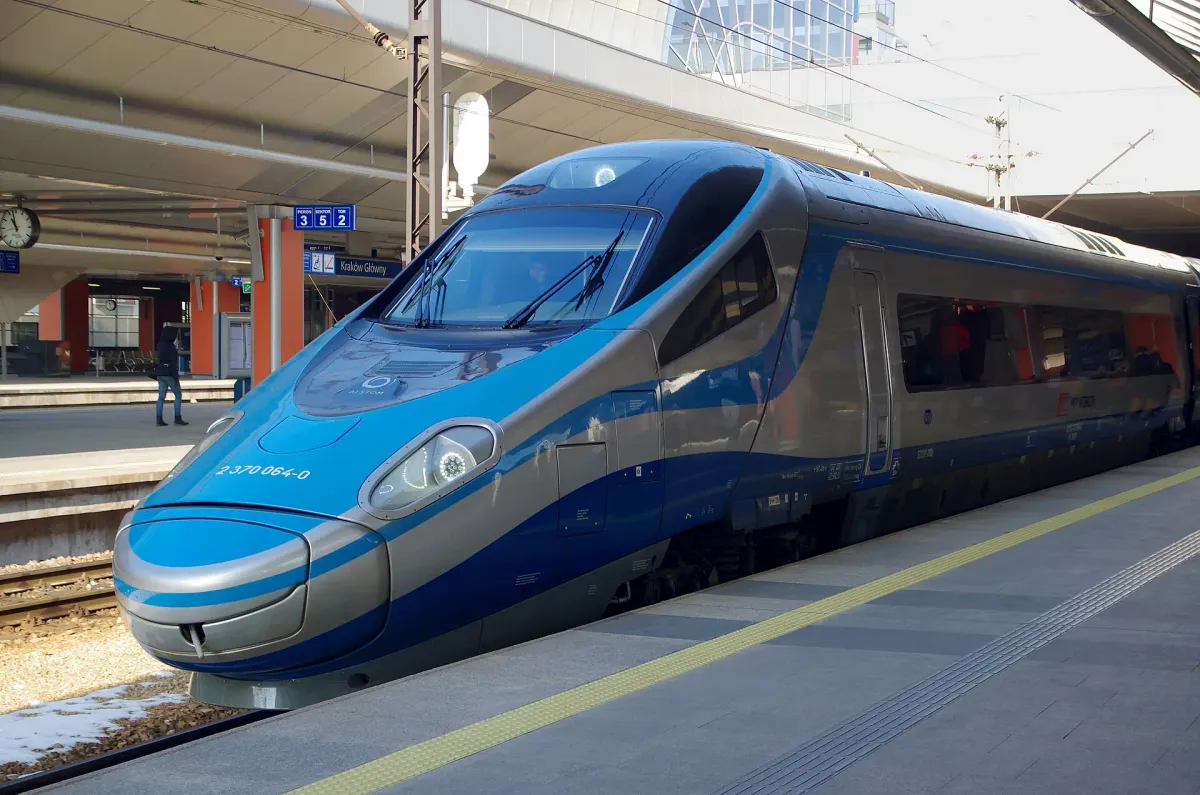
A speed of 250 km/h is not in itself a technological novelty for Poland. The Pendolino trains already operated by PKP Intercity are technically capable of speeds above 200 km/h, while the CMK itself has demonstrated that it can handle considerably higher speeds: during earlier tests, a Pendolino reached 293 km/h on the line. A year ago, Klimczak was still suggesting that trains could eventually exceed 250 km/h, but PKP has consistently played down such expectations and currently has no plans to cross the 250 km/h threshold.
For years, the real bottleneck was not the track or the rolling stock, but the communications and traffic-control system. The modern GSM-R system is replacing the old analogue railway radio communications infrastructure and will enable faster services, higher train frequencies and more advanced safety systems.
Poland is nevertheless significantly behind schedule in rolling out GSM-R nationwide. The procurement process for the system was completed as early as 2017, but the project was suspended following disputes with the consortium responsible for its implementation and resumed only in 2025. The system currently operates on just around 10% of the country's railway lines, with nationwide deployment expected by 2030.
The timing of the upgrade is also being driven by rapidly growing passenger demand. PKP Intercity carried 89.2 million passengers last year, while this year's forecast is around 96 million. During the August 13–17 long weekend alone, 1.66 million passengers travelled with the company. To cope with the exceptional demand, 427 additional carriages were added to 212 trains, with some services running with 14 or 15 carriages.
Another record was set on August 14, when 362,000 seats were booked in a single day. The figures show that the development of Poland's railway system is no longer merely a matter of infrastructure policy: as passenger numbers continue to rise, both capacity and journey times are becoming increasingly important factors in the railway's competitiveness.
The 250 km/h CMK project is therefore part of a broader transformation of Poland's railway system: by making better use of its existing tracks and rolling stock and introducing modern communications and safety systems, Poland is seeking to increase capacity and reduce journey times. The project also signals that the country increasingly views rail as a strategic backbone of domestic transport – particularly at a time when passenger numbers are already surpassing previous records.