EU summit: V4 split over Ukraine
The European Union summit of March 19, 2026, clearly highlighted that the Visegrád cooperation can no longer be seen as a unified political bloc when it comes to the war in Ukraine. The meeting was dominated by a single issue: the roughly €90 billion EU loan package intended for Ukraine, which would have required unanimous approval – and ultimately failed due to Hungary’s veto.
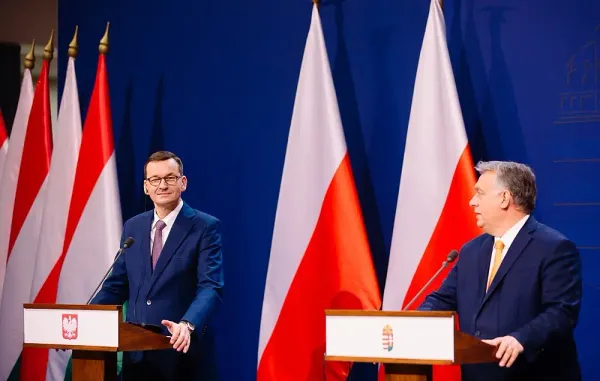
At the center of the conflict in Brussels was support for Ukraine and Budapest’s resistance. Prime Minister Viktor Orbán maintained his position blocking the €90 billion EU loan at the summit (despite having previously agreed to it in December), and made it clear that he would not support the package until the dispute with Ukraine over the Druzhba pipeline, which delivers Russian oil, is resolved. According to Reuters, EU leaders “voiced strong frustration” over Hungary continuing to obstruct the decision. The situation became so tense that several leaders described the veto as a move undermining EU unity.
This alone would have marked a serious rupture, but from the perspective of the V4, an even more important development was that the other three countries responded in entirely different ways. Poland and the Czech Republic clearly aligned themselves with the pro-Ukraine camp, consistently supporting both financial and military aid. This position is not new, but in the current situation it stood in particularly sharp contrast to Hungary’s stance.
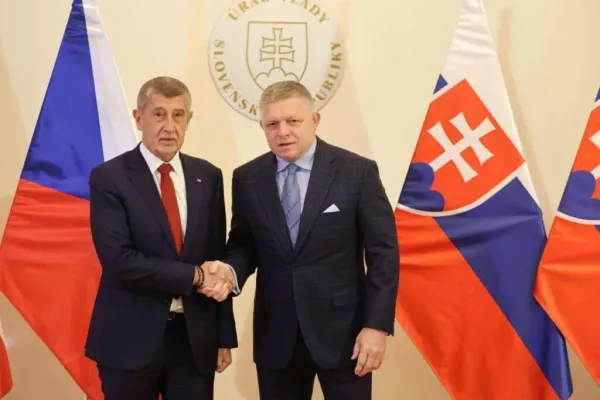
Slovakia’s position is more complex and illustrates the internal fault lines within the region. It did not veto at the summit, so it did not formally block the decision, but neither did it fully align with the majority position, and it did not sign the joint declaration. According to the Associated Press, the common statement supporting Ukraine was ultimately backed by 25 member states, with Hungary and Slovakia left out. This “half-step” fits well with the policy of Robert Fico’s government, which is trying to balance domestic political considerations with EU expectations.
Moreover, Slovakia has moved in tandem with Hungary on several occasions in recent weeks. The two countries jointly pushed their position on Russian oil supplies and previously blocked a new EU sanctions package against Russia together. The root of the dispute is that both countries are heavily dependent on Russian crude delivered via the Druzhba pipeline, and any disruption poses direct economic and political risks for them.
This energy dependence is now directly shaping their Ukraine policy. According to international reports, Hungary – and to some extent Slovakia as well – has tied its support for Ukraine to the restoration of oil supplies, while Kyiv views the disruptions more as a consequence of Russian attacks. At the heart of the dispute is the fact that the Druzhba pipeline plays a crucial role in both countries’ energy supply, and any interruptions generate serious domestic political pressure – especially in Hungary amid the election campaign.
By contrast, Poland and Romania – another key regional player – clearly represent the EU’s hardline pro-Ukraine position. They not only support financial packages but also treat Ukraine’s stabilization and integration as a strategic priority. At the summit, they stood firmly with the majority, a stance that ultimately contributed to Hungary’s isolation. The March 19 summit thus was not simply another debate over Ukraine, but a kind of litmus test: it showed that political coordination within the V4 has effectively broken down on this issue. While the Visegrád group once often acted together in opposition to Brussels, the current situation reveals a reality in which countries from the same regional bloc are positioning themselves against each other on one of the EU’s most important strategic questions.