Slovakia’s Beneš decree dispute reopens old wounds, and new political calculations
Progressive Slovakia’s attempt to limit the legal effects of the Beneš Decrees has ignited a major political clash in Bratislava and reopened sensitive historical tensions. With ethnic Hungarian voters emerging as a potential swing bloc ahead of 2027, the dispute could reshape both Slovak–Hungarian relations and Slovakia’s electoral landscape.
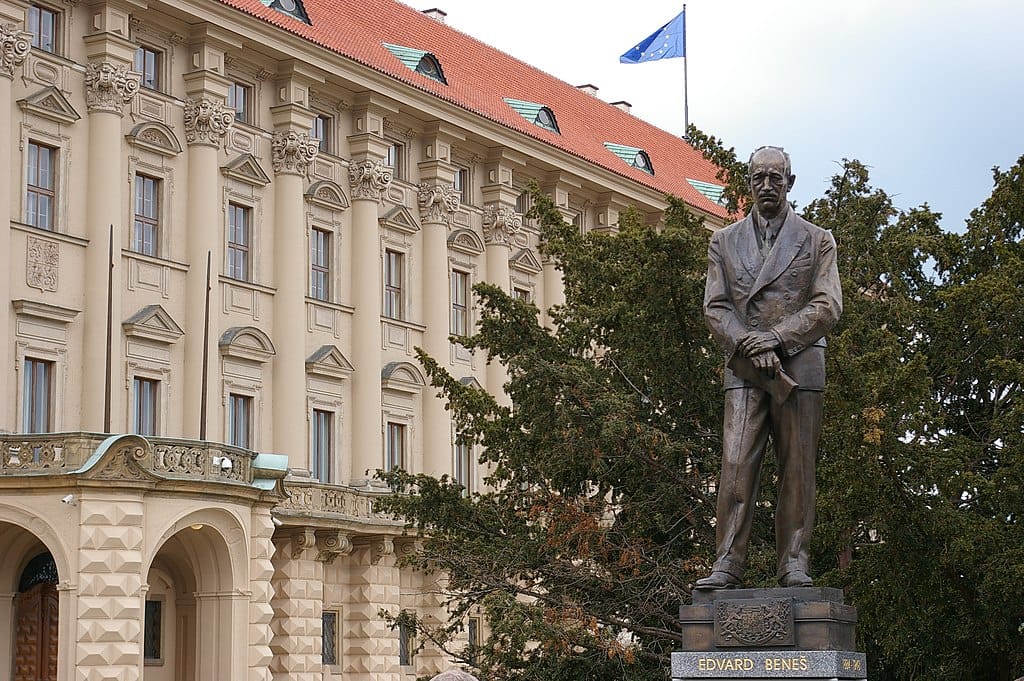
A wave of political controversy shook Slovakia in late November 2025 after the opposition party Progressívne Slovensko (PS) reignited the long-dormant debate over the Beneš Decrees (a set of post-war presidential decrees issued in 1945 by Czechoslovak president Edvard Beneš, which declared ethnic Germans and Hungarians collectively responsible for the wartime occupation and provided the legal basis for stripping them of citizenship, confiscating their property, and enabling forced labour, internment, and expulsions.) During a visit to southern Slovakia—a region with a substantial Hungarian-speaking population—PS adopted a resolution urging the government to ensure that the decrees should no longer serve as a legal basis for property confiscations or land transfers.
Backlash from the government and coalition parties
The move triggered an immediate backlash from the ruling coalition and several mainstream parties. At the cabinet session held the following week, ministers formally reaffirmed that the decrees remain part of the post-war settlement and rejected any reopening of the issue.
PS’s proposal sought primarily a symbolic gesture: acknowledgement that the post-war confiscations and expulsions justified on ethnic grounds inflicted collective injustice on the Hungarian (and German) minority. The party also called for a ban on using the decrees as grounds for present-day property seizures—effectively a moratorium on what many critics refer to as “retroactive confiscations.” Notably, PS did not call for abolishing the decrees outright or offering retroactive compensation, an intentional moderation meant to avoid escalating the issue.
Nonetheless, the initiative provoked a political storm.
Foreign Minister Juraj Blanár (Smer-SD) denounced PS’s statements as “unacceptable,” accusing the party of playing the “Hungarian card” for political gain and warning that revisiting the decrees would “undermine the foundations of the Slovak Republic” and destabilize the post-war order. Nationalist-leaning parties—including SNS—went further: its leader Andrej Danko threatened to file a complaint with the Prosecutor General if PS continued to raise the issue. Other coalition partners, such as Hlas-SD, called the initiative dangerous, arguing that reopening historical property decisions could jeopardize legal certainty for all Slovak citizens, not just minorities.
Legal context: alignment with earlier EU opinions
PS’s claim, however, aligns closely with a legal opinion commissioned by the European Parliament in 2002 regarding whether the Beneš Decrees posed an obstacle to Czech (and Slovak) accession to the EU. The opinion concluded that the decrees themselves did not violate EU entry criteria because EU law does not apply retroactively, and citizenship law is a national competence. Yet it also warned that post-accession enforcement of criminal or confiscatory measures based on the decrees could conflict with the EU’s fundamental principles, particularly regarding collective guilt, discrimination, and property rights.
Beyond Slovakia: implications for Slovak–Hungarian relations and V4 cooperation
The renewed debate inevitably reverberated beyond Slovakia’s borders. For many in Hungary—as well as for the large Hungarian-speaking minority in Slovakia—the Beneš Decrees symbolize decades of injustice: confiscated land, expulsions, and state-sanctioned collective punishment. In 2025, the Hungarian-minority party Maďarská aliancia submitted a bill to suspend the decrees’ legal effect in contemporary property cases, arguing that continued reliance on them amounts to “retroactive expropriation.”
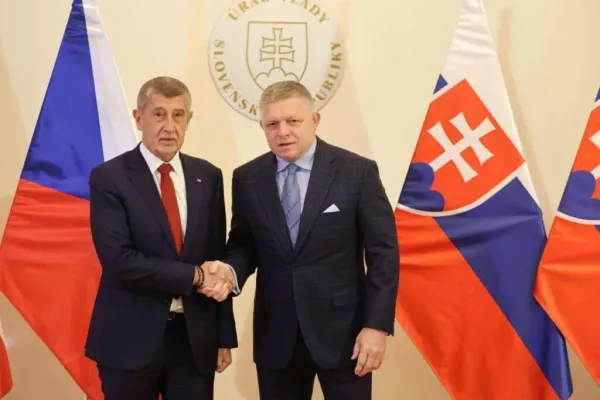
This places the Hungarian government in a delicate position. Prime Minister Viktor Orbán views Slovak Prime Minister Robert Fico as a strategic ally on issues such as migration, the war in Ukraine, and the revival of the Visegrád Group. He has no interest in seeing tensions flare between their governments. At the same time, Orbán must remain attentive to the expectations of Hungarian minorities abroad, whose support is a key part of Fidesz’s political identity.
Hungarian Foreign Minister Péter Szijjártó captured this balancing act in his annual parliamentary committee testimony: Budapest has always sought to address the Beneš Decrees in a way that offers a realistic chance of closure, he said, but reopening the issue must not revive previously “resolved” points of conflict. Sensitive questions affecting the Hungarian minority, he added, should not become ammunition in domestic Slovak political battles.
Will Slovakia see a Romanian-style minority shift in 2027?
Slovakia’s next regular parliamentary election is scheduled for 2027. According to the 2021 census, 422,065 people—about 7.75% of the population—identify as ethnic Hungarians; counting second-nationality declarations lifts this figure to roughly 8.3–8.4%. Despite this significant demographic presence, the unified Hungarian-minority party, Alliance (Szövetség/Aliancia), won only 4.39% of the vote in 2023 and failed to cross the 5% threshold for parliamentary representation.
Analysts widely describe that election as the worst-ever result for the Hungarian minority in Slovakia, citing long-term internal fragmentation, leadership conflicts, low turnout in Hungarian-majority regions, and a shift of many Hungarian voters toward larger Slovak parties.
Traditionally, Slovak Hungarians have leaned toward Hungary’s governing Fidesz. Yet Fidesz now maintains friendly ties with a Slovak government that includes nationalist factions often resistant to minority rights creating an increasingly complex voter landscape.
Recognizing an opening, PS—currently polling ahead of Smer—has begun courting ethnic Hungarian voters. Such outreach could unsettle the informal Fidesz–Smer alignment by drawing minority voters toward a liberal, pro-European Slovak alternative.
A precedent for this exists. In Romania’s 2025 presidential election, the Hungarian minority played a decisive role in electing Nicușor Dan, who won overwhelming support from UDMR voters in Transylvania. This occurred even after Prime Minister Orbán made a controversial comment interpreted by some as tacit support for Dan’s rival, George Simion of AUR, a party with a history of anti-Hungarian rhetoric, despite Simion’s late attempts to appeal to Hungarian voters.
Whether similar dynamics could unfold in Slovakia in 2027 remains uncertain. But recent developments suggest that ethnic Hungarian voters—long regarded as politically predictable—may once again emerge as a pivotal swing constituency capable of reshaping electoral outcomes in Central Europe.